From October 26 to 27, former Director-General of UNESCO, Irina Bokova, visited Nanjing University. Tan Zhemin, President of NJU and Academician of the Chinese Academy of Sciences, met with Bokova at the Xianlin Campus.
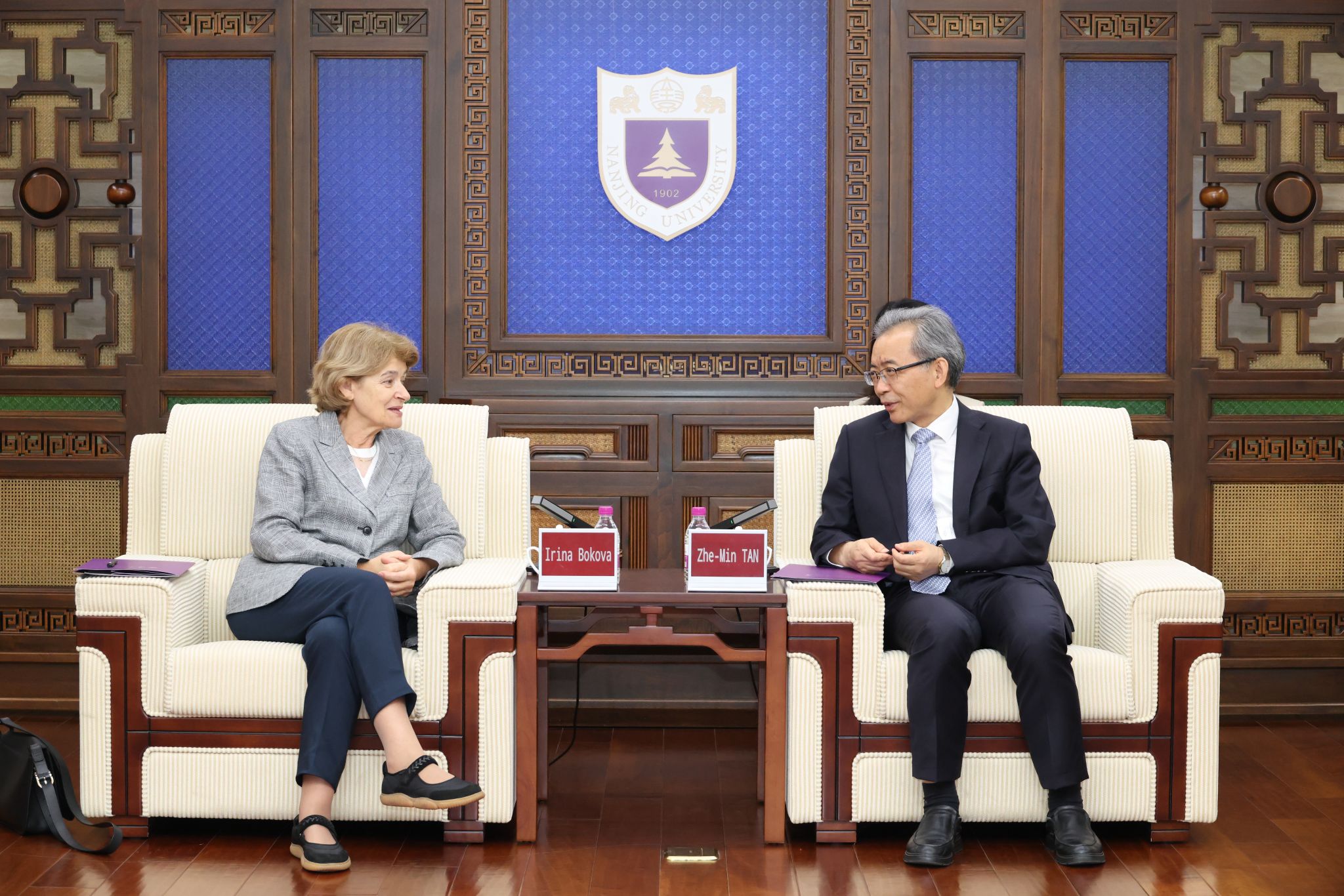
On behalf of Nanjing University, Tan Zhemin warmly welcomed Bokova and introduced NJU's general situation in terms of campus construction, discipline development, and open education. He also reviewed the achievements in the university's cooperation and exchanges with UNESCO and other international organizations. He emphasized that NJU has a long history and is a highly influential institution of higher education globally. Over its more than 120 years of operation, the university has consistently ranked among the top universities in China and has upheld an international education tradition. It has nurtured many youth with international perspectives and global competencies for the UN system and various specialized agencies. Looking ahead, he expressed hope that UNESCO, related international organizations, and think tanks would prioritize NJU as a key partner to further collaborative research and cooperation, contributing wisdom and strategies, especially to the promotion of the four global initiatives, including the Global Civilization Initiative.
Bokova expressed her gratitude for NJU's warm reception and recalled her fruitful cooperation with China during her tenure as Director-General of UNESCO. She acknowledged the university's profound foundation and brilliant achievements, describing it as a leading university in China and the world. She noted that humanity is currently facing complex global challenges and that universities play a pivotal role in cultivating talents for international organizations and promoting the Global Civilization Initiative. Bokova expressed her anticipation that NJU would take on the essential mission of nurturing international talents, producing more interdisciplinary individuals with global competitiveness, and partnering to contribute significantly to world development and cross-civilization exchange.
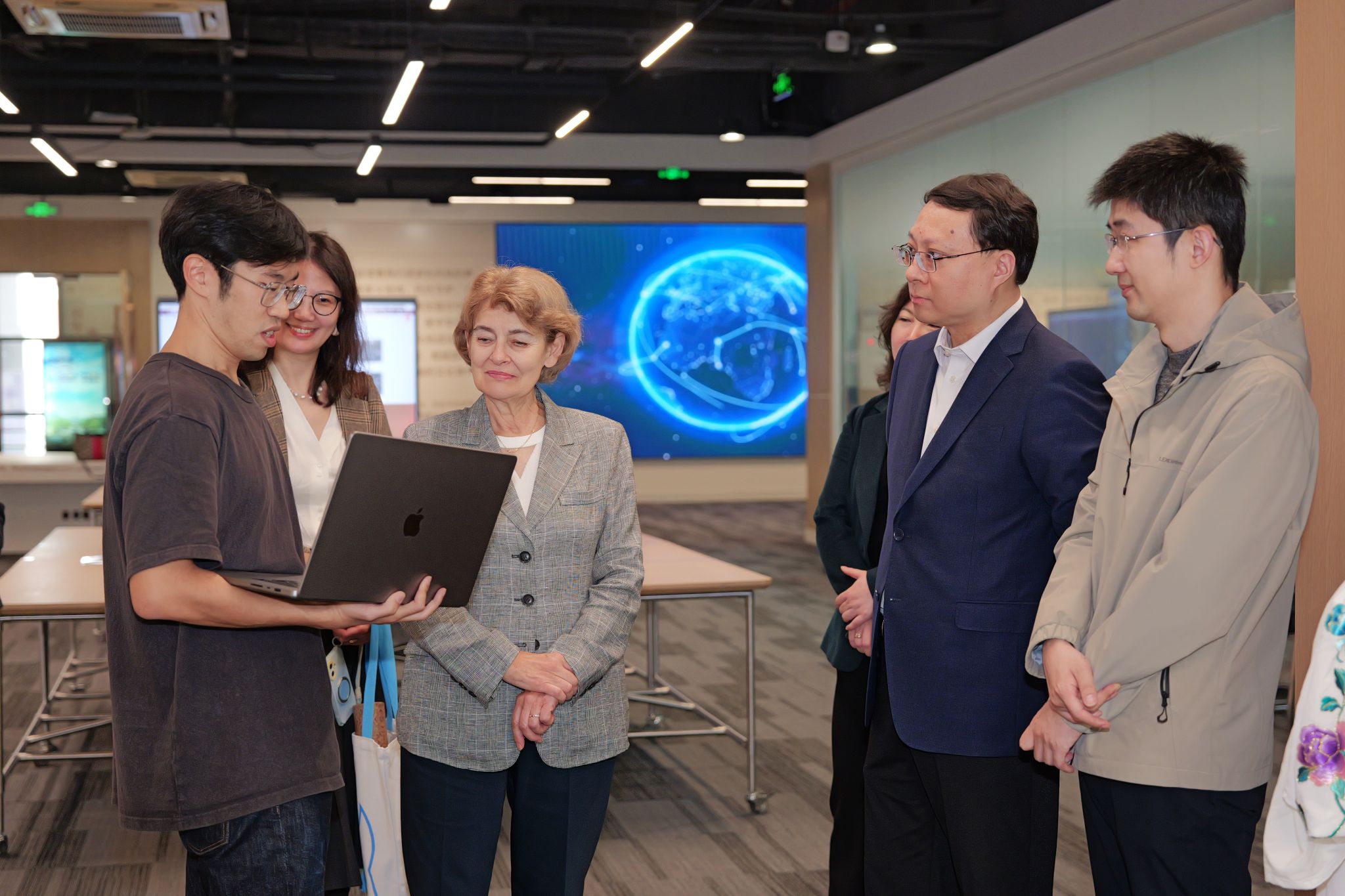
During her visit, Bokova toured NJU's Chinese Civilization Digital Intelligence Innovation Lab. Chen Yunsong, Vice Chair of NJU CPC Council and Director of the lab, introduced the lab's construction objectives, interdisciplinary research layout, and key scientific achievements. The lab is committed to cross-disciplinary innovation in new humanities, employing big data and artificial intelligence technologies to pursue major projects such as the digital atlas of ancient Chinese cities. It aims to protect and interpret Chinese civilization through digital means, foster cross-civilization dialogue, and advance research in digital humanities. Bokova praised NJU's work in AI-driven digital civilization research and cross-civilization research and highly affirmed the university's implementation of the Digital Support Plan for Cultural Heritage in the Global South. She anticipated greater contributions from Nanjing University to the preservation of world cultural heritage.
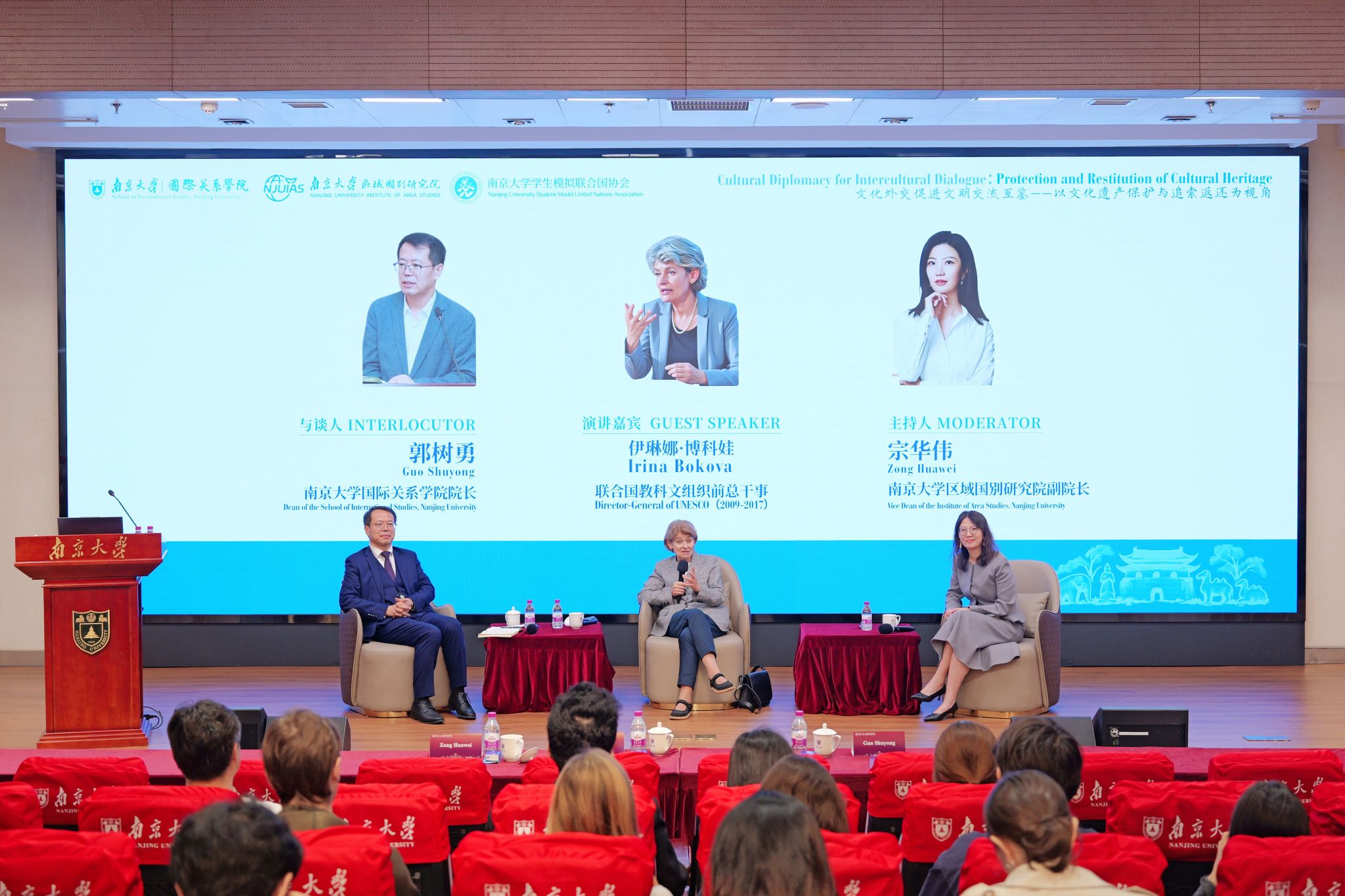
Bokova delivered a special lecture titled "Using Cultural Diplomacy to Promote Civilizational Exchange and Mutual Learning" for the faculty and students of Nanjing University. Drawing on her personal experiences in advancing multilateral cultural cooperation during her tenure as Director-General of UNESCO, she elaborated on the indispensable and unique value of cultural diplomacy in eliminating divisions and building bridges of trust. Encouraging the young students at Nanjing University, Bokova urged them to embrace an open and inclusive attitude to engage in cross-civilization dialogue and contribute their youthful energy to global governance and mutual learning among human civilizations. After the lecture, Bokova engaged in a discussion with Guo Shuyong, Dean of the School of International Studies at NJU, and Zong Huawei, Vice Dean of the Institute of Area Studies. They had an in-depth exchange on topics such as the practical paths of cultural diplomacy, talent cultivation for international organizations, and the role of universities in civilizational dialogue. The session was interactive and well-received.
Irina Bokova, former Director-General of UNESCO, previously served as Bulgaria's Ambassador to France and Monaco, as well as its Permanent Delegate to UNESCO. She was elected as the first female Director-General of UNESCO in 2009. During her tenure, she visited China several times, facilitated the inclusion of nine significant Chinese cultural heritage sites on UNESCO's World Heritage List, and advanced the inclusion of 11 Chinese cities in the UNESCO Creative Cities Network, making significant contributions to fostering collaboration between China and UNESCO.
Gao Fang, Assitant Presidnt and Director of the Office of Humanities and Social Sciences, along with representatives from relevant departments and faculties, participated in the activities.


