From August 20 to 24, 2026, the 24th General Meeting of the International Mineralogical Association (IMA) was held in Nanjing. With the theme of "Mineralogy in the Future," the Congress was co-hosted by Nanjing University and the Chinese Society for Mineralogy, Petrology, and Geochemistry (CSMPG), under the guidance of IMA. Held every four years, this is the first time the General Meeting has returned to China since the 15th meeting in Beijing in 1990, marking a 36-year interval. Nearly 800 participants from 29 countries and regions registered for the event.
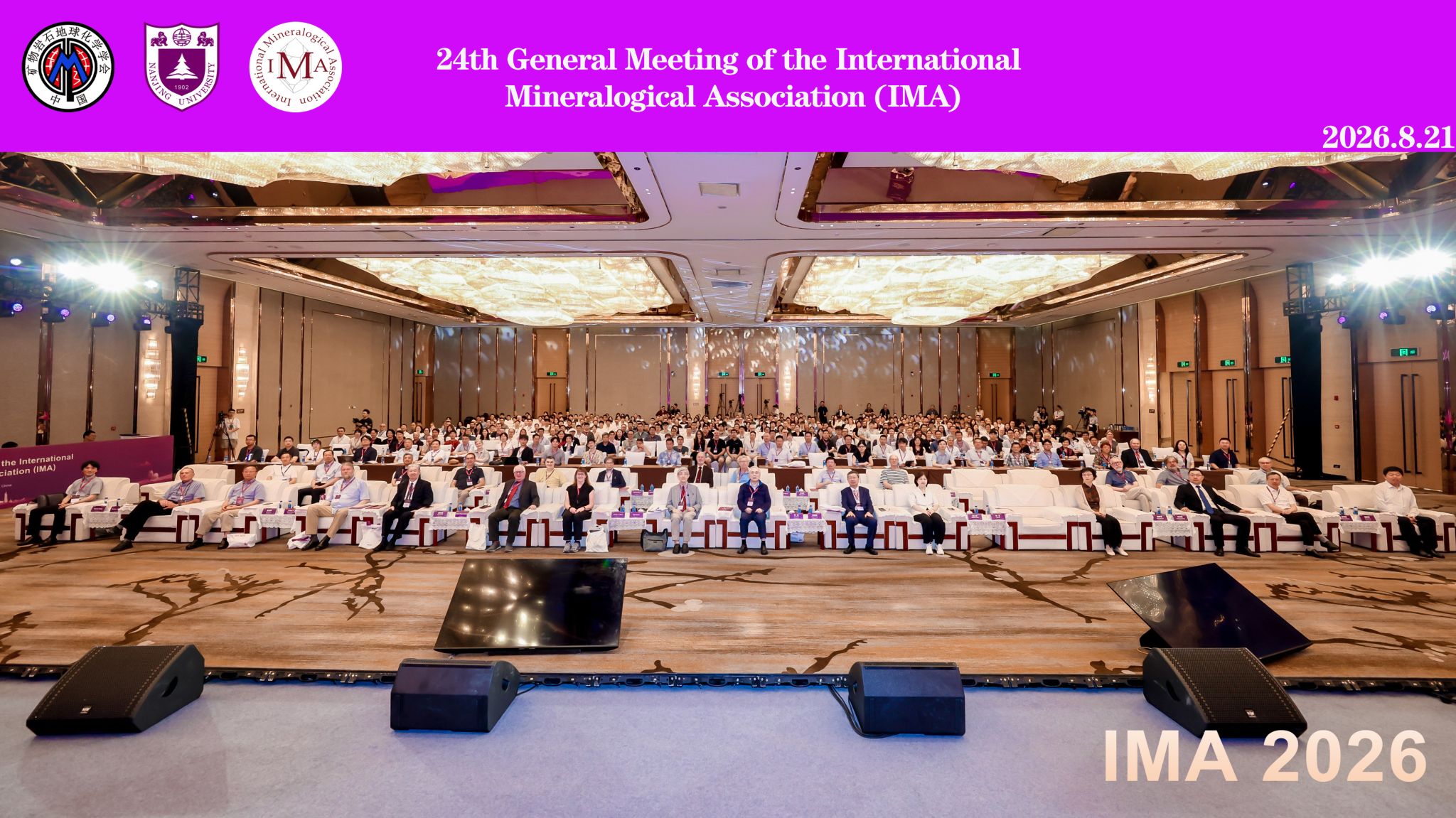
On the morning of August 21, the opening ceremony took place. Zhao Yan, Vice Governor of Jiangsu Province, delivered a video address, while representatives from Nanjing's municipal leadership extended a warm welcome to mineralogy experts from around the world visiting Nanjing.
Prominent attendees at the opening ceremony and other related activities included Zheng Hairong, Member of the Standing Committee of the CPC NJU Committee, Executive Vice President of NJU, and Academician of the Chinese Academy of Sciences; Eiji Ohtani, President of the IMA; Feng Xinbin, President of CSMPG; Chen Jun, Professor at NJU and Academician of the CAS; Xie Xiande, Foreign Academician of the Russian Academy of Sciences; Lu Xiancai, Member of the Standing Committee of the CPC NJU Committee, Vice President of NJU, and Vice President of the IMA; along with 15 academicians from various countries.
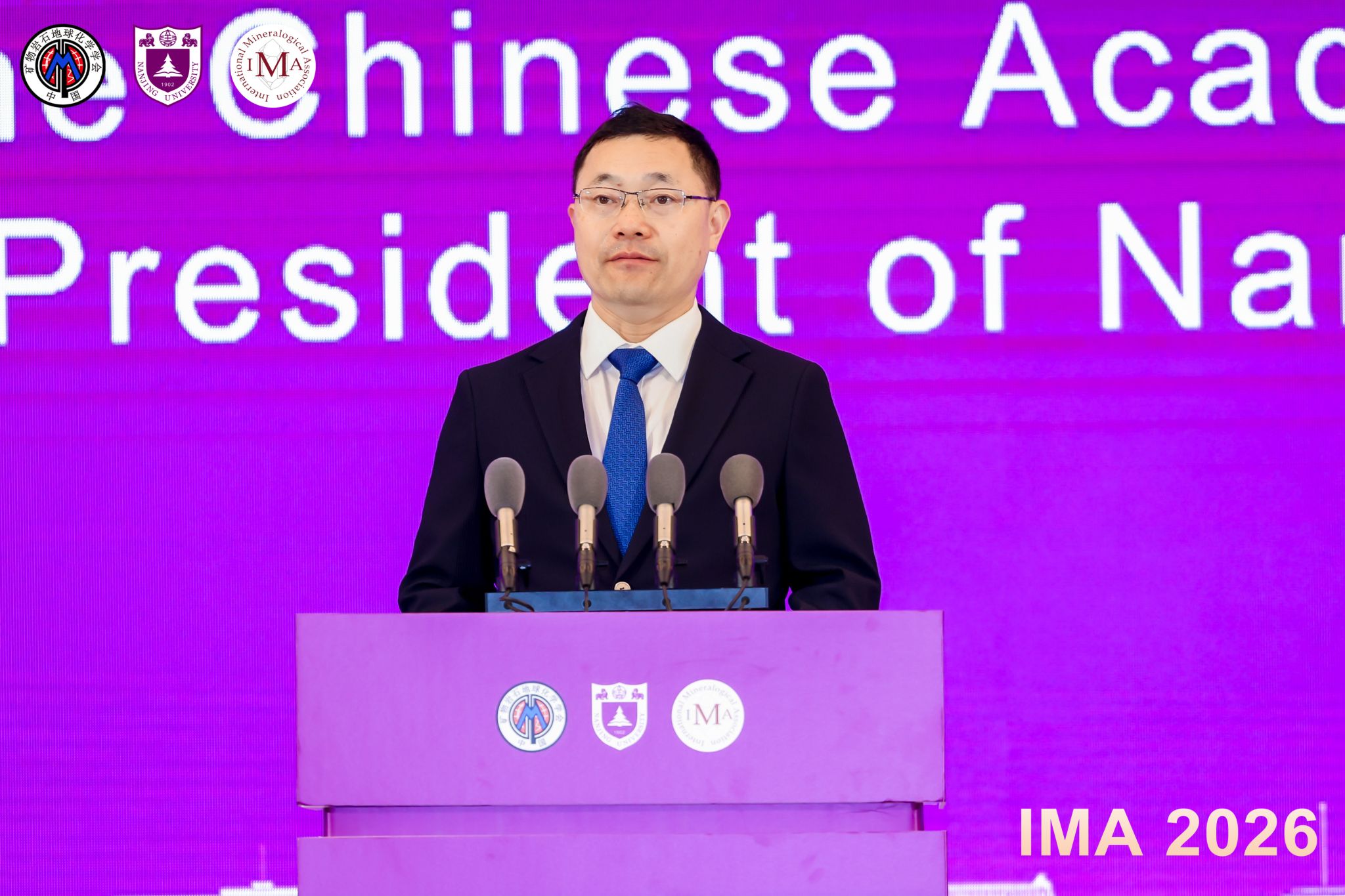
In his speech, Zheng Hairong stated that mineralogy serves as a foundational, cutting-edge discipline for understanding the evolution of the Earth and other planets, ensuring energy and resource security, maintaining environmental health, and guiding deep-space, deep-earth, and deep-sea exploration. With the rapid development of precision detection and artificial intelligence technologies, mineralogy has entered a new stage of atomic-level cognition and big data-driven development. On behalf of NJU, Zheng expressed gratitude to the CSMPG, the IMA, and other supporting organizations, and he urged global scholars to join hands in exploring the uncharted territories of mineralogy and promoting innovation in the field on the international stage.
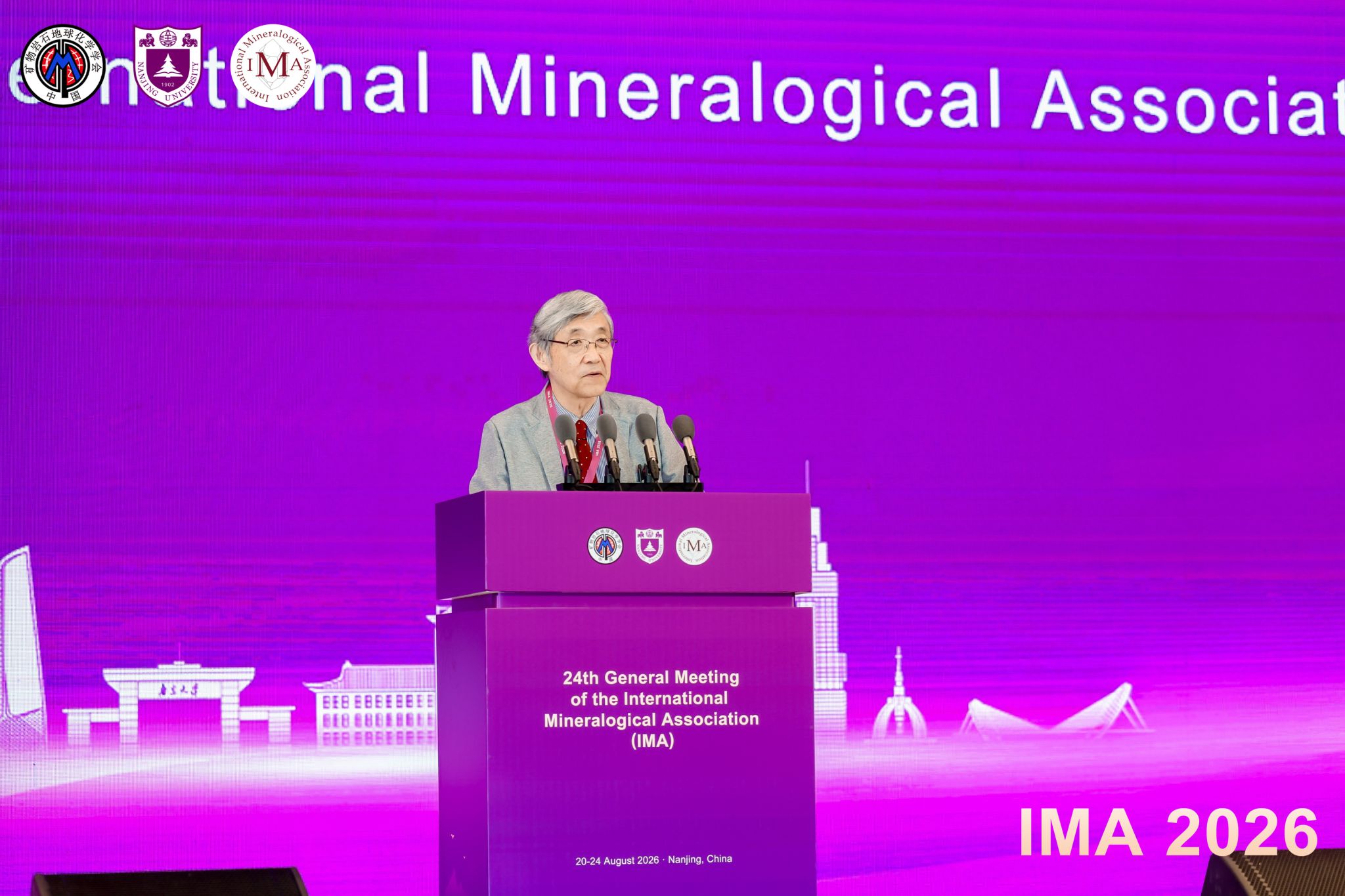
Eiji Ohtani, in his address on behalf of the IMA, expressed appreciation to the attendees and emphasized the growing importance of mineral science in the era of humanity's expansion into space. He encouraged participants to actively engage in discussions, share innovative insights, and deepen collaboration. He wished the meeting great success in sparking new ideas and generating fruitful results.
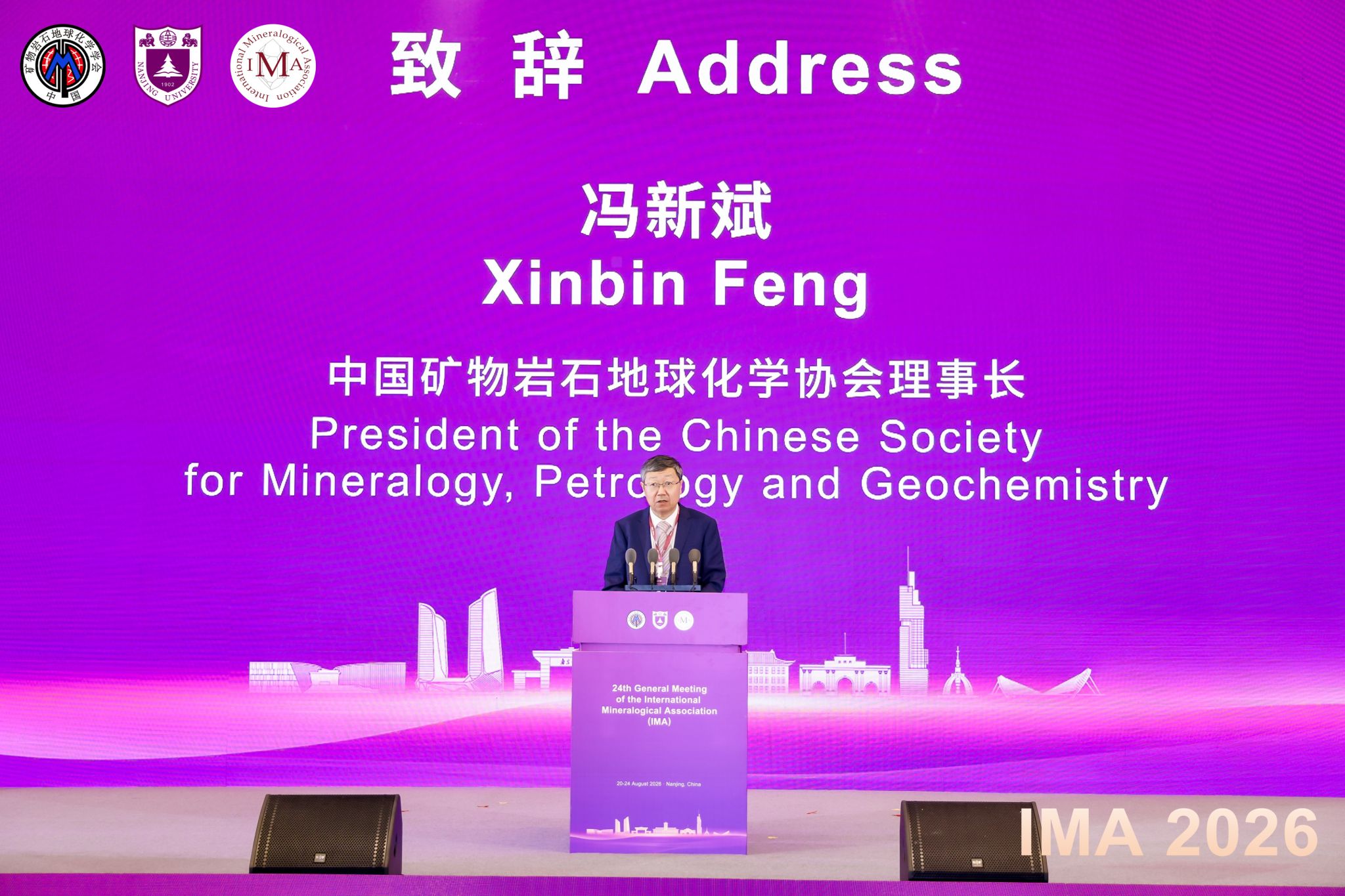
Feng Xinbin stated in his speech that this meeting brought together leading experts in areas such as deep-earth, deep-space, deep-sea, and deep-time mineralogy, critical metal mineralogy, carbon-neutral mineralogy, planetary mineralogy, and mineral informatics. He expressed confidence that the meeting would serve as a critical platform for exchanging cutting-edge research findings, fostering new collaborations, and advancing interdisciplinary innovation.
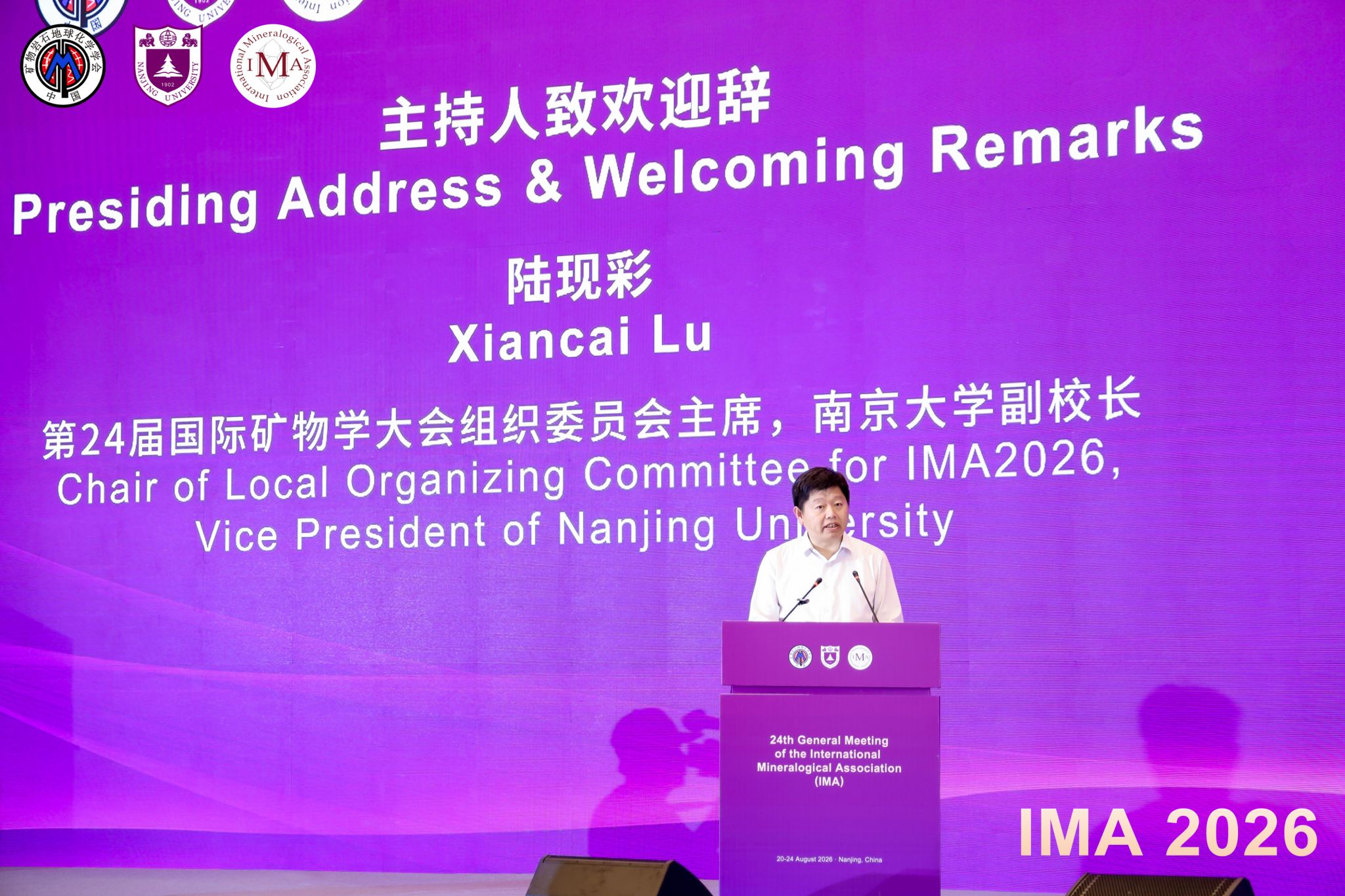
Lu Xiancai chaired the opening ceremony.
This year's General Meeting featured over 40 specialized sessions, focusing on topics such as "Four Deeps" mineralogy (deep-earth, deep-space, deep-sea, deep-time), critical metal mineralogy, carbon-neutral mineralogy, planetary mineralogy, frontier mineralogy, and mineral informatics. The program included four plenary lectures, three lectures by IMA medal recipients, and two lectures by IMA presidents, with a total of 540 oral presentations and 151 poster presentations. Rich academic activities such as geological field trips and museum visits were also organized. During the conference, the IMA convened nine working group meetings. Nearly 40 NJU faculty members and students participated. Prof. Wang Rucheng delivered a keynote address on recent advances in research on critical metal mineralization. 58 volunteers from NJU assisted with conference organization and logistics.
On the morning of August 24, the closing ceremony was held, featuring awards for 18 outstanding poster presentations and the handover ceremony for the IMA presidency. Incoming president Nancy Ross announced that the 25th General Meeting of the IMA will be held in Vancouver, Canada.
This Congress not only showcased the latest achievements in Chinese mineralogy but also highlighted the significant influence of China's mineralogical community on the international academic stage. Over the past decade, China has emerged as one of the countries with the highest number of new mineral species discoveries in this century. Significant progress has also been made in fundamental theoretical research areas such as diagenetic and metallogenic mineralogy, mineral physics and chemistry, surface mineralogy, and computational mineralogy. These advancements have strongly supported the exploration and development of critical metal resources, including rare earths and rare precious elements, and have provided new insights for carbon-neutral technologies.
The meeting provided a global platform for scholars in mineralogy and related interdisciplinary fields to share cutting-edge findings and explore future directions. It deepened international exchanges and collaboration in the mineralogical community and promoted foundational and interdisciplinary innovation in mineral sciences. This progress strongly supports major collaborative initiatives, such as the Deep-time Digital Earth Big Science Program and others, reinforcing the integration of mineralogy with resources, energy, environmental ecology, and planetary science.


