The Acoustofluidics 2026 International Conference was held in Nanjing from August 18 to 21. With the support of the National Natural Science Foundation of China, the School of Physics at Nanjing University, the Jiangsu Physical Society, and the Key Laboratory of Modern Acoustics, MOE, the conference was hosted by the International Society for Acoustofluidics and organized by Nanjing University, with Xi'an Jiaotong University as a co-organizer. Under the theme "Frontiers in Acoustofluidics", the conference marked the first time the event series was held in Asia. Launched in 2003, the conference attracted more than 180 registered delegates from 18 countries and region, including around 60 international participants, making it the largest edition in its 23-year history.
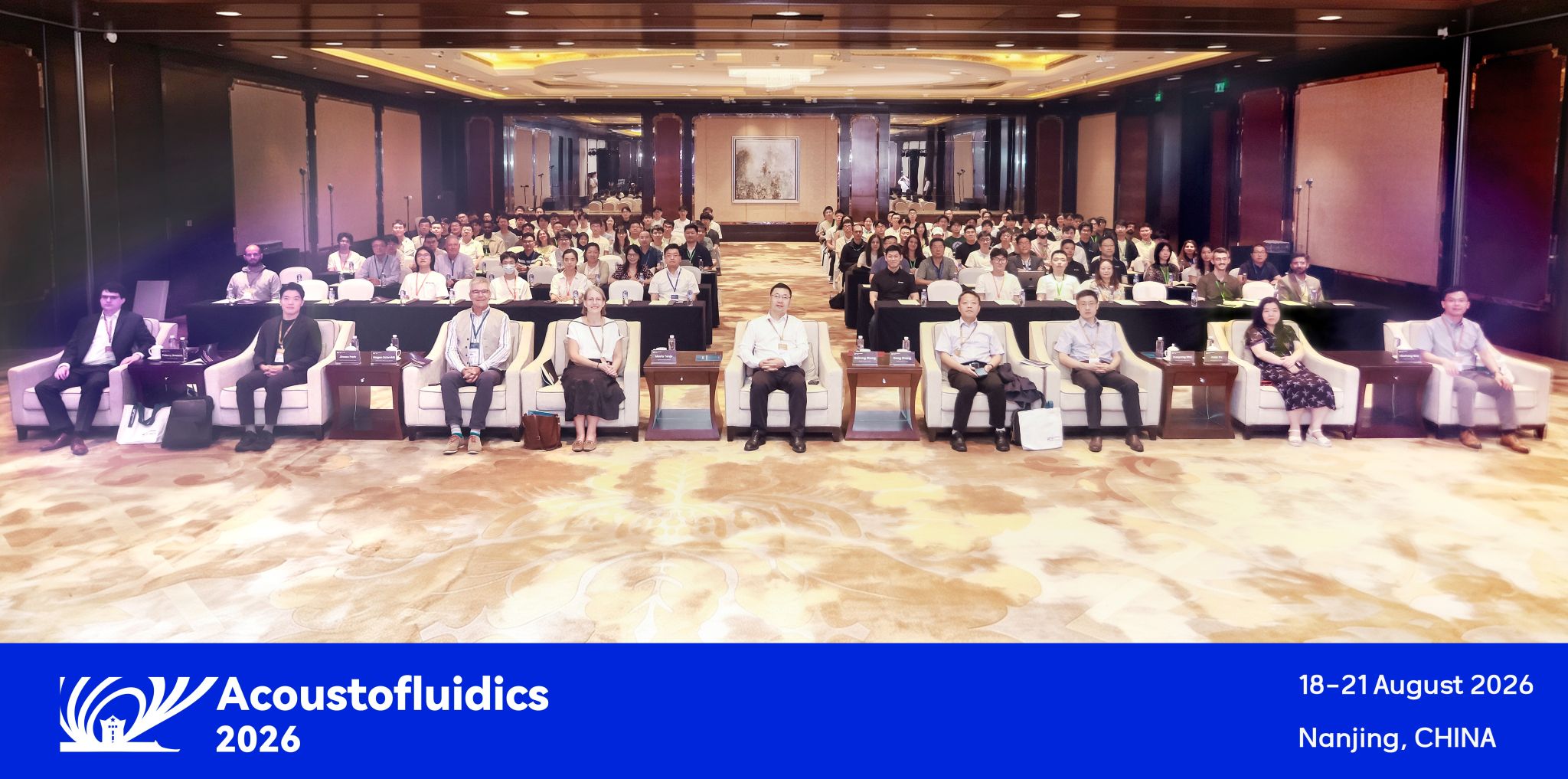
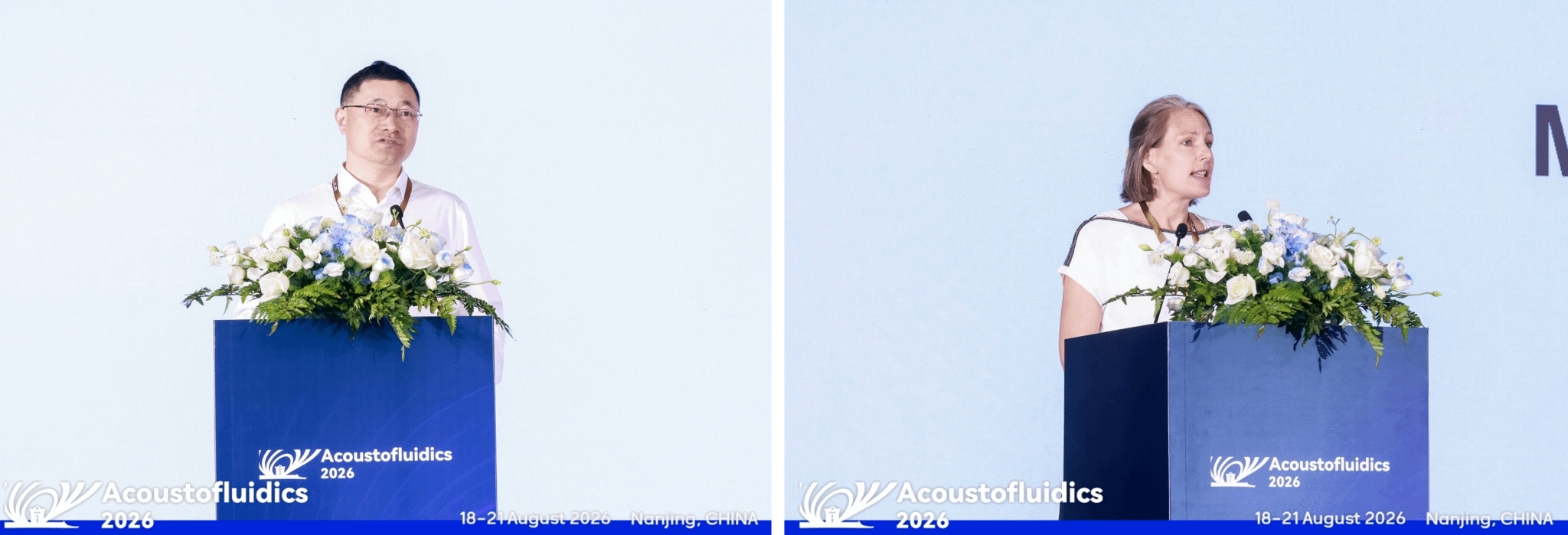
Zheng Hairong, Member of the Standing Committee of the NJU CPC Committee, Executive Vice President of Nanjing University and Academician of Chinese Academy of Sciences, attended the opening ceremony and delivered remarks. He reviewed the over seven-decade history of acoustics at Nanjing University and noted that acoustofluidics, as an emerging interdisciplinary field combining acoustics and microfluidics, holds broad application prospects in areas including precision medicine and organoid engineering.
Maria Tenje, President of the International Society for Acoustofluidics, expressed appreciation for Nanjing University's organization and congratulated the university on bringing the event to Asia for the first time. She also shared her vision for strengthening international exchange and collaboration in the field of acoustofluidics.
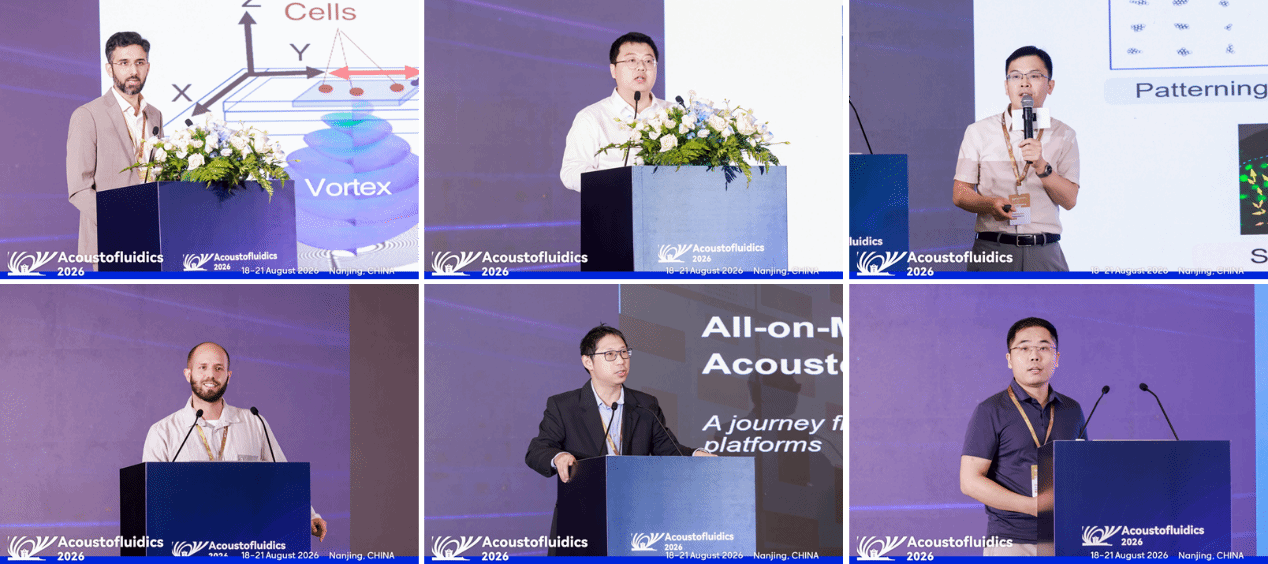
The conference featured in-depth discussions on key topics including surface acoustic wave microfluidics, fully microelectromechanical acoustofluidic devices, and acoustofluidic extraction of biological information. Six leading experts, including Professor Ghulam Destgeer of the Technical University of Munich and Professor En-yuan Joshua Lee of the University of Technology Sydney, delivered keynote and invited talks. The program featured nearly 60 oral presentations, more than 40 poster presentations, and 10 "Acoustofluidics Olympics" experimental demonstrations. Experimental scientists from China, the United Kingdom, South Korea and other countries showcased engaging experiments involving droplet manipulation and acoustofluidic human-machine interfaces. Participants agreed that, as a highly interdisciplinary field, acoustofluidics is poised to develop deeper connections with emerging areas such as artificial intelligence and neuromodulation.
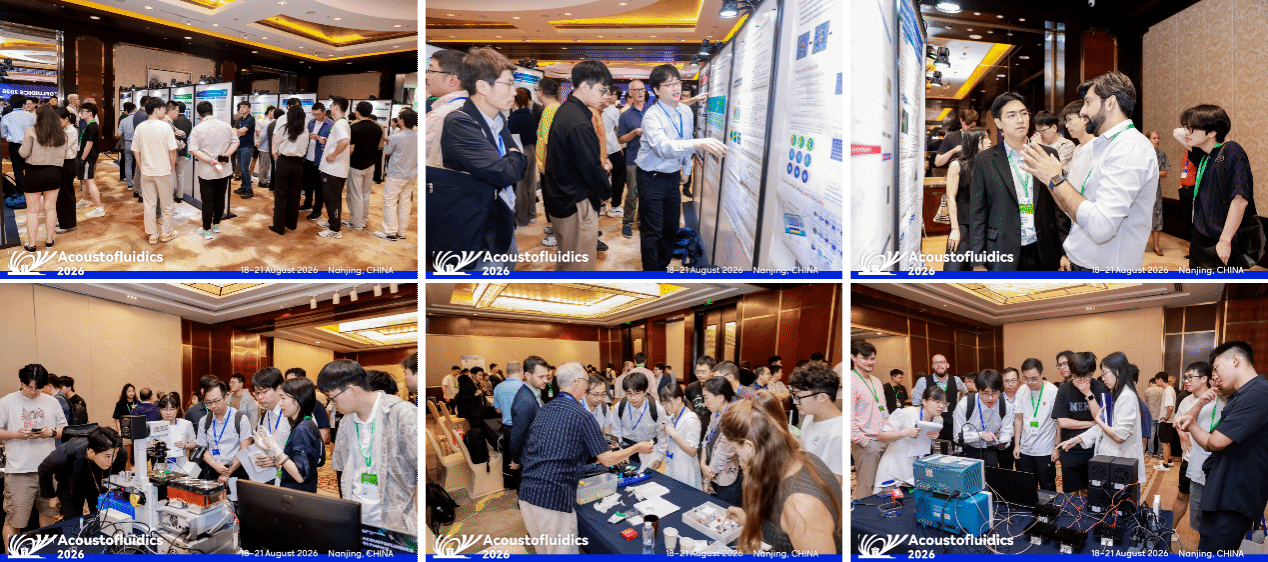
Six leading companies from China and abroad participated in the conference and presented their technologies and products. An 8-inch wafer featuring micron-scale PZT thin films exhibited by Shenglan Semiconductor of China attracted considerable attention from participants. Around 50 graduate students from universities in Nanjing attended the conference as observers, gaining first-hand exposure to the international academic exchange and discussion. More than 30 student volunteers from the School of Physics at Nanjing University provided support throughout the conference, helping ensure its smooth operation.
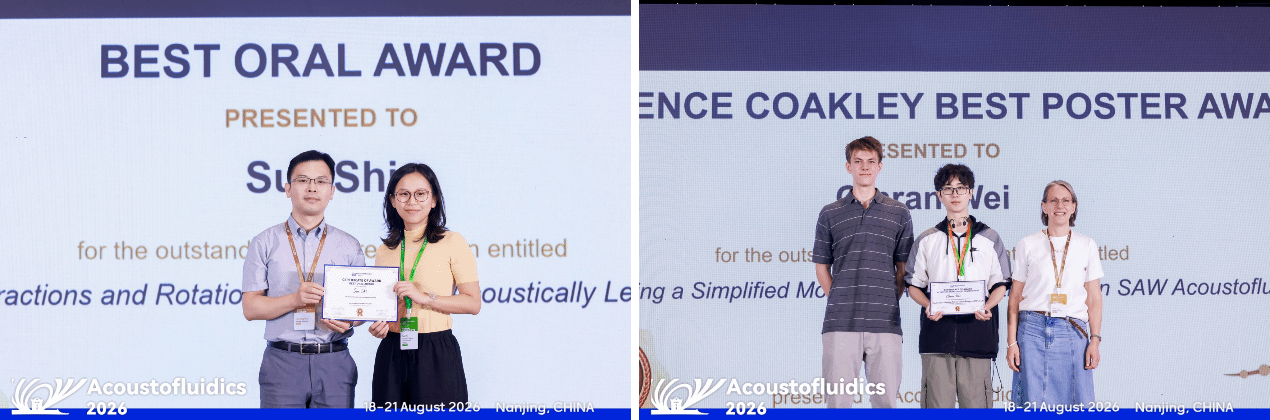
During the conference, the Council Meeting of the International Society for Acoustofluidics was held to discuss key priorities for the coming year and conduct preliminary discussions on potential host locations for future conferences. The conference also presented awards for the Best Oral Presentation (µTAS Award) and Best Poster (W. Terence Coakley Award). The winners will be invited to deliver talks at the following year's International Conference on Micro and Total Analysis Systems (µTAS) and International Acoustofluidics Conference, respectively.
The closing ceremony was by Professor Guo Xiasheng, a co-chair of the conference from NJU School of Physics, and announced that Acoustofluidics 2027 will be held next year in Bristol, UK.
The conference showcased the latest advances in acoustofluidics and provided a high-quality platform for global scholars to exchange ideas and engage in in-depth discussions on key scientific questions.


