On July 23, the Nanjing Municipal Party Committee and Municipal Government held a meeting on the progress of Shanghai (Yangtze River Delta) International Science and Technology Innovation Center Nanjing Key Pivot and the promotion of the Zijin Mountain Innovation Belt Construction. Participants thoroughly studied and implemented General Secretary Xi Jinping's important statements on science and technology innovation and his important remarks on Jiangsu's work, fully implemented the deployment requirements of the Provincial Party Committee and the Provincial Government. A high standards, and high quality are set for advancing the construction of the Zijin Mountain Innovation Belt and creating a good start for building the key pivot in Nanjing of the Shanghai (Yangtze River Delta) International Science and Technology Innovation Center. These efforts aim to make a greater contribution to realizing high-level scientific and technological self-reliance and self-strengthening. Zhou Hongbo, Secretary of Nanjing Municipal Party Committee; Xu Guanghui, Director of Jiangsu Provincial Department of Science and Technology attended the meeting and delivered remarks.
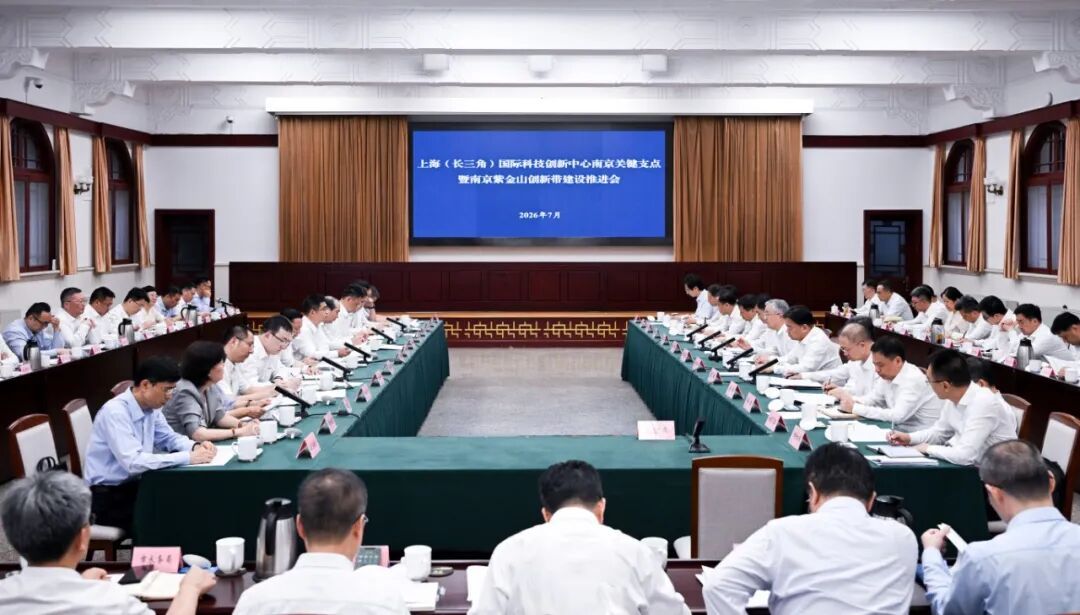
Zhou Hongbo pointed out that the establishment of the Shanghai (Yangtze River Delta) International Science and Technology Innovation Center is a major strategy planned, deployed, and promoted by General Secretary Xi Jinping. Nanjing, as a key pivot city in this Center, bears great opportunities and responsibilities. We must accurately grasp the national overall deployment for the development of the Yangtze River Delta region and the positioning requirements of the Provincial Party Committee and Government's work on Nanjing. By focusing on constructing the key pivot and prioritizing "two belts and two corridors," we must work solidly on innovation and result transformation. With a strong sense of political responsibility, Nanjing must take on its responsibilities, shape its unique advantages, and leverage its capabilities for further functional improvement.
Zhou Hongbo emphasized that the construction involves a heavy workload and broad scope and requires joint efforts from all sides. Collaborative and efficient mechanisms should be structured to drive forward construction coordination, strengthen resource integration, optimize policy integration, and encourage the convergence of talent, technology, information, and capital innovation elements into the Zijin Mountain Innovation Belt. The higher education institutions in Nanjing are the city's most valuable innovation resources and represent the most remarkable development advantage. These institutions are expected to collaborate closely with the city, align their efforts, provide broader academic support, deliver more technological achievements, and cultivate more talented individuals for the Zijin Mountain Innovation Belt.
Xu Guanghui stated that Nanjing plays a pivotal role in the province's regional science and technology innovation framework. Proper planning and construction of the Zijin Mountain Innovation Belt are crucial to determining the quality of Nanjing's key pivot status and the overall province's technological innovation picture. The Provincial Department of Science and Technology will establish a normalized connection mechanism, focusing on Nanjing's breakthroughs in fundamental innovation sources, industrial science and technology innovation, and innovation and entrepreneurship ecosystems. The department will facilitate the industrial "plateau" to evolve into "peaks" in innovation, striving to build a world-class platform for industrial and technological innovation and to serve as the strategic engine for a technologically strong province.
At the meeting, Zhou Hongbo and Xu Guanghui unveiled the "Space Astronomy and Engineering Yingtian Laboratory" (hereafter referred to as "Yingtian Laboratory").
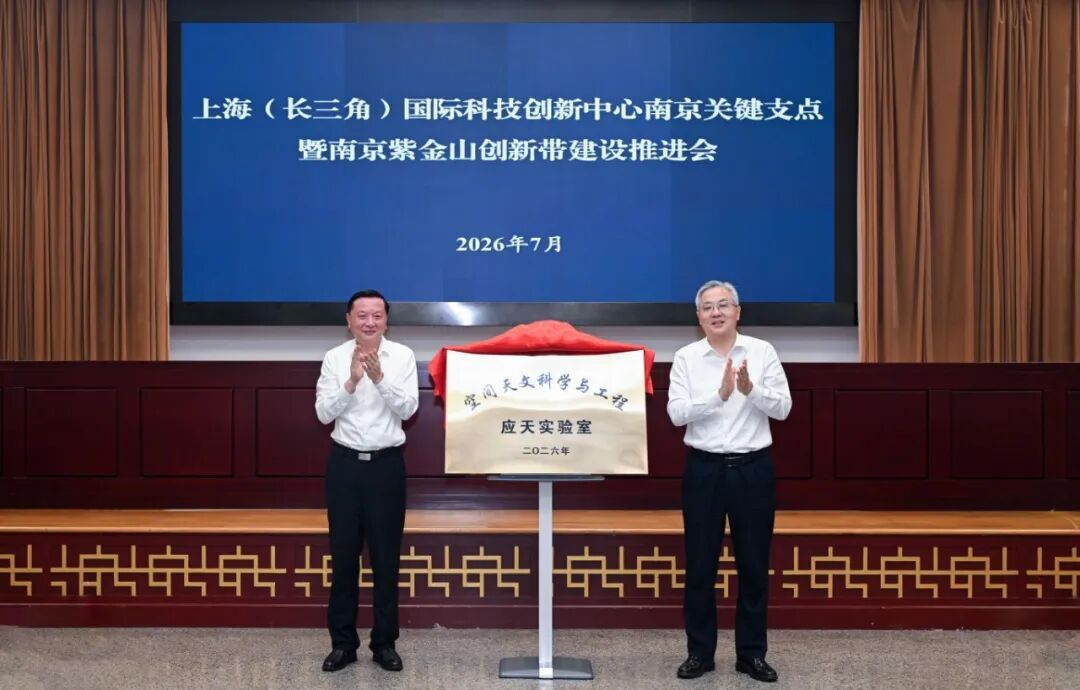
The Yingtian Laboratory is a joint effort spearheaded by Nanjing University, Nanjing University of Aeronautics and Astronautics, the Purple Mountain Observatory of the Chinese Academy of Sciences, the Nanjing Institute of Astronomical Optics & Technology, and Qixia District. The laboratory aims to establish globally influential strategic scientific and technological capabilities in the aerospace domain, creating a comprehensive chain of basic frontier research in space astronomy, breakthroughs in core key technologies, and transformation of scientific and technological achievements into industries. Its focus is on cultivating a novel space-oriented productive force.
Nanjing municipal leaders Lu Weidong, Lin Tao, Li Hui, and Gao Yan; Suo Wenbin, Member of the Standing Committee of CPC NJU Committee; representatives from higher education institutions and scientific research platforms in Nanjing, and key leaders from municipal government departments and zones attended the meeting. At the conference, Li Xiangdong, Head of the Yingtian Laboratory's preparatory group and Dean of NJU School of Astronomy and Space Science, introduced the laboratory's establishment and its key tasks.


