From November 16 to 17, 2026, Professor Zheng Hairong, Executive Vice President of Nanjing University and Academician of the Chinese Academy of Sciences, was invited to Shenzhen to attend the APEC University Leaders' Forum and the 2026 China-Russia University Presidents' Roundtable. He engaged in in-depth exchanges with representatives from universities at home and abroad on topics such as openness, innovation, and inclusiveness in higher education in the Asia-Pacific region, as well as innovative models for China-Russian collaboration in science and education.
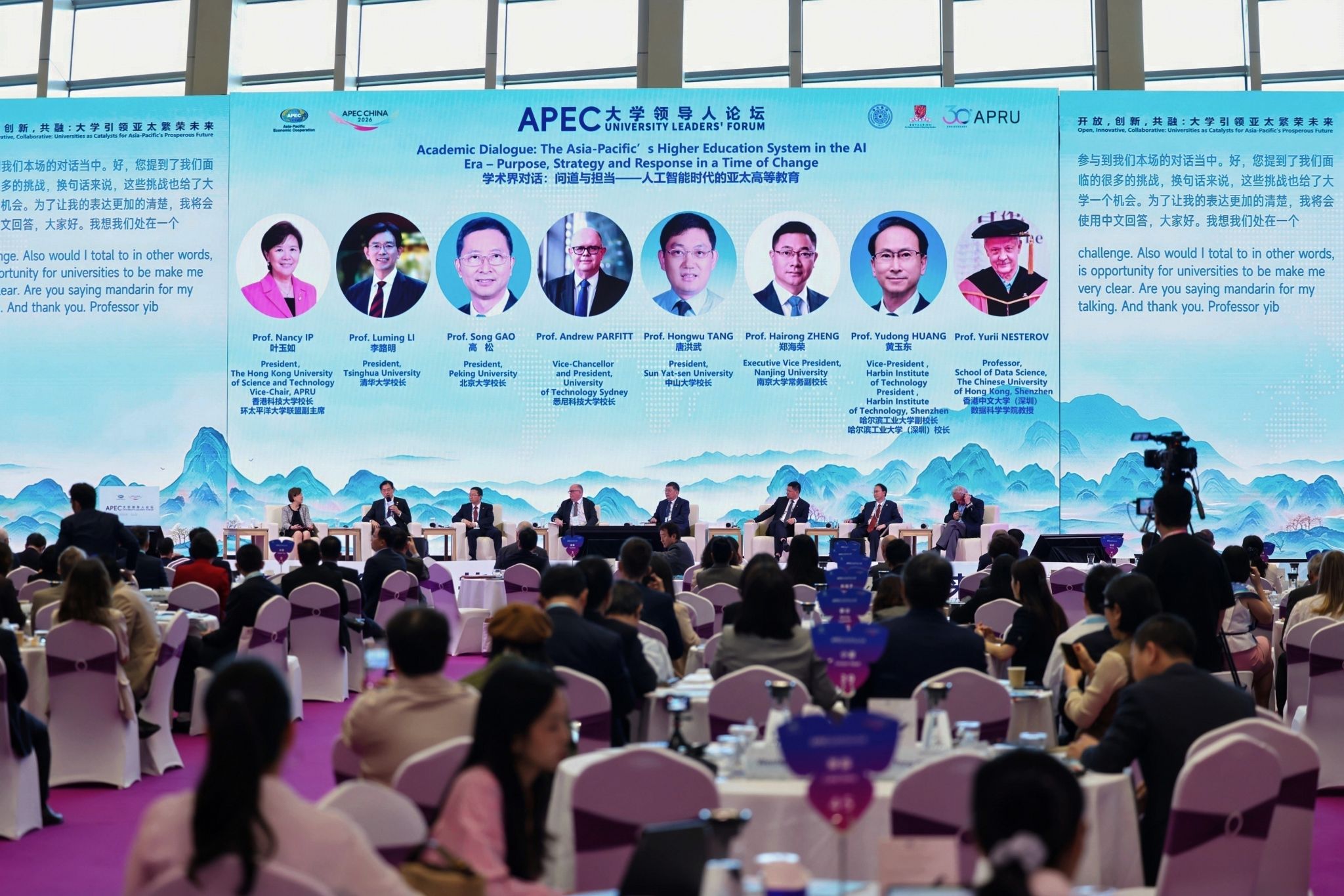
On November 16, the APEC University Leaders' Forum was held in Shenzhen. Jointly hosted by Tsinghua University and Chinese University of Hong Kong, Shenzhen, with support from the Association of Pacific Rim Universities, the forum focused on the theme "Openness, Innovation, and Inclusiveness: Universities Leading the Future Prosperity of the Asia-Pacific." Over 300 representatives from 61 higher education institutions and organizations from 24 countries and regions attended the forum. Liu Yong, Deputy Director of the Department of International Cooperation and Exchanges of the Ministry of Education of the People's Republic of China, and Eduardo Pedrosa, Executive Director of the APEC Secretariat, participated in the opening ceremony and delivered speeches.
The academic dialogue, themed "The Asia-Pacific's Higher Education System in AI Era," was moderated by Nancy Ip, President of the Hong Kong University of Science and Technology and Vice-Chair of the Association of Pacific Rim Universities. Guest speakers on the panel included Li Luming, President of Tsinghua University; Gao Song, President of Peking University; Andrew Parfitt, Vice-Chancellor and President of the University of Technology Sydney; Tang Hongwu, President of Sun Yat-sen University; Huang Yudong, Vice President of Harbin Institute of Technology and President of Harbin Institute of Technology, Shenzhen; and Yurii Nesterov, Professor of the School of Data Science at The Chinese University of Hong Kong, Shenzhen.
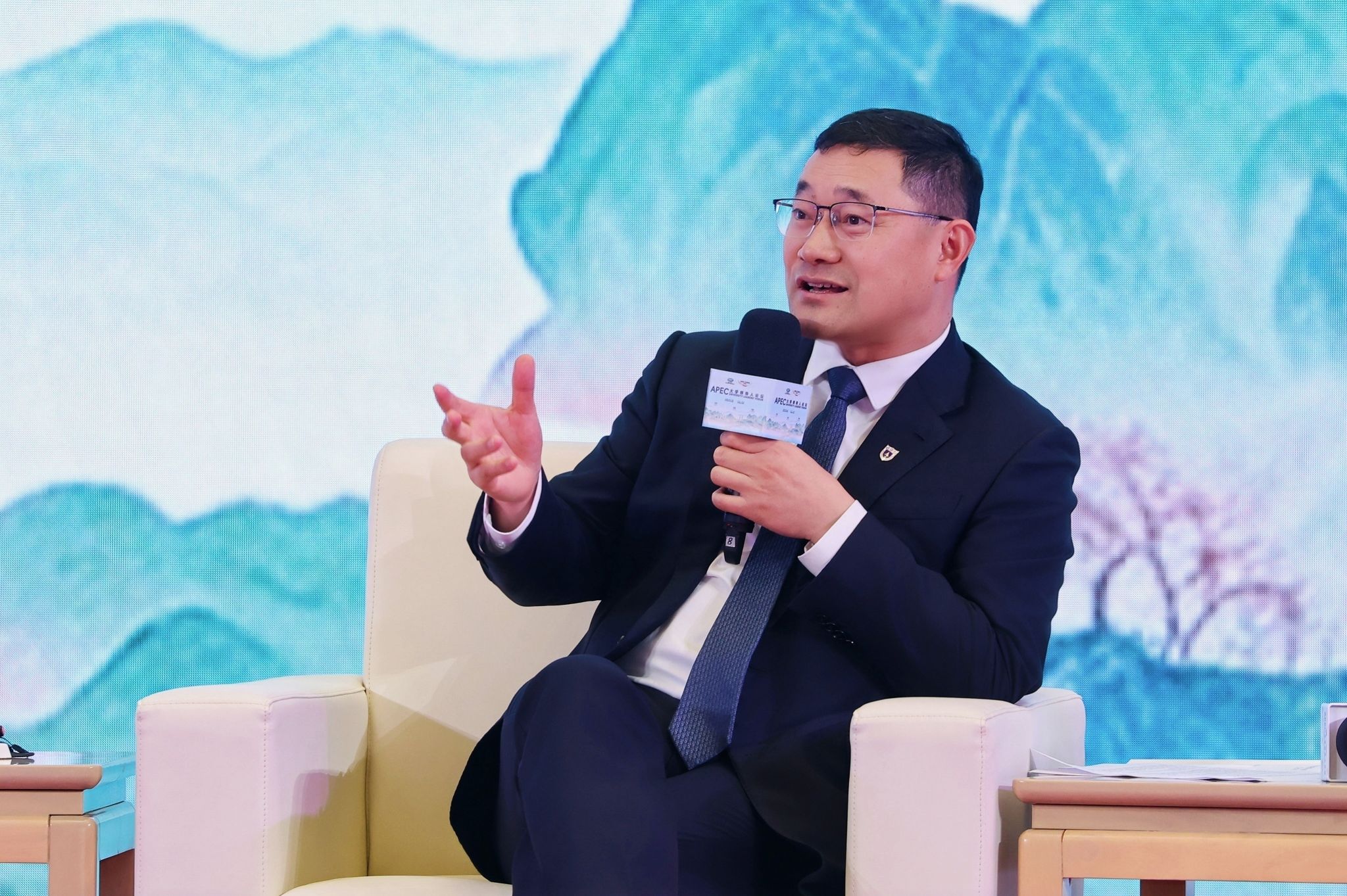
In the discussion, Zheng Hairong shared NJU's exploration and practices in incorporating AI into education and teaching, emphasizing that the integration of AI into classrooms is an irreversible trend. He highlighted the need to address how to use it effectively. He stated that universities' management systems must adapt to the transformations brought by AI, allowing room for students to explore and supporting their personalized development. He further pointed out that the core mission of universities is not simply introducing AI tools into the teaching process but re-evaluating the relationship between knowledge dissemination and skill development. Regarding the impact of geopolitical changes on international academic cooperation, Zheng Hairong shared NJU's approach, referencing its 40 years of collaboration with Johns Hopkins University in co-founding the Johns Hopkins-Nanjing University Center for Chinese and American Studies. He emphasized that the unique teaching model at the Center enables direct engagement and trust-building between Chinese and international students, something that AI cannot replace. With over 4,000 alumni, the Center's alumni network continues to expand opportunities for international collaboration and sustain dialogue. Zheng Hairong's insights resonated deeply with the audience.
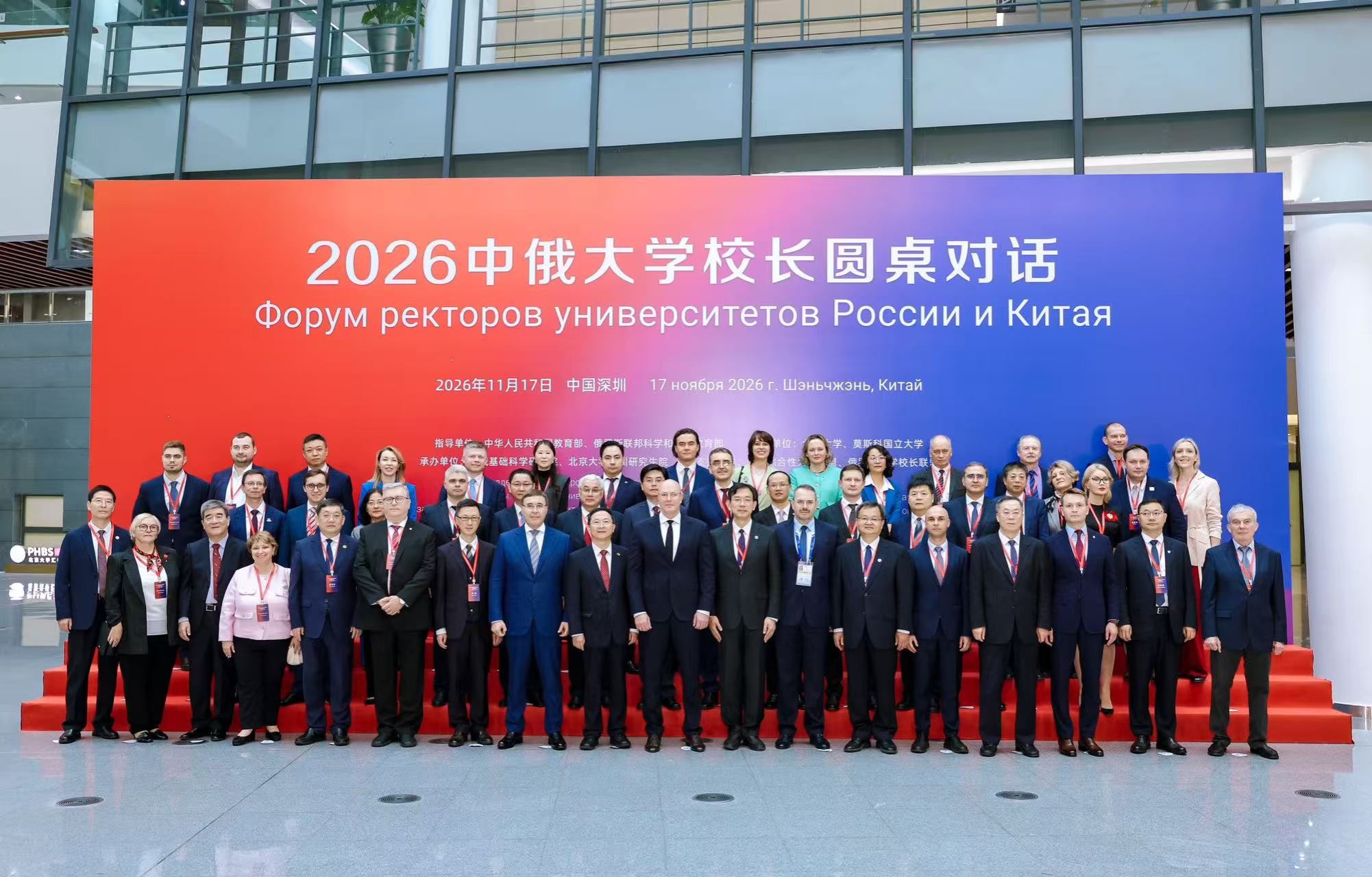
On November 17, the 2026 China-Russia University Presidents' Roundtable was held at the Shenzhen Graduate School of Peking University. Co-hosted by Peking University and Lomonosov Moscow State University, the event welcomed Dmitry Chernyshenko, Deputy Prime Minister of the Russian Federation; Valery Falkov, Minister of Science and Higher Education of the Russian Federation; Konstantin Mogilevsky, Deputy Minister of Science and Higher Education of the Russian Federation; Jia Peng, Deputy Director of the Department of International Cooperation and Exchanges of the Chinese Ministry of Education; as well as university leaders from 11 Chinese universities and 17 Russian universities. Zheng Hairong participated in the roundtable and delivered remarks during the session focused on "Deepening Collaborative Research to Achieve Scientific Breakthroughs." Participants engaged in in-depth discussions on the mechanisms and pathways for collaborative research between Chinese and Russian universities.
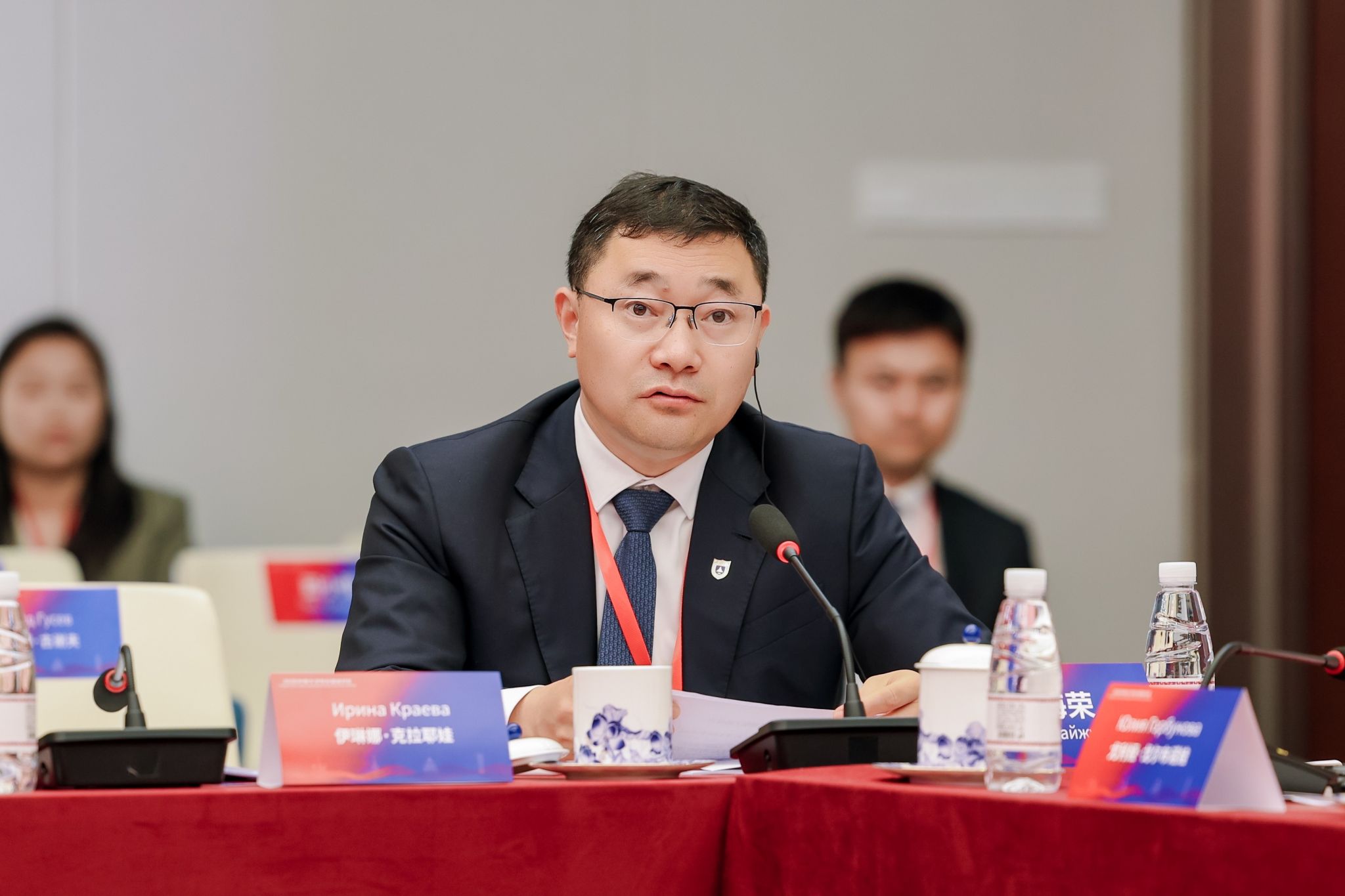
During his speech, Zheng Hairong noted the significance of discussing collaborative research in the context of the "China-Russia Education Year." Reflecting on NJU's longstanding collaborations with more than ten top universities and research institutions in Russia, including Lomonosov Moscow State University, St Petersburg University, and the Russian Academy of Sciences, he highlighted that NJU has led 12 science and technology cooperation projects with Russia over the past decade. Russia has become the third-largest international student source for NJU. Looking ahead to the "15th Five-Year Plan," Zheng proposed three directions for cooperation: addressing frontier scientific questions, jointly building platforms for shared resources, and cultivating outstanding talent. He stressed that the realm of basic sciences knows no borders and expressed NJU's eagerness to collaborate with Chinese and Russian universities to achieve scientific breakthroughs through joint efforts.
Representatives from the International Affairs Office the School of Foreign Studies at NJU also attended the events.


