From September 3 to 4, Tan Zhemin, President of Nanjing University and Academician of the Chinese Academy of Sciences, visited the Pukou and Gulou campuses to inspect the progress of key construction projects and laboratory development, check the support facilities for teaching and student life, and greet new students, ensuring that all work for the new semester proceeds in an orderly, stable, and high-quality manner.
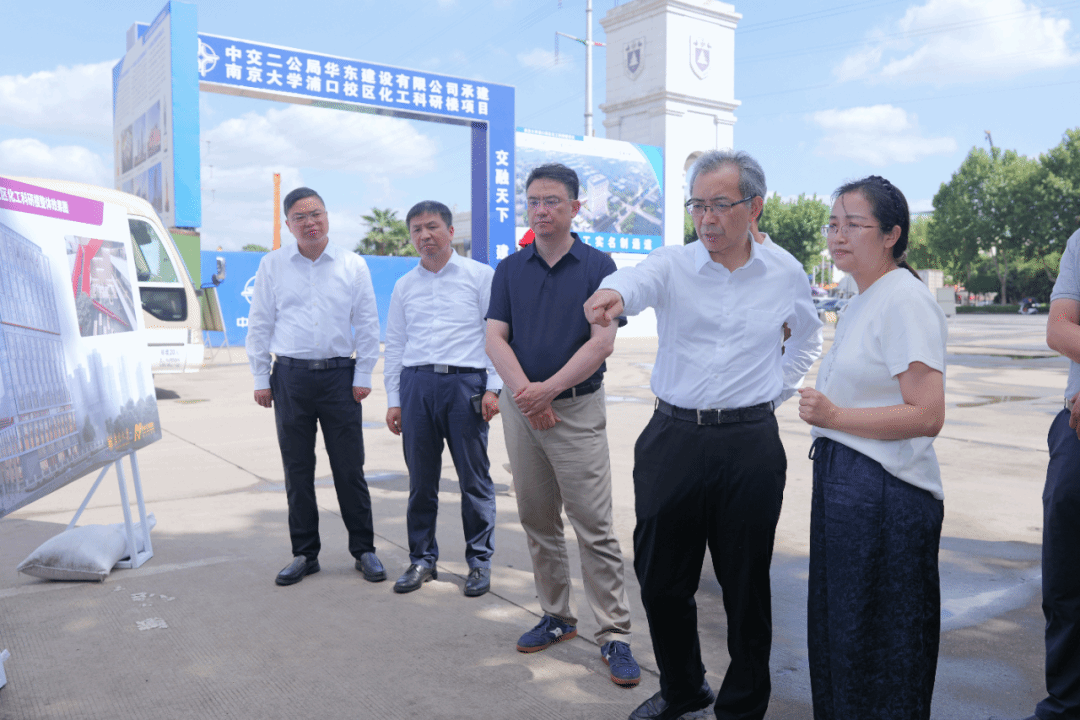
At the Pukou campus, Tan Zhemin first went to the construction sites, where he carefully listened to reports on the progress of the Chemical Research Building, Pharmaceutical Research Building, Shared Research Facilities Center, and the first-phase renovation and renewal projects of the campus. He inquired in detail about the construction schedule and expected outcomes of each building. He pointed out that in the campus renovation, it is necessary to adhere to the overall coordination of the "four-campus integration", fully mobilize and rationally allocate various resources, continuously optimize the layout of schools and disciplines, and truly make the campus take on a new look, ensuring the peace of mind and comfort of faculty and students.
At the No. 15 Student Canteen, Tan Zhemin asked about daily operations, the number of diners during meal times, the variety of food offerings, and food safety and hygiene. He emphasized the importance of fully listening to students' opinions and suggestions, continuously improving the variety and quality of food services on campus, encouraging logistics staff to continue scientifically coordinating resources among campuses, piloting diversified service models, and striving to provide better dining support for all faculty and students.
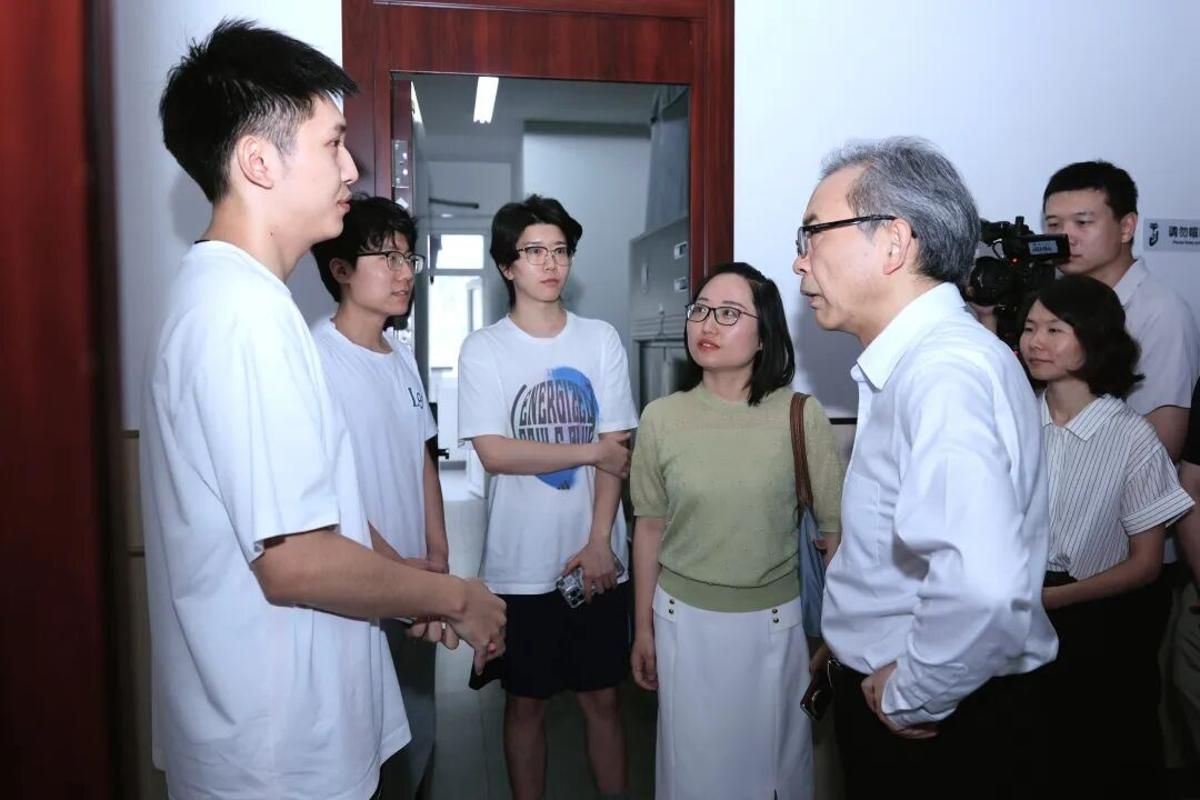
At Dormitory Building 19, Tan Zhemin toured the renovation of the residential areas and the upgraded facilities in public service zones such as laundry rooms and study rooms. He had cordial conversations with students, carefully soliciting their opinions and ideas about the campus renovation, and immediately implemented on-site their proposal for an online reservation system for campus shuttle bus commutes. Tan Zhemin encouraged these vibrant young people to seize the most precious years of their lives, study diligently, cultivate themselves, and in the future, give back to their alma mater and serve the country with outstanding achievements. Subsequently, Tan Zhemin inspected the operation of the campus hospital and emphasized the need to refine work arrangements and continue providing integrated, high-standard medical services to faculty and students.
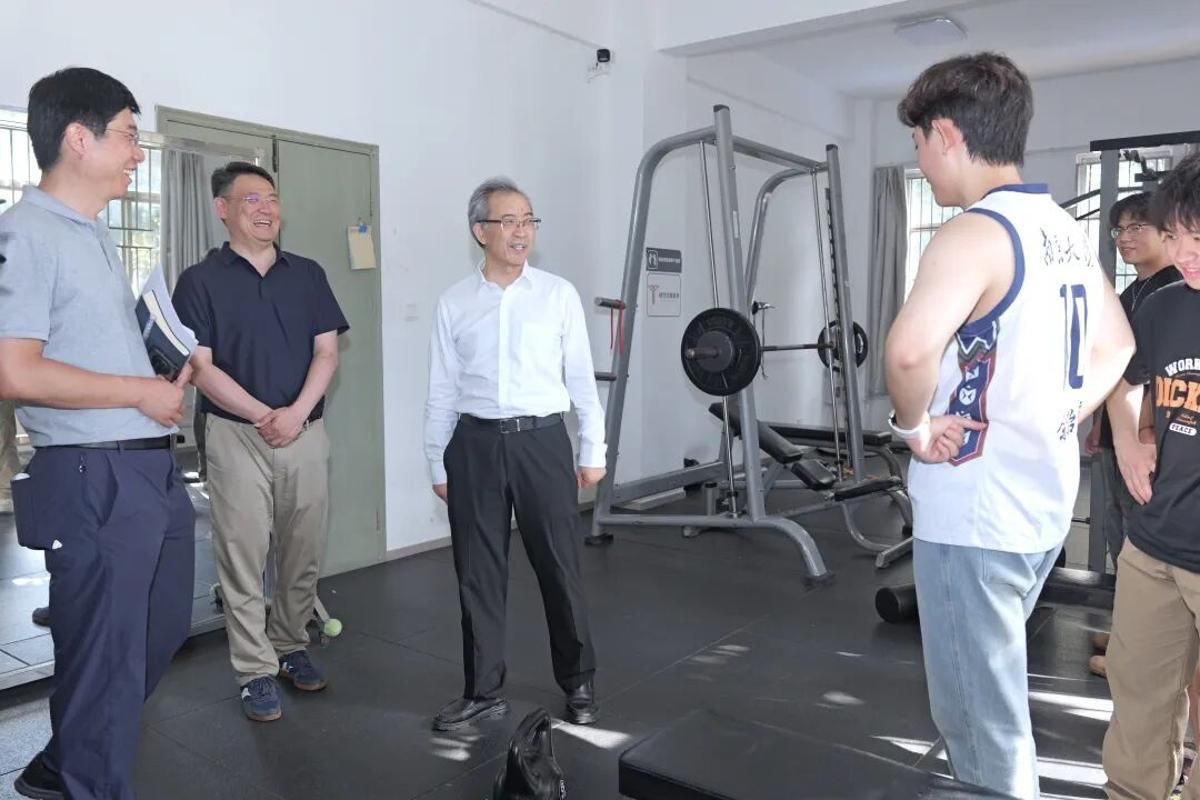
Entering the Zuo Dijiang Sports Hall, Tan Zhemin chatted cheerfully with students playing table tennis, soliciting their experiences and suggestions regarding the facility. When he noticed the gym was particularly bustling with many students sweating through their workouts, he applaud their enthusiasm for sports and gladly shared the hall's glorious past: "Many competitions were held here back in the day, and some champions actually won their titles in this very gym."
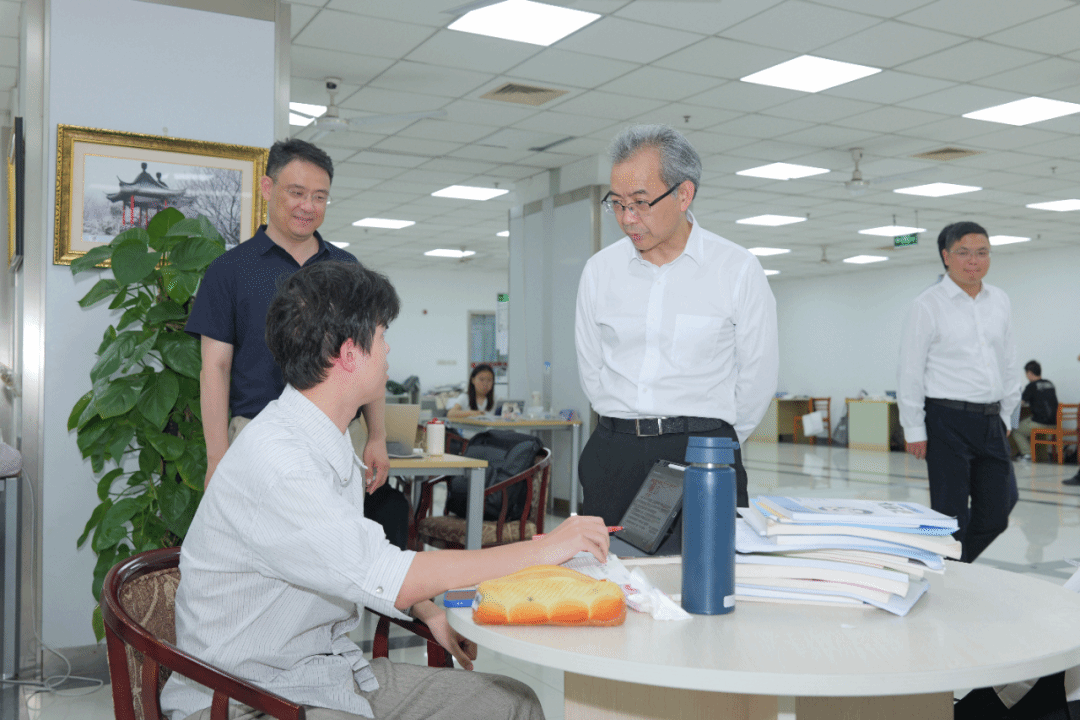
At the Siyuan Library, Tan Zhemin inspected the overall renovation and usage of the transitional classrooms. Upon learning that the seemingly high-end desks, chairs, air conditioning units, podiums, and lighting fixtures were all cleverly repurposed resources—"using old materials for new purposes"—he nodded repeatedly in approval and emphasized, "Everything is for the students." In particular, classroom upgrades must follow scientific, standardized, and reasonable principles in every detail, revitalizing resources while striving for excellence and efficiency to fully meet the comprehensive teaching and research needs of faculty and students.
Accompanying the inspection tour were Suo Wenbin, Member of the Standing Committee of the CPC NJU Committee and Vice President of NJU, along with heads of the General Office, the Pukou Campus Management Committee, the Department of Student Affairs, the Capital Construction Office, the Logistics Service Group, the Shared Research Facilities Center, and other relevant departments.
At the Gulou campus, Tan Zhemin visited the laboratories of the "Institute of Engineering Medicine" to inspect their development, coordinate solutions to practical difficulties encountered during construction on site.
During the inspection, Tan Zhemin examined the layout of laboratory research spaces, learned about equipment configuration, project progress, and team building, and exchanged views with Gu Ning, Academician of the CAS and Professor at the Medical School, who serves as the laboratory director, on research directions, target outcomes, and practical challenges. He requested that all functional departments proactively engage and provide front-line support, fully assisting the construction unit in resolving bottlenecks and difficulties in the laboratory's development, and ensuring that all support measures are implemented effectively. Tan Zhemin noted that the laboratory has achieved considerable interim results in undertaking major national research tasks and fostering interdisciplinary engineering-medicine integration. He encouraged the team to continue its efforts and strive to produce more original and leading outcomes, with the university fully committed to supporting its development into a high-level research institute with international influence. Team members expressed their determination to seize development opportunities, align with the university's planning and expectations, and fully advance the high-quality construction of the laboratory.
During the inspection, Tan Zhemin warmly greeted the undergraduate Class of 2026, who were participating in military skills training on the Gulou campus. He pointed out that military training is an important transitional lesson before university academic life, crucial for building willpower and cultivating good discipline. He reminded them to arrange their physical activities reasonably during training and to fully leverage the positive role of military training in strengthening their bodies. The students expressed their resolve to use the training opportunity to sharpen their skills and lay a solid foundation for their upcoming university studies.
Accompanying the inspection were heads of the General Office, the Department of Student Affairs, the Institute of Science and Technology Research, the Capital Construction Office, and other relevant departments.


