On July 15, 2026, Zheng Hairong, Member of the Standing Committee of the CPC Nanjing University Committee, Executive Vice President of NJU, and Academician of the Chinese Academy of Sciences, visited the Institute of Education and Tao Xingzhi Institute for Teacher Education for a research.
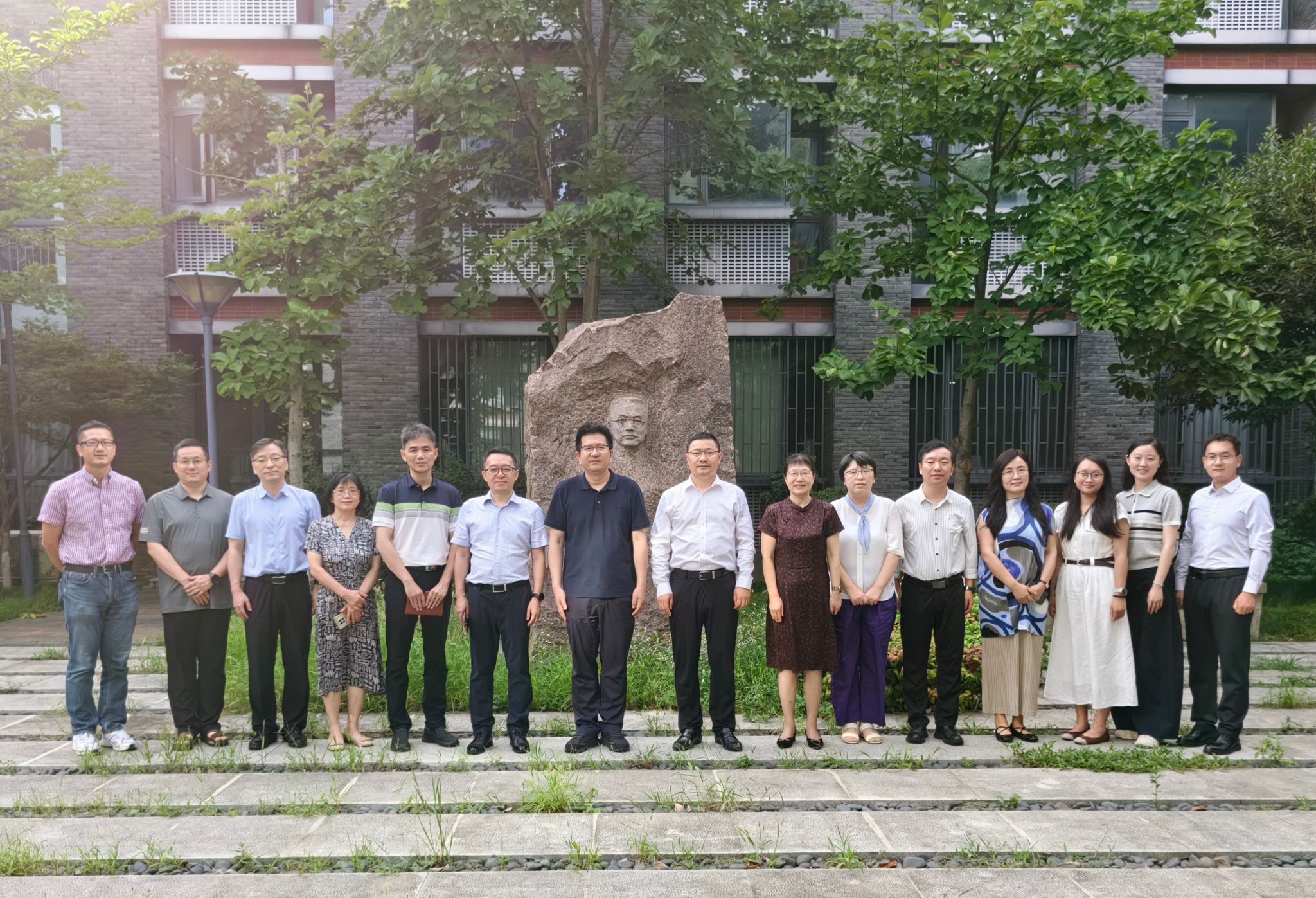
Zheng Hairong attentively listened to the work report of the Institute of Education and Tao Xingzhi Institute for Teacher Education, and engaged with teacher representatives. He fully acknowledged the achievements the institutes have made in recent years in disciplinary development, academic research, talent training, and social service. In his concluding remarks, he emphasized that NJU has always placed great importance on the high-level construction of arts and humanities disciplines, viewing pedagogy as a crucial component of the university's humanities and social sciences framework. The university will systematically review and carefully study the suggestions and opinions proposed by the institutes, focusing on key challenges such as disciplinary development bottlenecks, faculty team building, research platform development, integration of high-quality resources, and guidance from think tanks on education. This will enable accurate and effective implementation of measures, injecting strong momentum and providing solid support for the high-quality development of the Institute of Education and Tao Xingzhi Institute for Teacher Education.
Zheng Hairong stressed that education is a key national undertaking that should be rooted in the Chinese context. The Institute of Education should build upon NJUy's traditional strengths in humanities and social sciences, inherit and carry forward the invaluable thoughts of early educators like Tao Xingzhi and Kuang Yaming, and further enhance the leading role of pedagogy in the fundamental mission of fostering virtues and nurturing people. It should also play a pivotal role in meeting national strategic demands and contributing to regional economic and social development. The institutes should proactively adapt to the trends of the new wave of technological revolution and industrial transformation, particularly the impact of artificial intelligence on the development of academic disciplines and educational practices. They should accurately grasp academic frontiers and emerging interdisciplinary fields, refine the unique characteristics and development priorities of their disciplines, promote the adjustment of disciplines and curricula, and strive for breakthroughs in innovative educational thinking, the transformation of education paradigms, and exploration of the laws of education in the age of artificial intelligence.
During the meeting, Huang Bin, Secretary of the Party Committee of the Institute of Education, Dean of the Institute, and Executive Dean of the Tao Xingzhi Institute for Teacher Education, presented a thematic report on the construction and development of the institutes. The report covered the achievements and key highlights in disciplinary development, talent training, faculty building, and scientific research, while also addressing the bottlenecks the institutes are currently facing and offering suggestions. Plans for future initiatives in scientific research, talent cultivation, and platform development were also outlined.
Representatives from the teaching staff shared their insights and experiences based on their own teaching and research practices. They enthusiastically provided advice and suggestions, offering targeted opinions and development proposals in areas such as discipline development, team building, and resource expansion.


