On the occasion of the 40th anniversary of the establishment of the Johns Hopkins University-Nanjing University Center for Chinese and American Studies (hereinafter referred to as the "Center") co-founded by Nanjing University and Johns Hopkins University, Ronald J. Daniels, President of Johns Hopkins University, led a delegation to visit Nanjing University. Tan Zhemin, President of Nanjing University and Academician of the Chinese Academy of Sciences, met with Daniels and his delegation to discuss cooperation prospects and jointly promote higher education exchanges and collaboration between China and the United States.
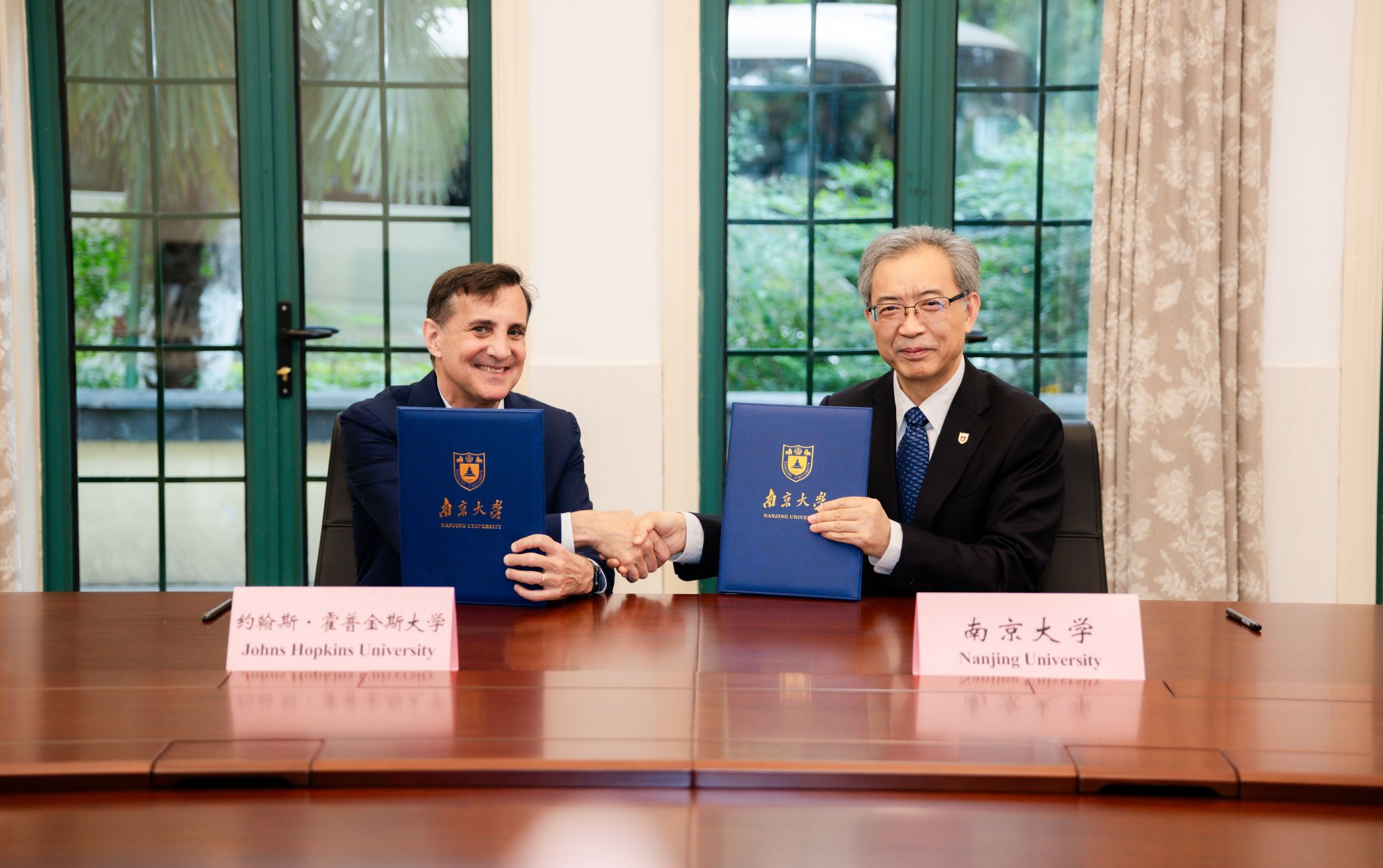
On the morning of June 20, the two universities signed an agreement for cooperation on an English academic program. Building upon 40 years of successful collaboration, this agreement aims to further strengthen faculty and teaching resources, optimize talent cultivation, and enhance the influence of cooperation between the two universities.
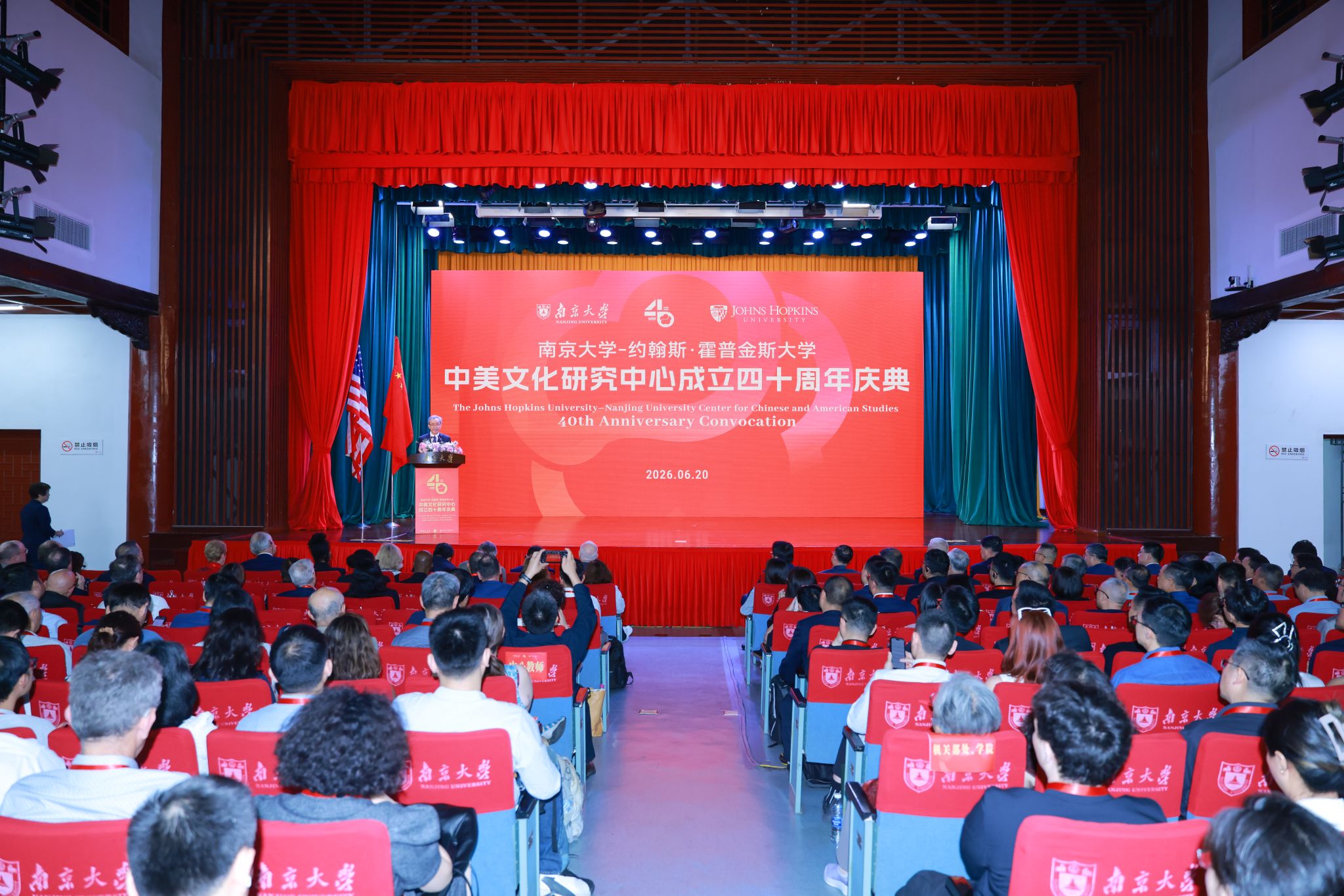
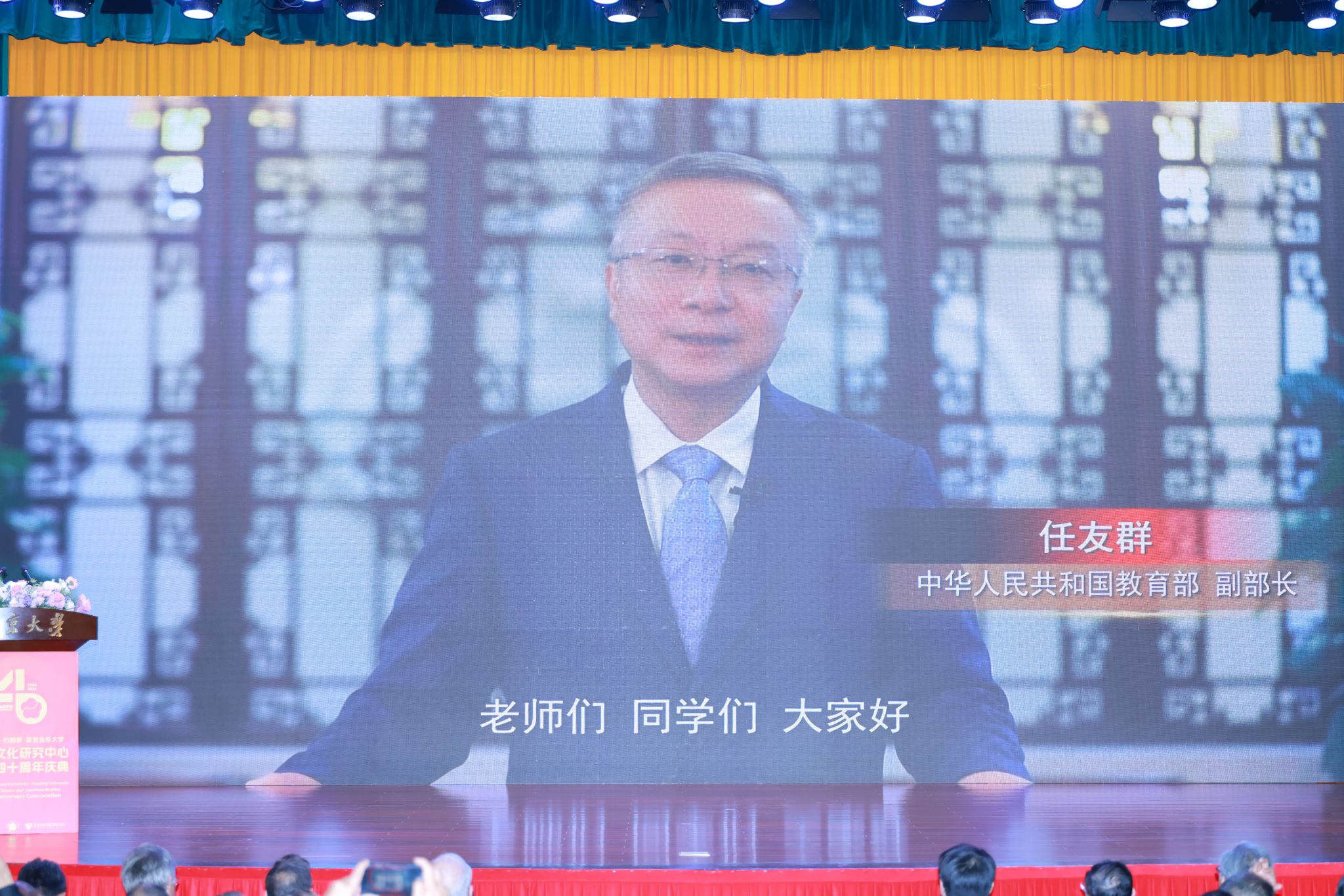
That afternoon, the 40th anniversary celebration conference of the Center was held. Shen Xin, Vice President of the Chinese People's Association for Friendship with Foreign Countries; Tan Zhemin; Ronald J. Daniels; James Steinberg, Dean of the School of Advanced International Studies of Johns Hopkins University; John Lipsky, Chairman of the Hopkins SAIS-China Center Council and former First Deputy Managing Director of the International Monetary Fund (IMF); Jill McGovern, Board Member of the Hopkins China Center and wife of former Hopkins President Steven Muller, as well as former Party Secretaries of NJU Hong Yinxing and Hu Jinbo, and Kuang Rongrong, son of Kuang Yaming, attended the conference. Ren Youqun, Member of the Ministry of Education's Party Leadership Group and Vice Minister, extended his congratulations via video.
Ren Youqun remarked that the Center was established at a significant historical juncture during China's reform and opening-up and the thawing of Sino-American relations. As a pioneering collaborative platform co-founded by leading universities of the two countries, it innovatively cultivates high-level international talent and has become a milestone in the practice of China-foreign cooperative education. The Ministry of Education has always attached great importance to Sino-American educational exchanges and collaboration, firmly supporting mutually beneficial cooperation between universities of both countries. Ren expressed hope that Nanjing University and Johns Hopkins University would continue to leverage their unique advantages as trailblazers in Sino-American educational cooperation. Using the 40th anniversary as a new starting point, the two universities are encouraged to foster deeper academic dialogue, strengthen talent cultivation at its foundation, and lead through innovative collaboration. Ren urged them to set a new benchmark for modern university cooperation between China and the U.S., continuously advance Sino-American cultural exchanges steadily and sustainably, and contribute to the foundation of Sino-American friendship and global socioeconomic development.
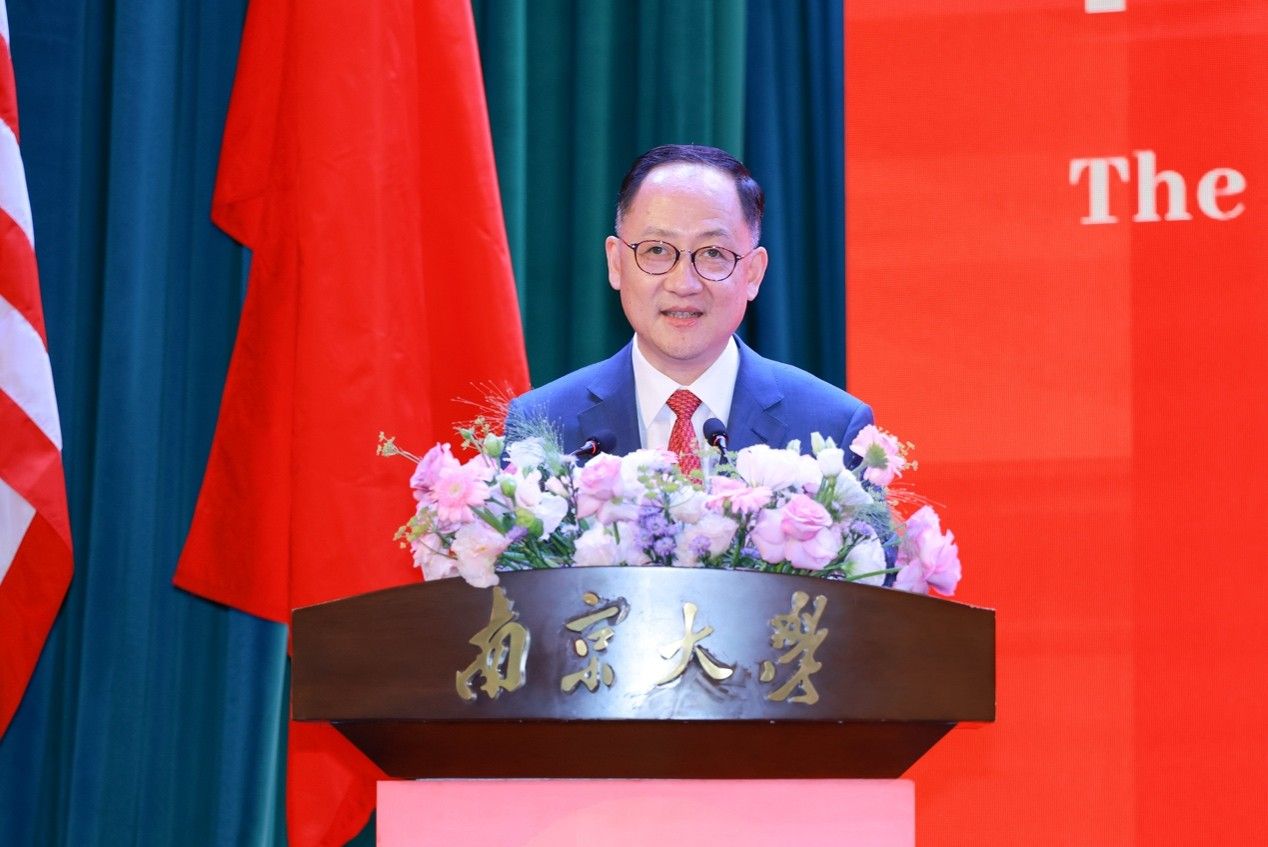
Shen Xin noted that the recent successful meeting between the presidents of China and the United States in Beijing outlined a new direction for Sino-American relations and injected positive energy into the countries' cultural exchanges. He emphasized that cultural exchange serves as the "ballast" of stable Sino-American relations, a "fast track" for mutual understanding, and a "seedbed" for cultivating the younger generation. He hoped that the Center would take its 40th anniversary as a new starting point to continue being a benchmark for Sino-American higher education cooperation, a platform for cultural exchanges, and a cradle for the growth of youth, contributing to the healthy and stable development of Sino-American relations, the dialogue among world civilizations, and the building of a community with a shared future for humankind.
Tan Zhemin warmly welcomed the attending guests on behalf of Nanjing University and extended sincere gratitude to the faculty and staff of the Center, alumni, and all individuals who have supported the growth of the Center and Sino-American cultural exchanges. He recounted the founding journey of the Center as the first higher-education collaborative program after China's reform and opening-up, paying high tribute and expressing deep remembrance to the Center's founders, former President Kuang Yaming and President Steven Muller. Over 40 years, the Center has remained dedicated to its mission of fostering mutual learning among civilizations, advancing cross-cultural understanding and cooperation, and producing nearly 4,000 outstanding graduates for the world stage. It has become not only a milestone in enhancing the friendship between the two governments but also a pioneer of the "Nanjing-Hopkins Model" for deep Sino-American university collaboration. Looking to the future, Tan raised expectations for the Center and stated that Nanjing University would continue to work hand-in-hand with Johns Hopkins University, alumni across the globe, and individuals of vision to build a new paradigm for cross-cultural talent cultivation and contribute wisdom and strength to the steady development of Sino-American relations and the betterment of humanity.
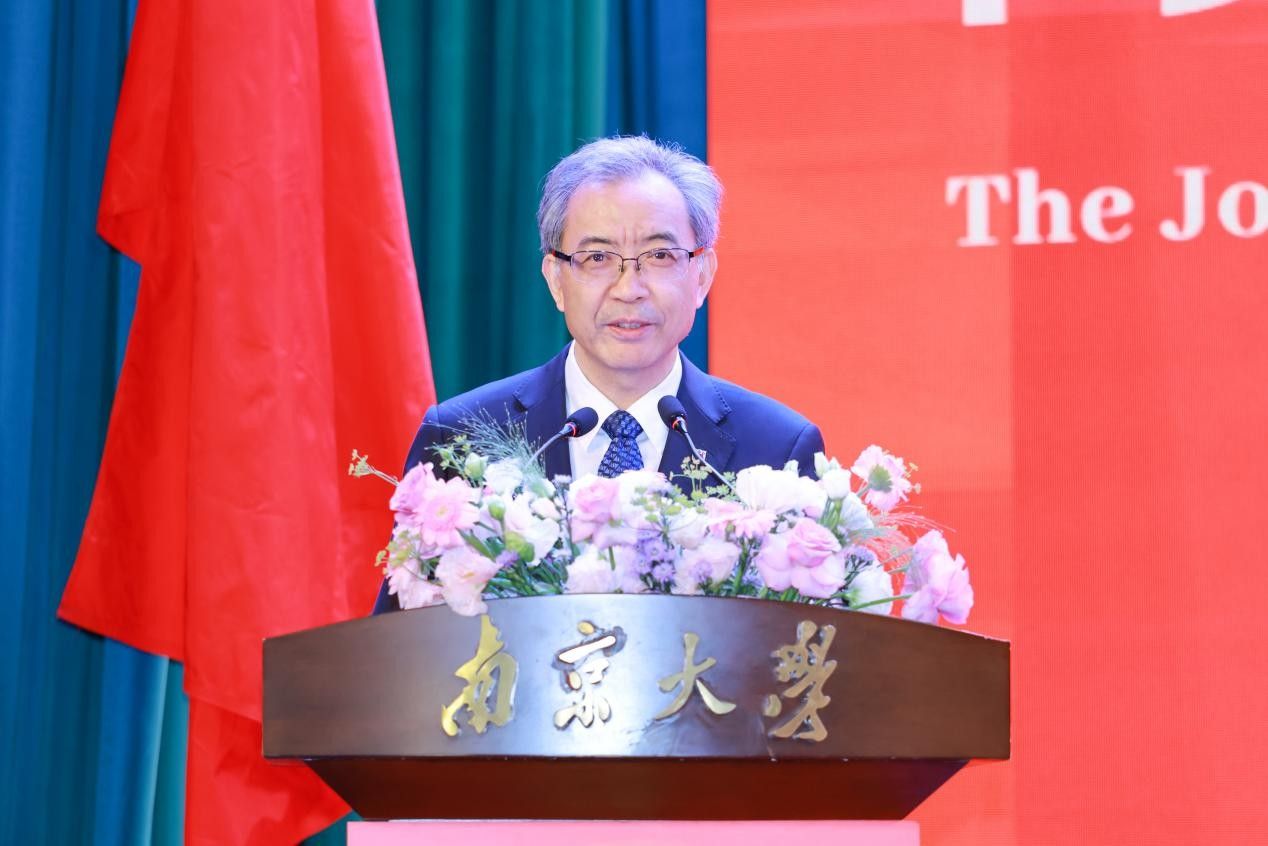
In his speech, Ronald J. Daniels reflected on the founding of the Center, highlighting how, for four decades, the Center has maintained its rigorous academic tradition, fostering cross-language and cross-cultural exchanges and learning. It has become a spiritual home where students from around the world exchange ideas and grow together. Daniels acknowledged the current challenges to Sino-American relations, including factors such as climate change, technological transformation, and geopolitical adjustments. However, he reaffirmed Johns Hopkins University's commitment to its shared mission with Nanjing University, expressing hope for continued collaboration over the next five years and beyond to seize opportunities and confront challenges together.
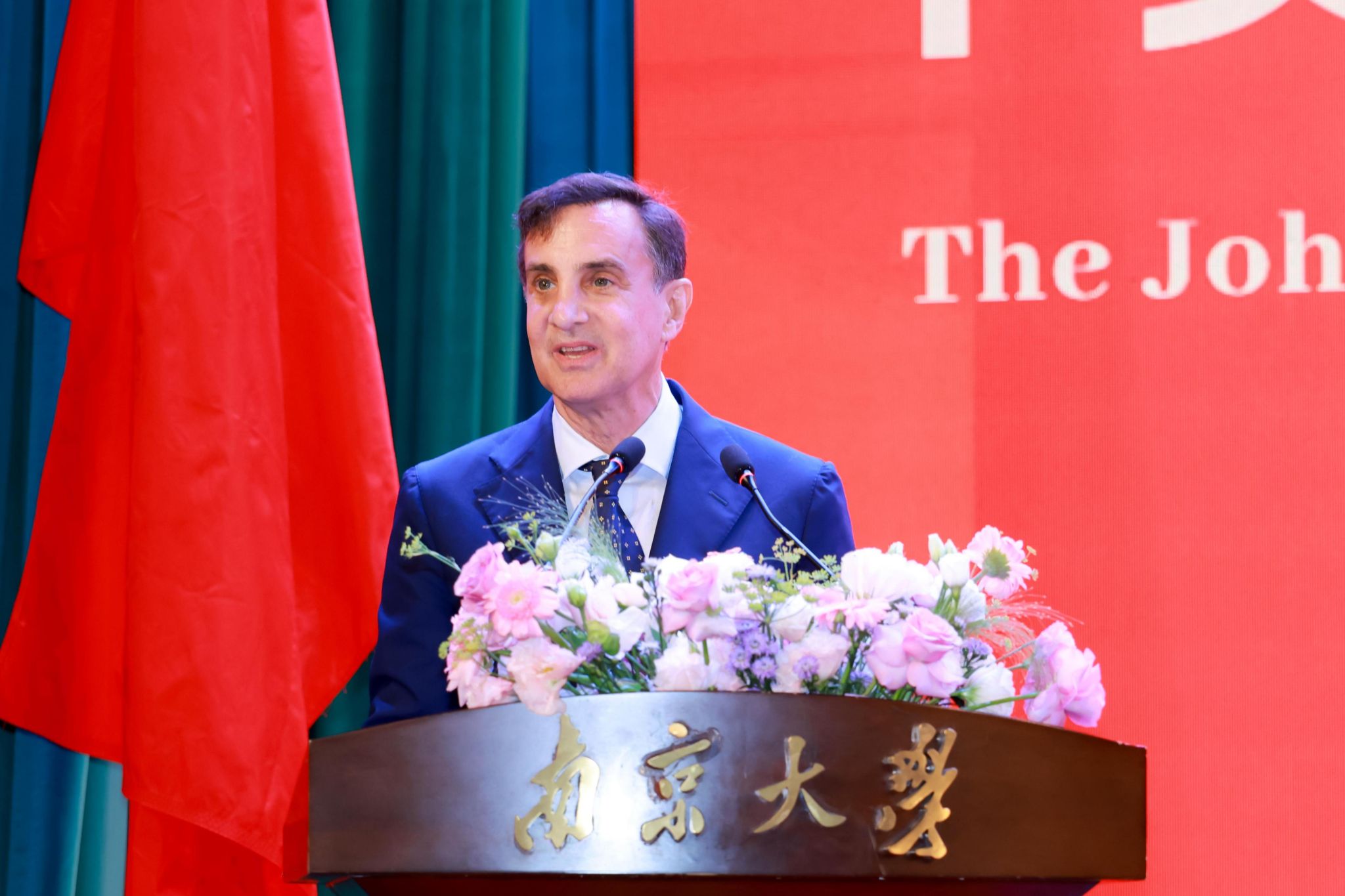
On behalf of the American guests, Benjamin Cardin remarked that the Center has remained steadfast to its founding mission as a unique bilingual, cross-cultural academic institution providing rigorous graduate education that extends learning beyond classrooms into everyday interactions. He emphasized the significance of cultural exchanges in fostering mutual understanding, especially in challenging times, which is central to the educational mission of the Center.
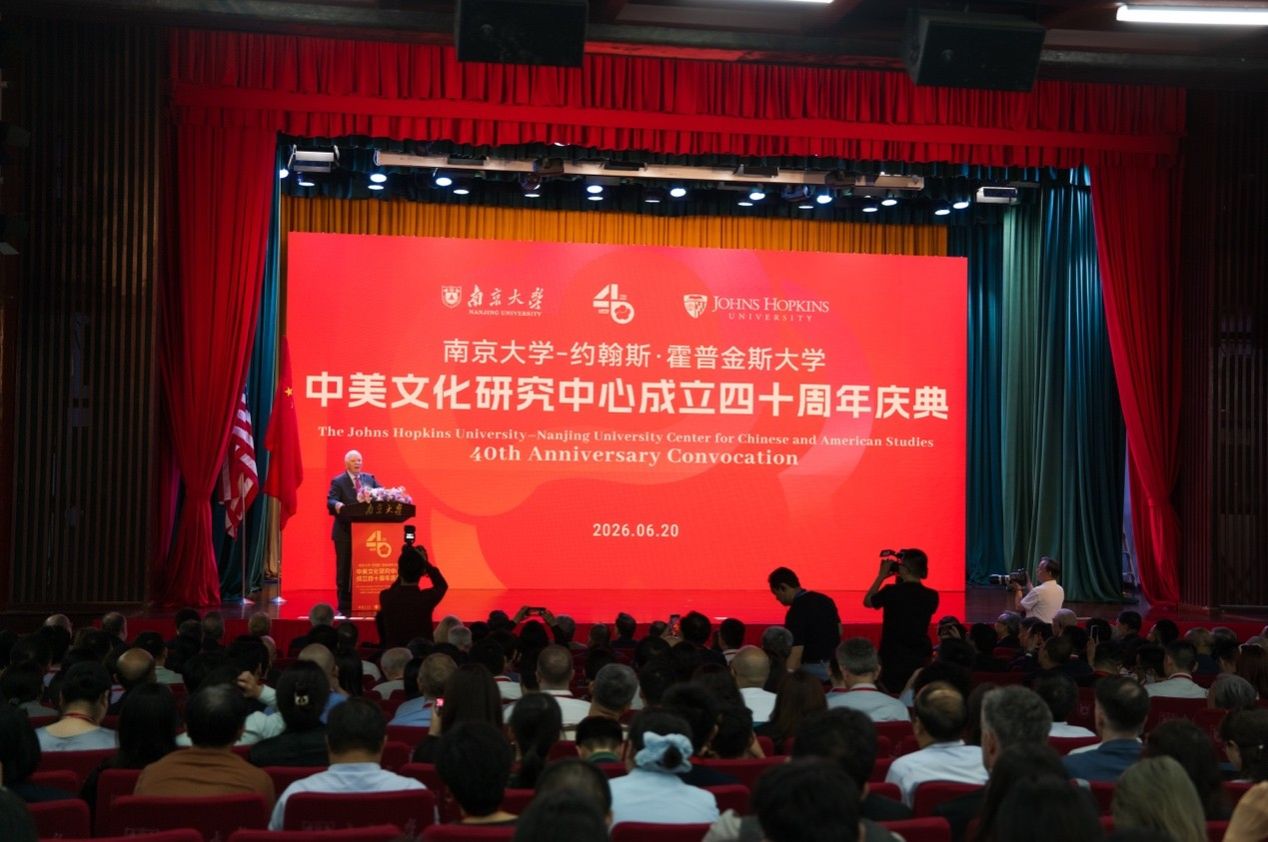
During the event, alumnus representatives shared their learning and life experiences at the Center and its significant influence on their personal development. Officials from relevant Jiangsu provincial departments, Nanjing University leaders, and international and domestic guests gathered in the historical auditorium to commemorate this milestone moment together.
On June 19, the Center held its 40th certificate program and 19th master's program graduation ceremony, where 101 students from around the world received jointly awarded degrees or completion certificates. Tan Zhemin and Ronald J. Daniels attended and delivered speeches.
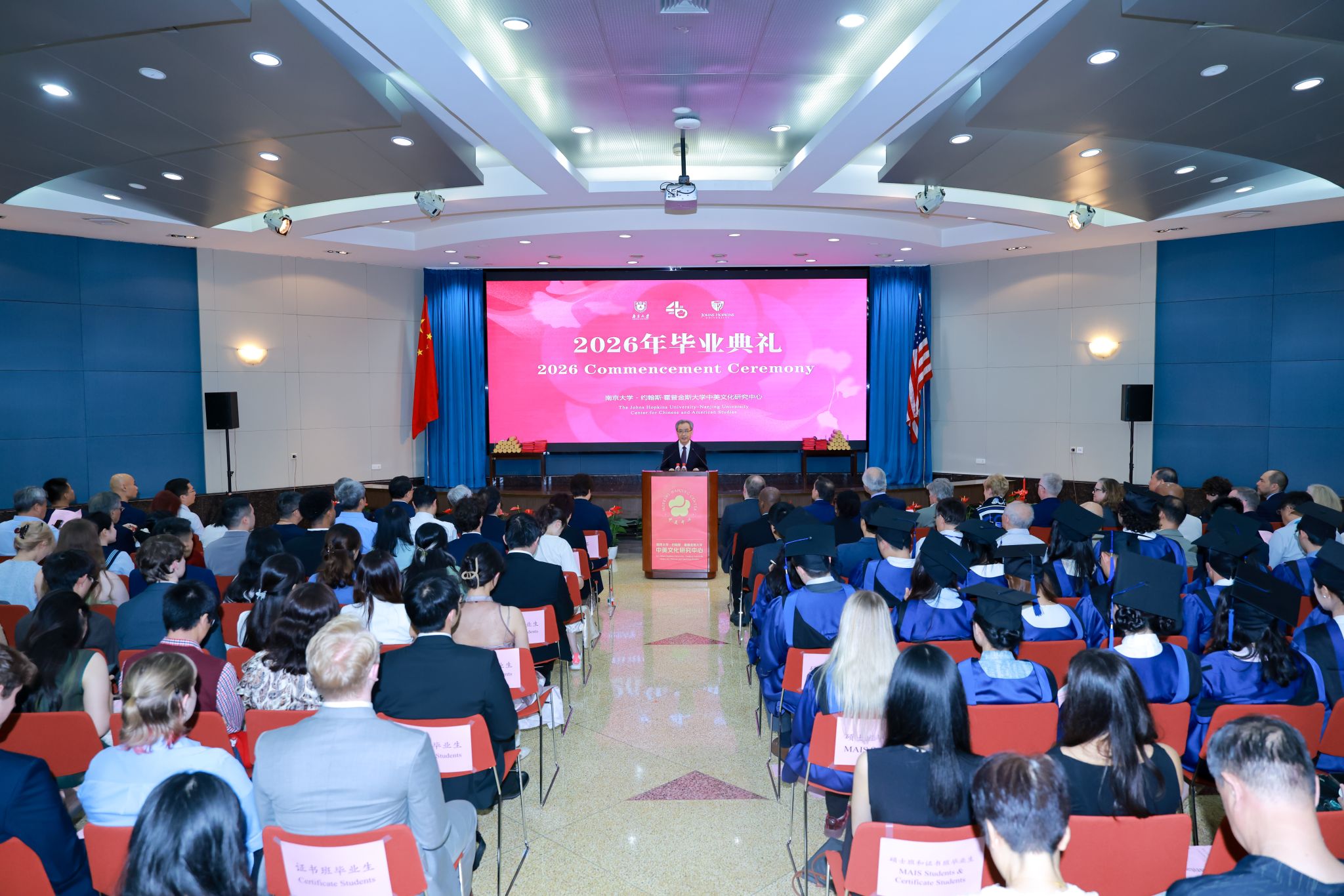
Tan Zhemin and Ronald J. Daniels jointly awarded degree certificates and completion certificates to the Class of 2026 from the Center.
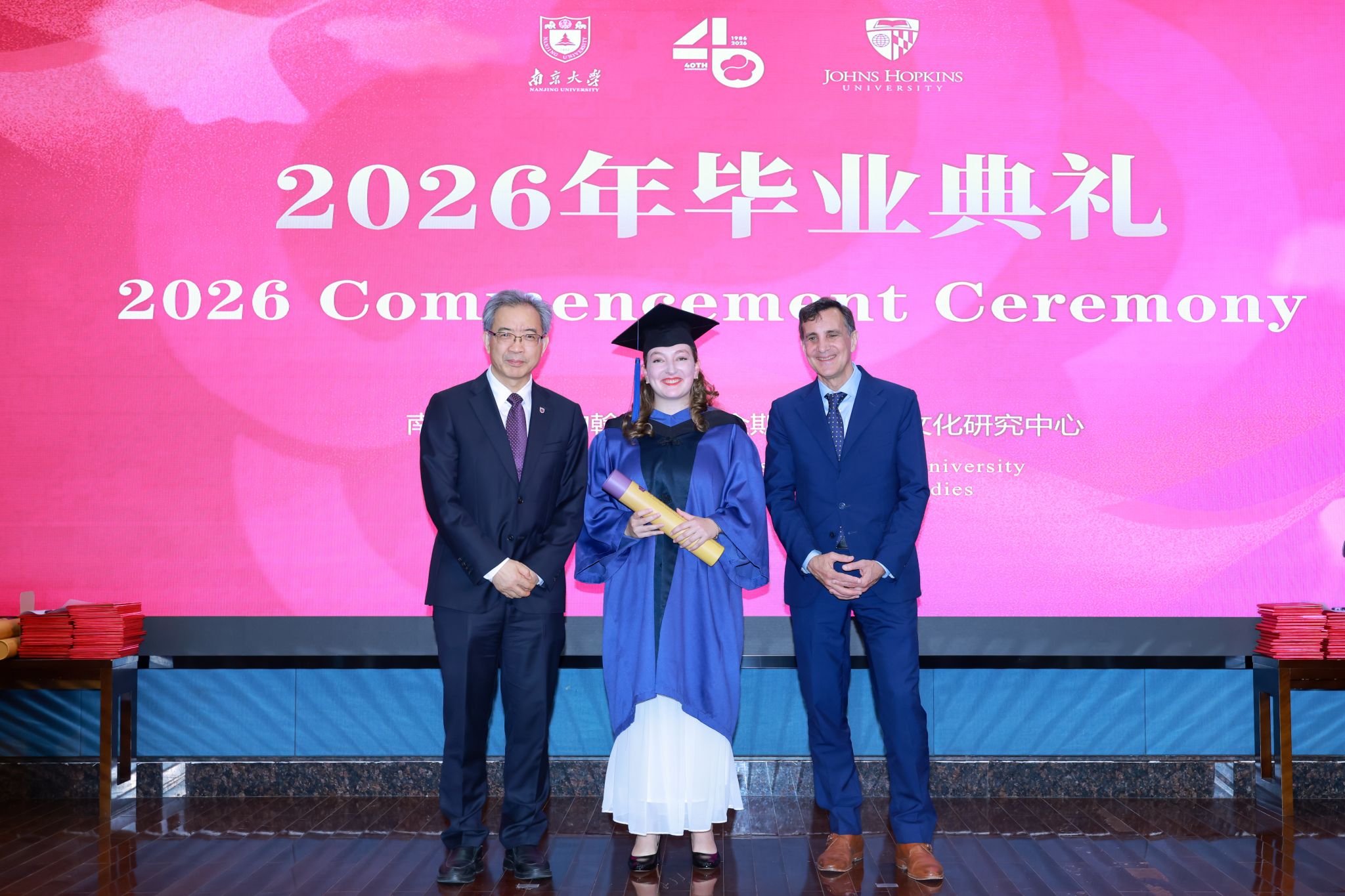
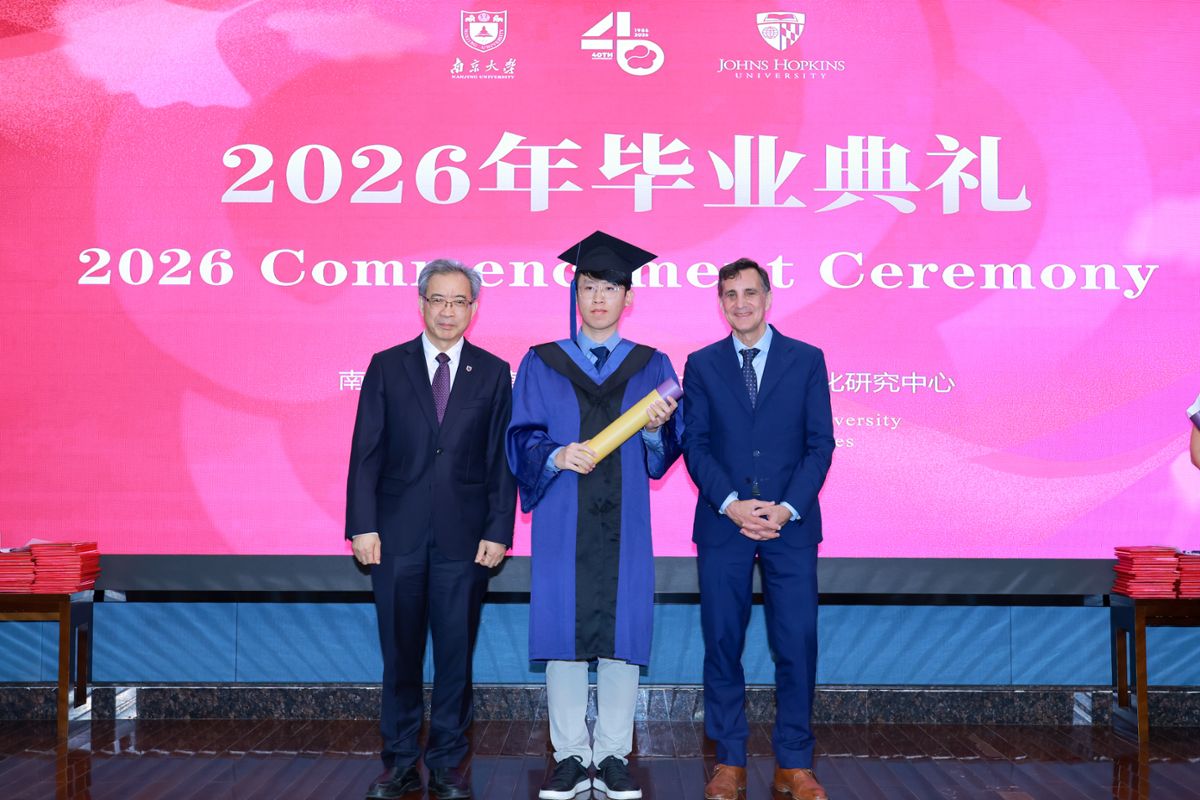
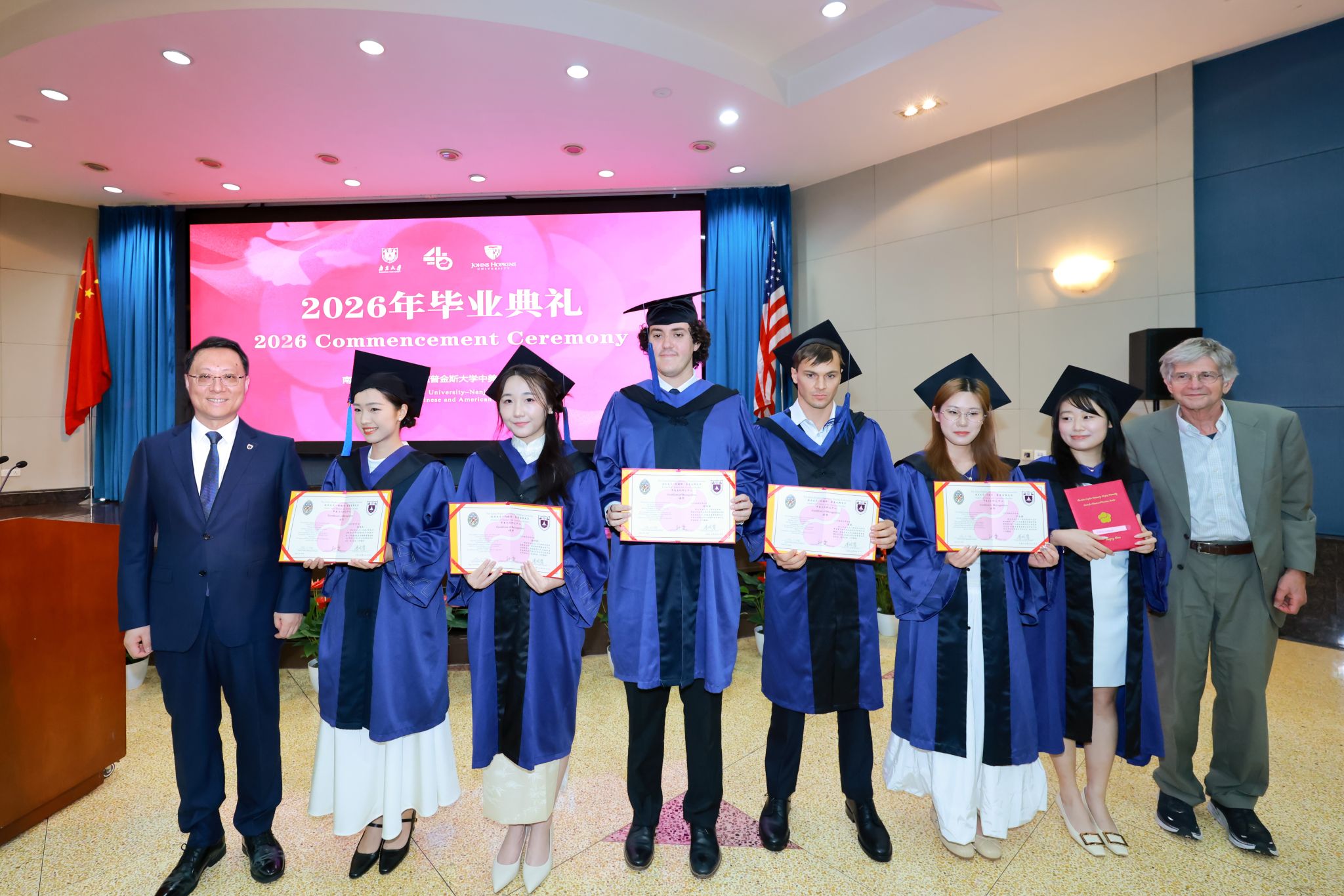
Chen Yunsong, Vice Chair of NJU CPC Council and Jim Steinberg presented the Outstanding Thesis Award to graduates.
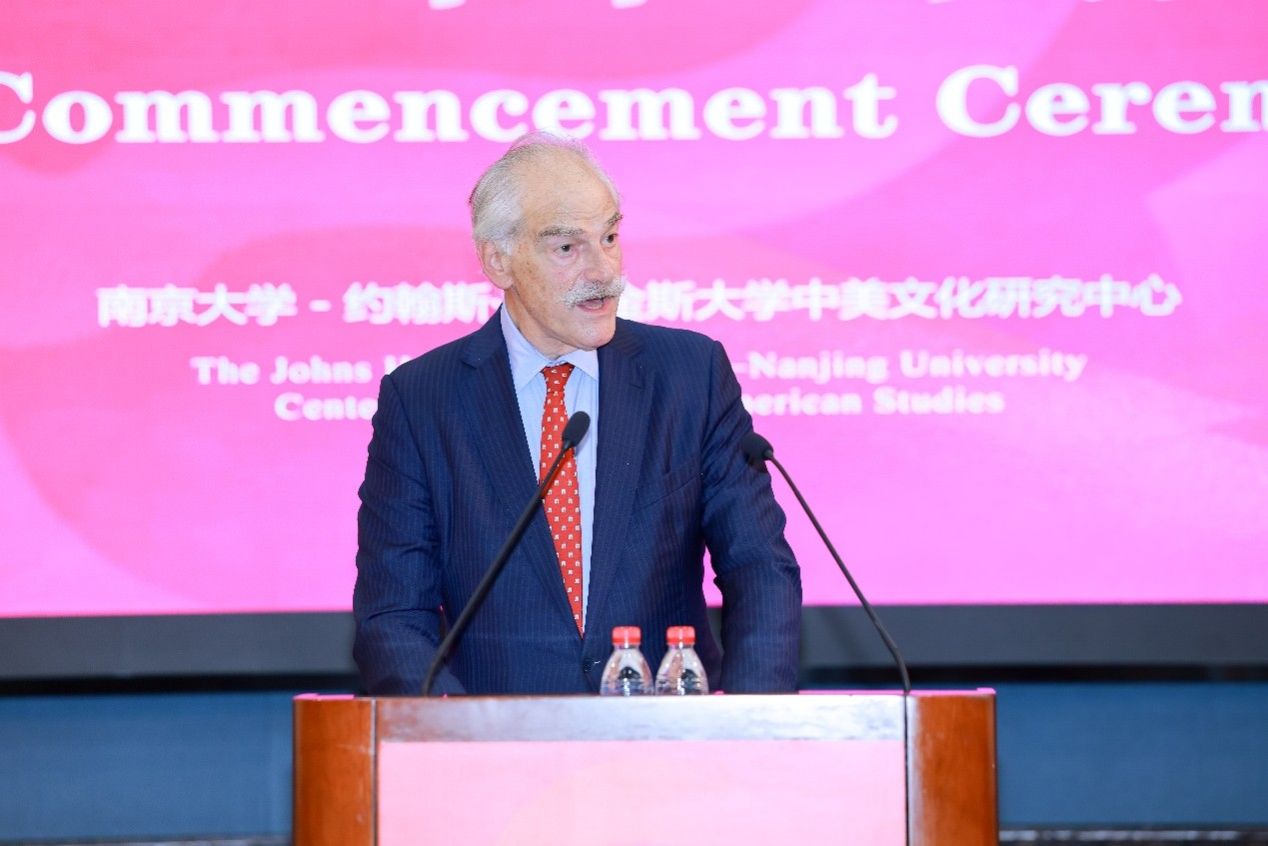
John Lipsky and Yang Zhong, Jiangsu CPPCC Standing Committee Member and former Executive Vice Chair of the NJU CPC Council, delivered keynote speeches.
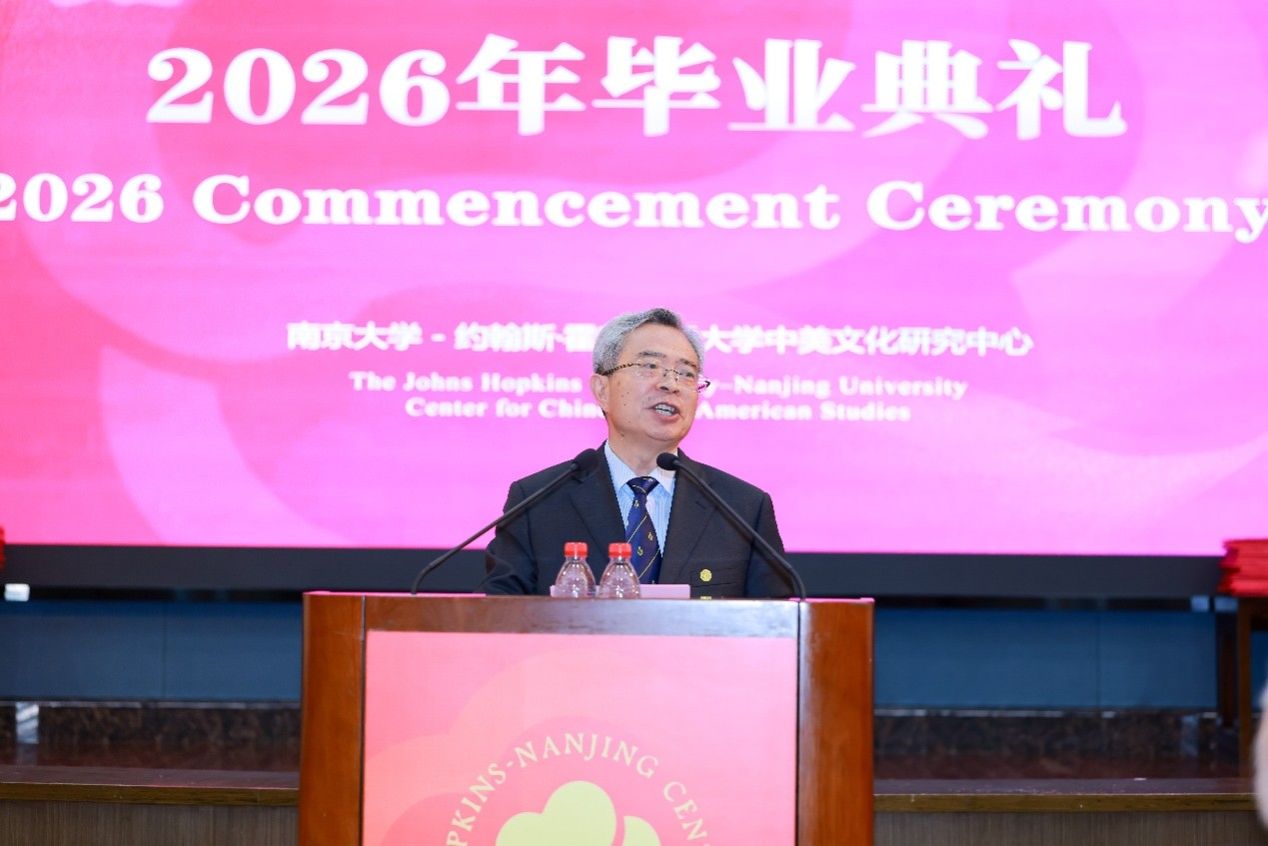
International student Bai Shiyin and Chinese student Li Yanshu spoke on behalf of all graduates, sharing their experiences at the Center and their aspirations for the future.
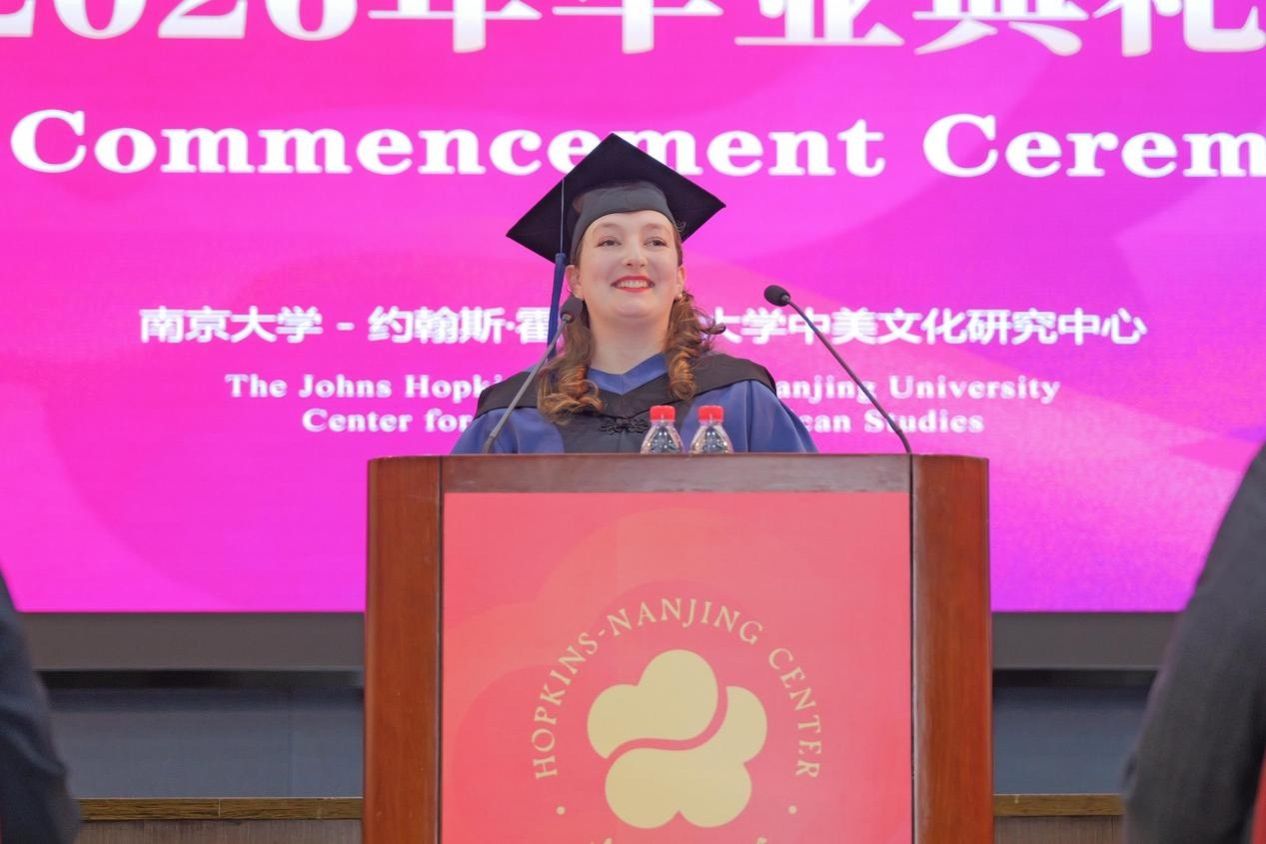
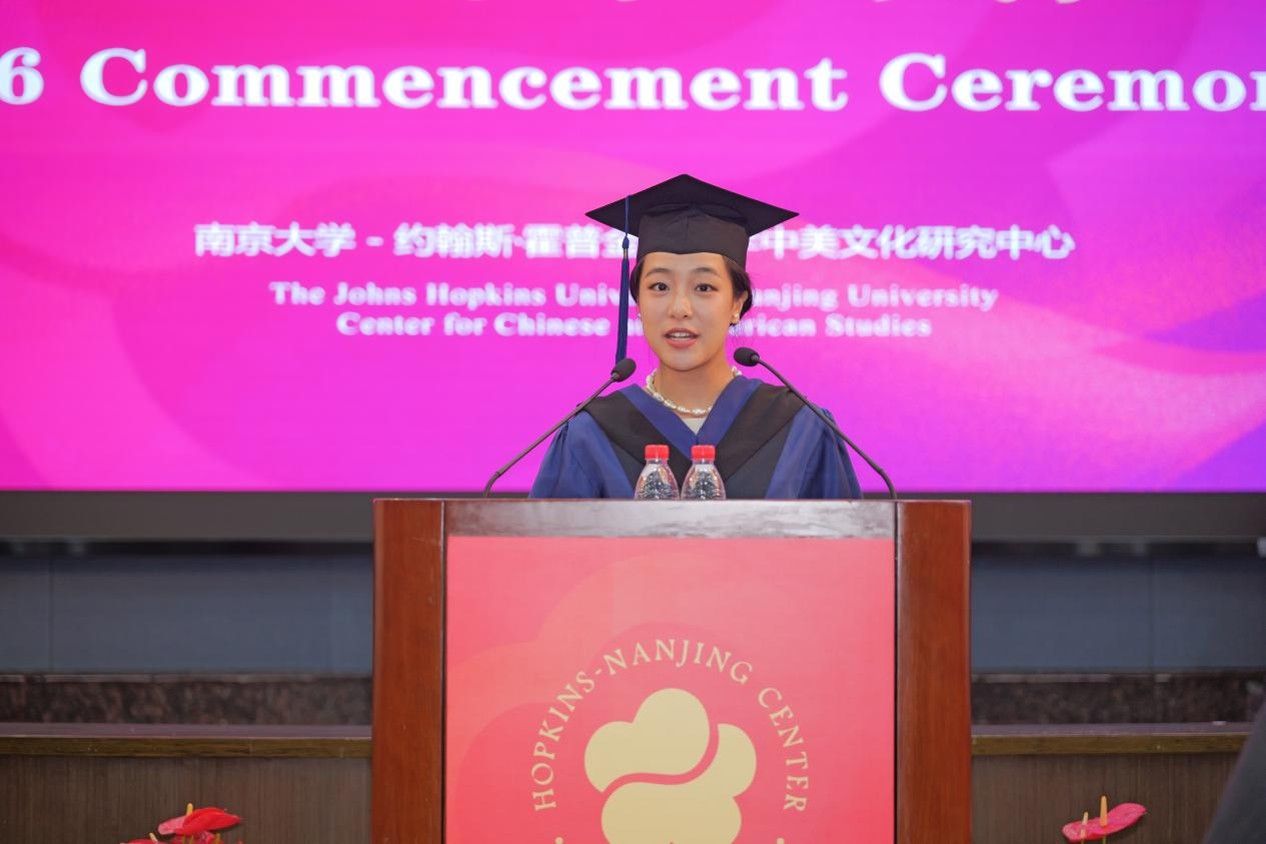
The ceremony was jointly hosted by the Chinese Director of the Center, Li Xiaorong, and the American Director, Adam Webb.
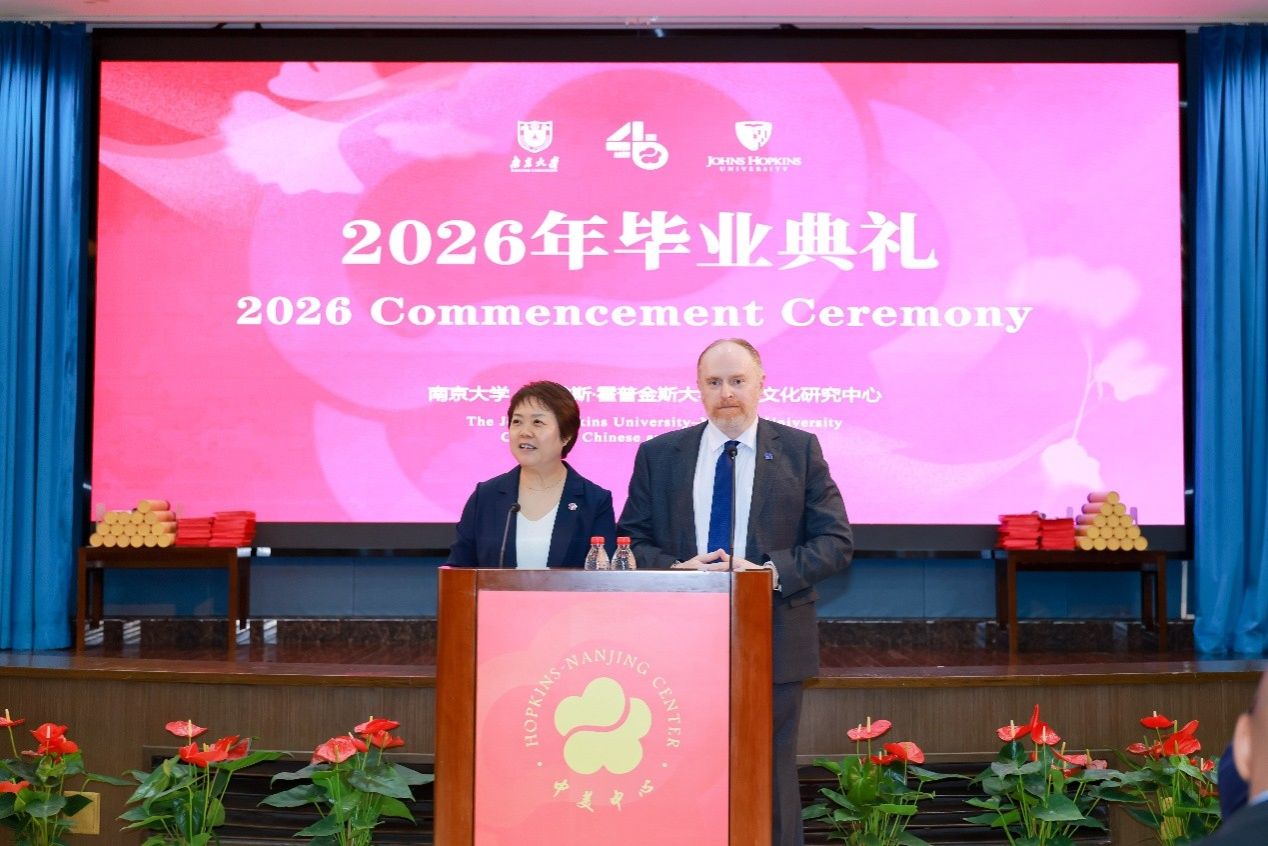
The Center, co-established by Nanjing University and Johns Hopkins University, is dedicated to teaching and research. It consistently emphasizes cross-linguistic, cross-cultural, interdisciplinary, and cross-border learning, living, growing, and developing together. It has developed a unique teaching model that covers multiple fields, including international politics, international economics, comparative and international law, energy, resources, the environment, and Chinese and American history and culture. The Center has become an educational platform for cultivating globally-minded, culturally sophisticated individuals with strong professional knowledge and problem-solving skills, suitable for global development. Over the past 40 years, the Center has graduated nearly 4,000 students from around 40 countries and regions.


