On the morning of August 27, 2026, Tan Zhemin, President of Nanjing University and Academician of the Chinese Academy of Sciences, stepped into an undergraduate classroom to lecture third-year students from the School of Atmospheric Sciences at NJU on the course "Dynamic Meteorology." This lecture was also a nationwide open class under the Ministry of Education's "101 Plan" for the field of atmospheric sciences, with Academician Tan Zhemin serving as the lead figure for the atmospheric sciences segment of the initiative. Through an online broadcast, faculty and students from numerous universities across the country participated in the lecture synchronously.
Academician Tan Zhemin began by discussing the unique characteristics of "atmospheric sciences", a century-old field of study. Atmospheric sciences, as one of the essential branches of earth science, possess distinct features—the movement of the atmosphere is influenced not only by internal atmospheric processes but also by interactions with other spheres of the Earth system. Entering the 21st century, the scope and subject matter of atmospheric sciences have continuously expanded, transitioning from traditional meteorology that focused primarily on the atmosphere itself, to a comprehensive discipline framed around the Earth system. This modern evolution emphasizes interdisciplinary approaches, is driven by national and societal needs, and supports government decision-making, industry development, and social governance.
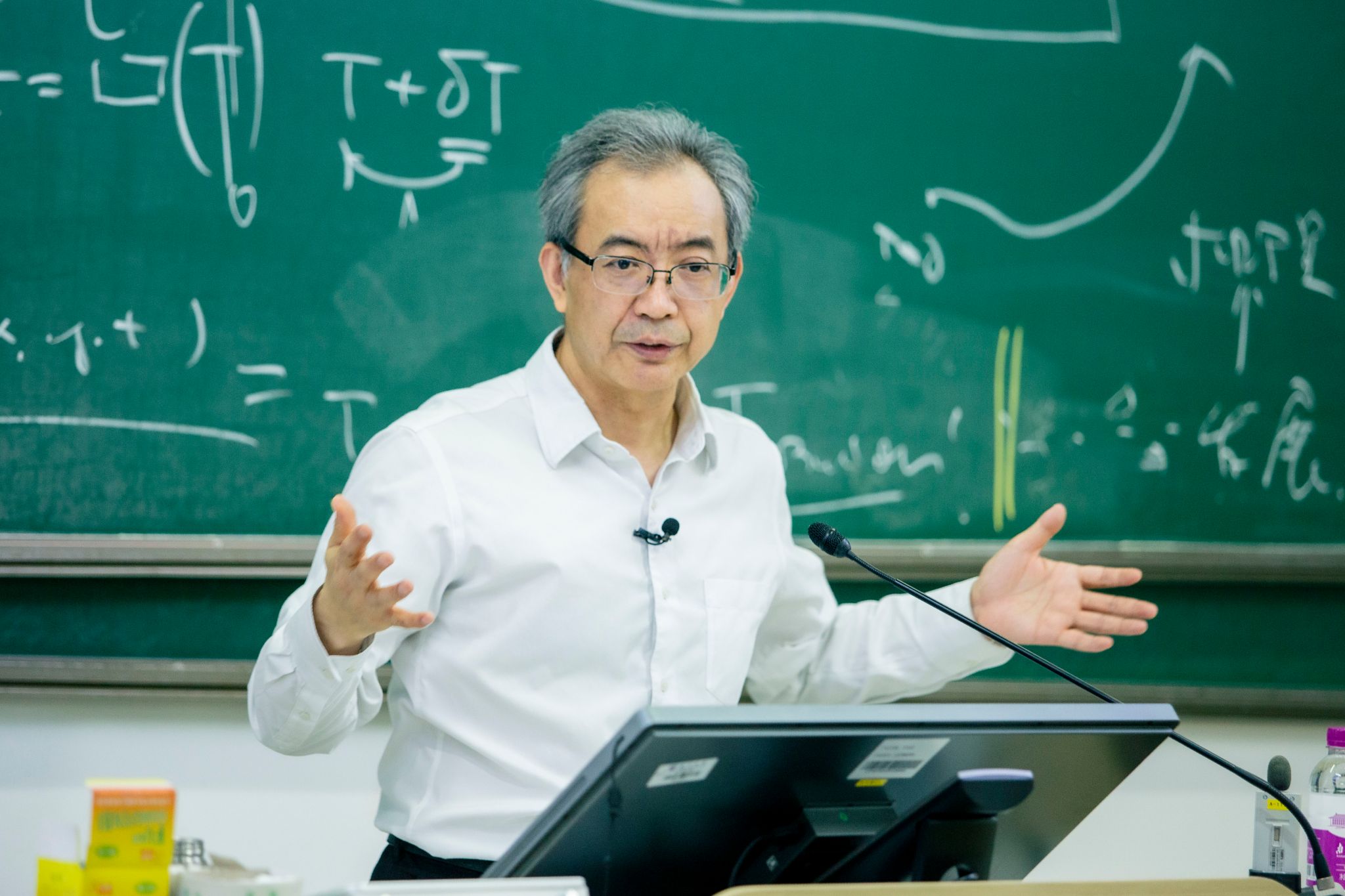
As a vital sub-discipline of atmospheric sciences, "dynamic meteorology" has continuously evolved over its century-long development. Using the "brief history of dynamic meteorology" as a main thread, Academician Tan Zhemin guided the students in understanding the formation and development of its theoretical framework. He summarized the development of modern dynamic meteorology into three stages. The first stage was marked by the creation of the frontal cyclone theory and the establishment of the Norwegian school, laying the foundation of modern atmospheric science. The second stage, represented by the development of theories such as Rossby wave theory, instability theory, and energy dispersion theory, saw the establishment of the Chicago school. During this period, the perspective on the atmosphere expanded from a two-dimensional plane to three-dimensional space, leading to deeper insights into the development and evolution mechanisms of weather systems and laying the dynamic groundwork for numerical weather prediction. The third stage was characterized by breakthroughs in numerical forecasting, as well as the advancements in tropical dynamics and nonlinear dynamics. Among these, the development of numerical forecasting and chaos theory not only profoundly transformed the research paradigms of atmospheric sciences but also reshaped the ways in which humanity understands complex systems, uncertainty, and predictability. Together, these three stages form the basic theoretical framework of classical dynamic meteorology.
After reviewing the historical development of the field, Academician Tan Zhemin further discussed the new changes artificial intelligence is bringing to atmospheric sciences. He pointed out that the rapid development of AI has introduced new methods and paradigms to natural science research, but this does not imply a simple replacement of traditional dynamic theories. While current AI-based meteorological large models have demonstrated promising forecasting capabilities, their generalizability and interpretability still rely on the underlying support of physical laws. This underscores the continued importance of studying the basic theories of dynamic meteorology. Tan emphasized that the development of dynamic meteorology is far from over. With the continuous advancement in Earth system observation capabilities, the rapid development of high-performance computing, and the ongoing progress in AI and big data technologies, dynamic meteorology is accelerating its cross-disciplinary integration with new technologies and emerging fields, opening up new research directions.
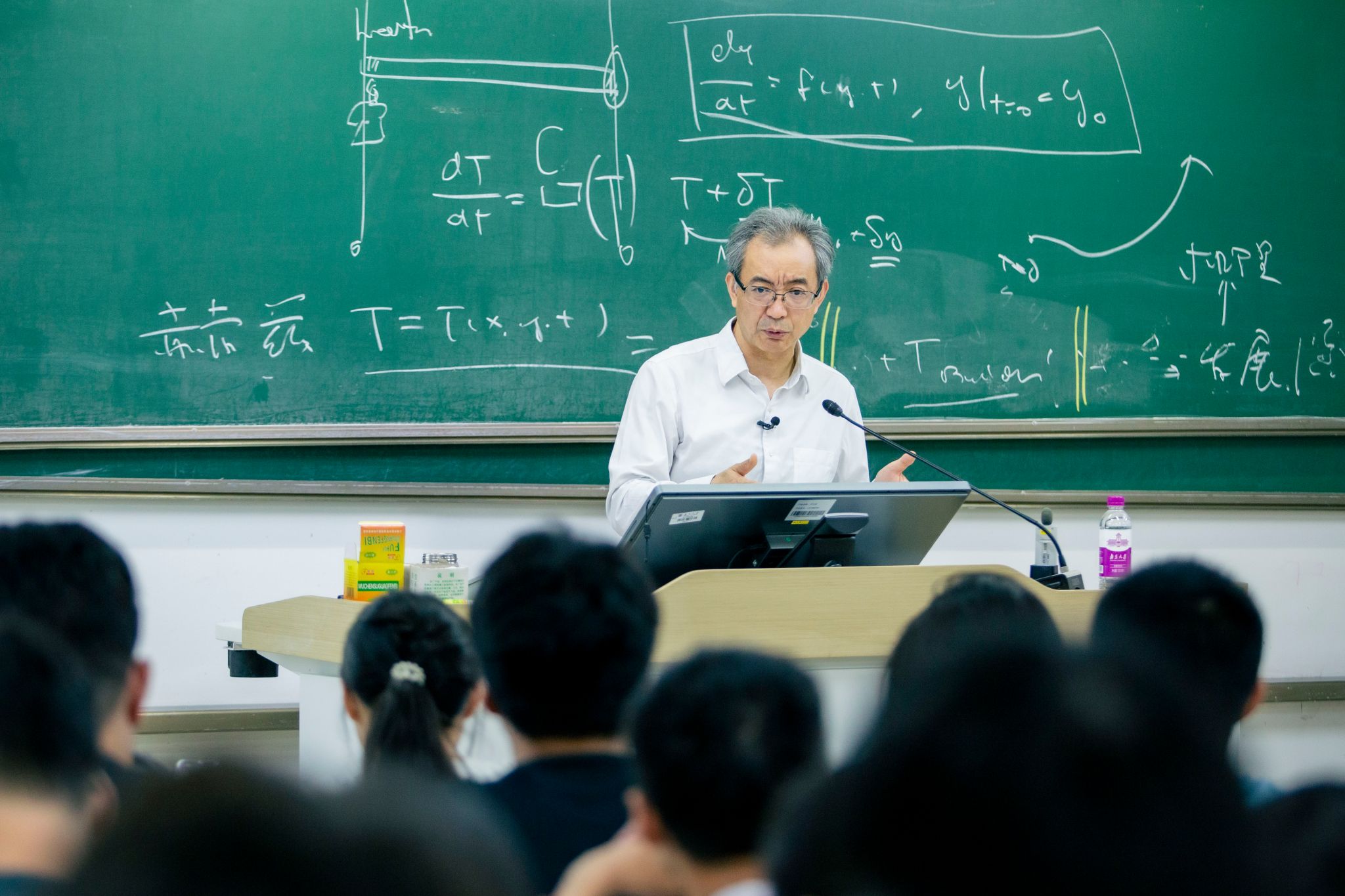
At the end of the lecture, a student posed a representative question: in an era of limited technological tools for observation, how did the pioneering scholars of dynamic meteorology achieve so many theoretical breakthroughs? What inspiration can their stories and spirit provide to atmospheric science undergraduates in the age of AI? Academician Tan Zhemin replied, "AI may change many specific approaches to scientific research in the future, but in this era, researchers must all the more return to fundamental questions like 'what do we seek to understand, explain, and question?'" He reminded the students that, in the age of AI, rote memorization of knowledge can no longer serve as the core of learning. What truly matters is understanding the physical principles and thought processes behind formulas. He proposed three key abilities students should strive to cultivate: the ability for "scientific thinking, the ability to "pose scientific questions", and the ability to "simplify complexity". These three abilities are precisely what distinguished the scientists who made significant contributions to the advancement of the field. Tan Zhemin expressed his hope that the students would actively embrace the opportunities brought by AI and big data, while simultaneously grounding themselves in foundational knowledge and honing their skills. He encouraged them to continuously elevate their scientific literacy and innovation capabilities, preparing to meet future challenges with resilience in this rapidly changing era.


