On the evening of October 20, Tan Tieniu, Chair of Nanjing University CPC Council and Academician of the Chinese Academy of Sciences, delivered the first lecture of the Core General Course on Artificial Intelligence titled "Basic Concepts and Development Trends of Artificial Intelligence" to nearly 12,000 new undergraduate and graduate students of the Class of 2026 online and offline. He guided the students to experience the boundless charm of artificial intelligence and encouraged them to embrace the responsibilities and missions of the AI era.
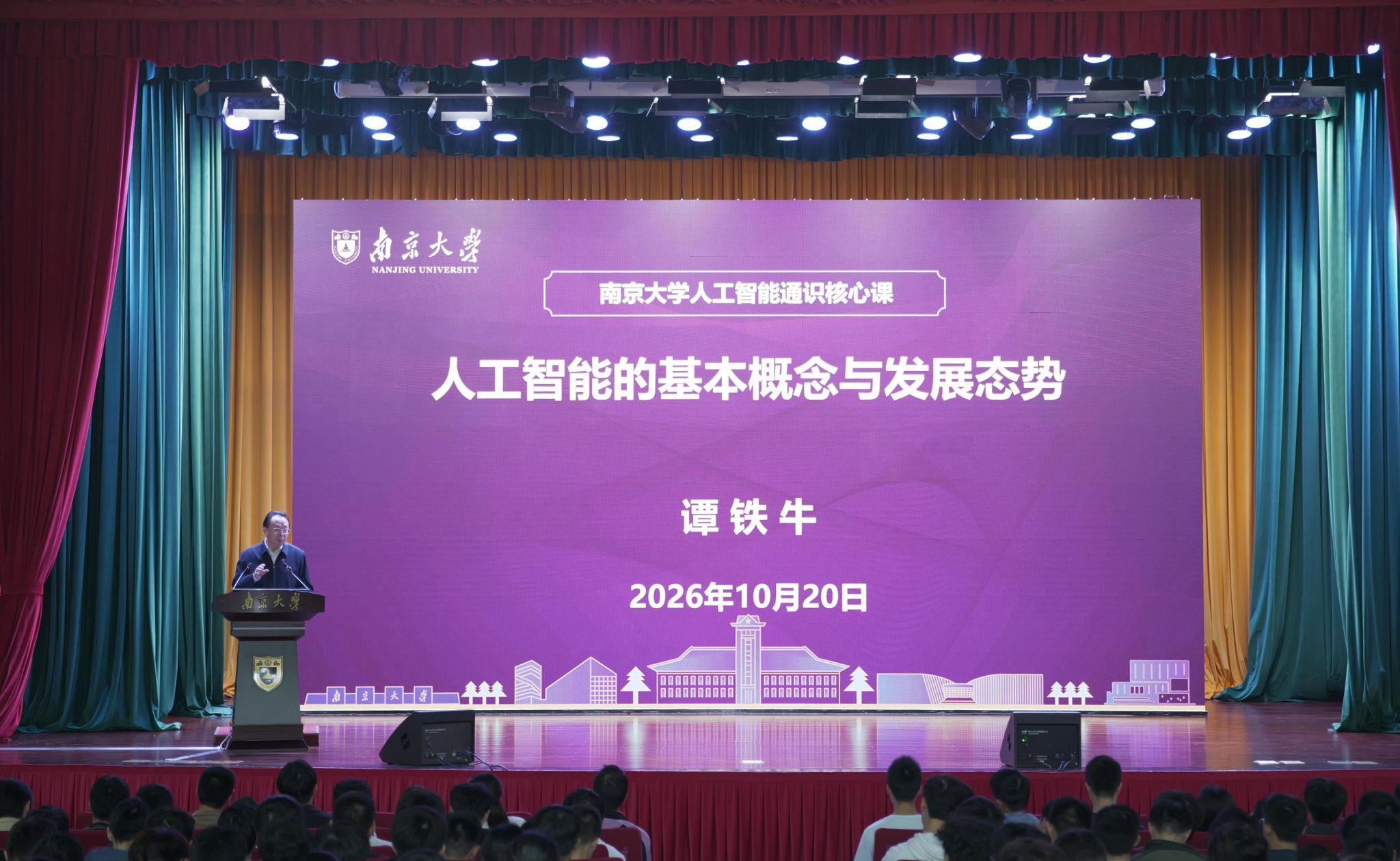
The development of artificial intelligence relies on technology, technological advancement relies on talent, and talent cultivation relies on education. On April 25, 2025, General Secretary Xi Jinping emphasized during the 20th collective study session of the Political Bureau of the 20th CPC Central Committee: "Promote artificial intelligence education throughout all stages of learning and general education in society to continuously nurture high-quality talent." This guidance provides a scientific roadmap for advancing AI talent development.
"Why is this course being offered?" Tan Tieniu pointed out that computational thinking, digital awareness, and AI skills are fundamental qualities and essential competencies for top-notch innovative talent in the new era. Offering the core general course on AI is a necessary response to the demands of the times to cultivate new generations aligned with the era, accelerate the development of a strong education system, and address the paradigm shifts in scientific research. Nanjing University is actively exploring new AI-driven educational models that adapt teaching to individual talents. On the one hand, the university is reshaping the ecosystem of undergraduate education for the AI era by making "AI+" courses available to all students across all disciplines. On the other hand, it is fully implementing the "Postgraduate AI+ Innovation Capability Development Action Plan," making AI general education courses a mandatory component for new graduate students. These efforts position AI as a fundamental tool for enhancing Nanjing University's outstanding talent cultivation brand.
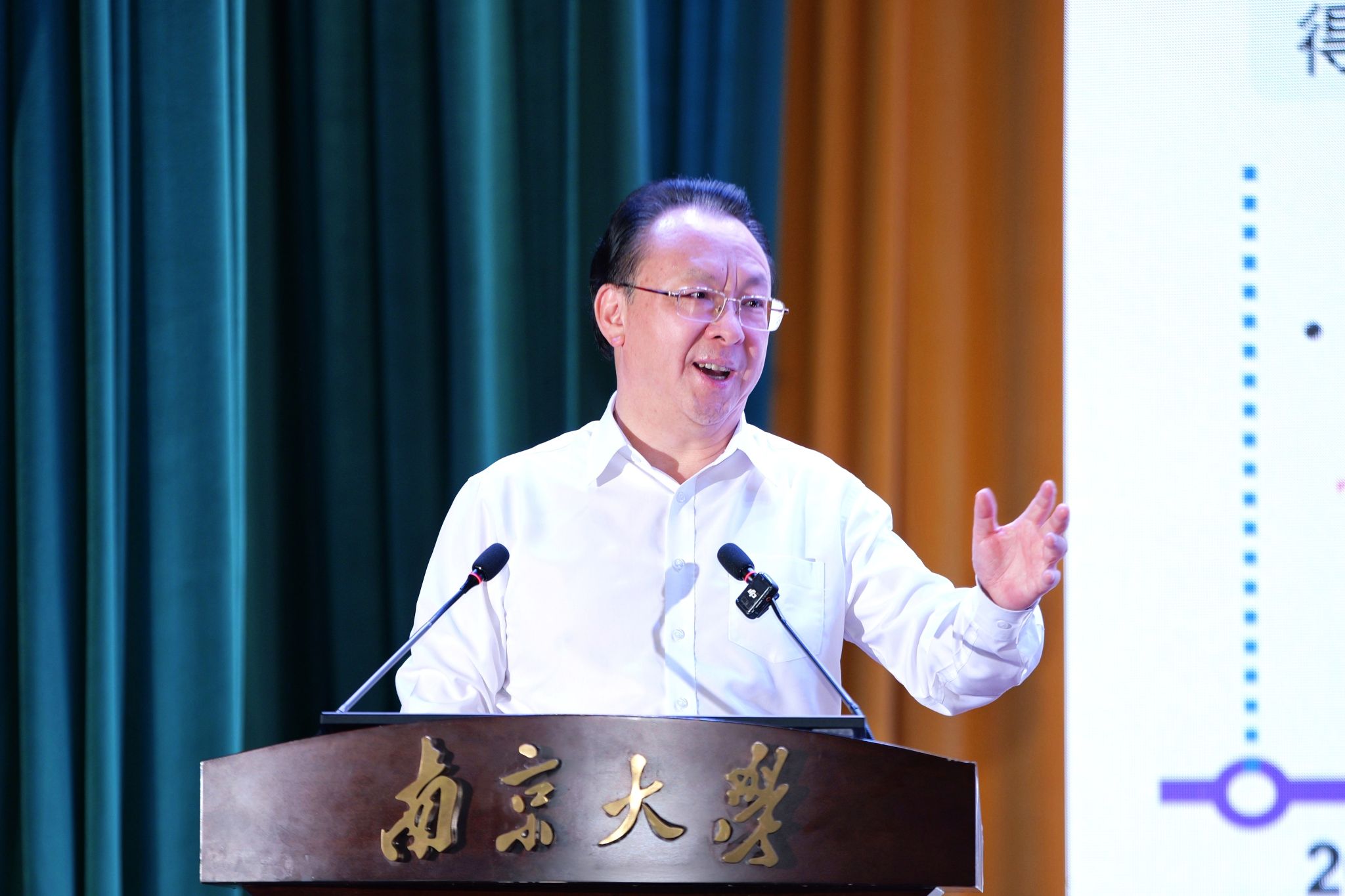
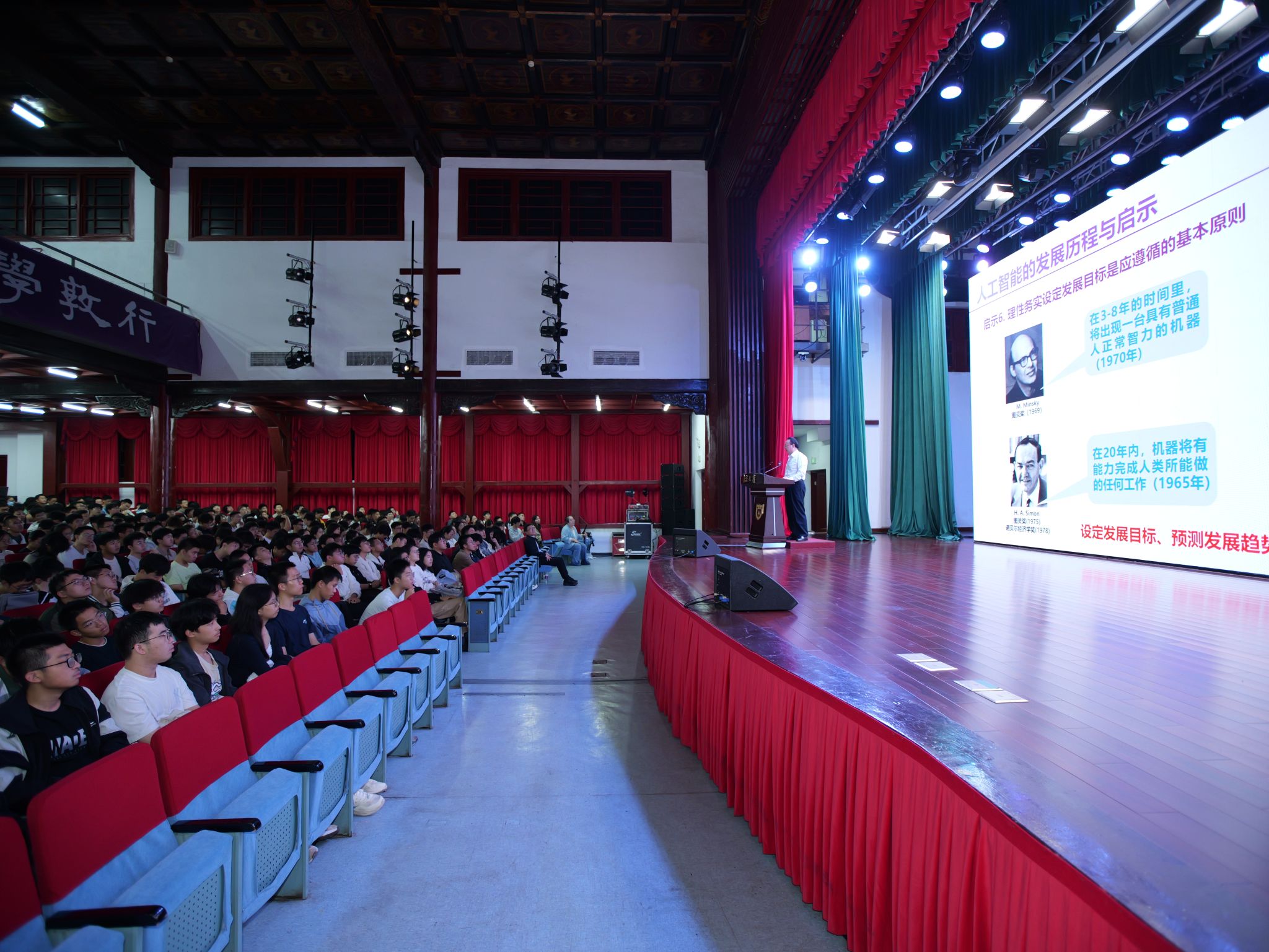
"What is artificial intelligence?" Tan Tieniu explained to the students that the concept of artificial intelligence was first proposed in 1956, aiming to explore the essence of intelligence and develop intelligent machines with human-like intelligence. In simple terms, its essence is researching machine intelligence and developing intelligent machines. Based on the degree of intelligence, AI is categorized into general AI, specialized AI, generative AI, embodied AI, and intelligent agents.
"The development of artificial intelligence provides us with some revelations," Tan Tieniu noted. "Respecting the laws of disciplinary development is a basic prerequisite for healthy disciplinary progress. Fundamental research lays the foundation for sustainable development of the field. Application needs are an inexhaustible source of scientific and technological innovation. Multidisciplinary integration is a 'shortcut' to breakthrough innovation. Tolerance for failure is an essential part of supporting innovation. Moreover, setting pragmatic and rational development goals is a basic principle to follow, and risk governance should proceed in step with technological innovation."
Tan Tieniu mentioned that after 70 years of development, artificial intelligence has achieved significant breakthroughs in theory, technology, and applications. AI has become the core driving force behind a new round of scientific and industrial revolutions, profoundly influencing the world’s economic, political, and military landscapes, as well as the development of human society. It is increasingly capturing the attention of governments, industry, and academic fields worldwide. "Attendance tracking for coal miners via iris recognition technology, locating lost children, aiding crime detection through gait recognition via water droplets, as well as Unitree Robotics' humanoid robot appearing on the CCTV Spring Festival Gala and the lifelike biomimetic robotic fish..." Tan Tieniu illustrated the application scenarios of various types of AI with vivid examples and summarized the current state of AI development in eight points: specialized artificial intelligence is maturing, significant breakthroughs have been made in large model technologies, generative artificial intelligence is revitalized, intelligent agent technology is accelerating adoption, embodied intelligence and humanoid robots are attracting attention, AI-driven scientific research is rapidly advancing, AI is empowering numerous industries, and the social impact of AI is becoming increasingly evident.
Midway through the lecture, Tan Tieniu called students' attention to seven misconceptions: that general AI is imminent (or has already been achieved), that "big data + massive computing power" is the path to general AI, that AI and human intelligence are in a "zero-sum game," that "AI+ means big model +," that AI already possesses human consciousness and emotions, that humanoid robots equate to embodied intelligence, and that AI will lead to human extinction. He reminded students that although AI is widely recognized as a buzzword, many theories and perceptions under this hype remain debatable. Conceptual misunderstandings, recognition errors, and deliberate hype in the AI field occur frequently.
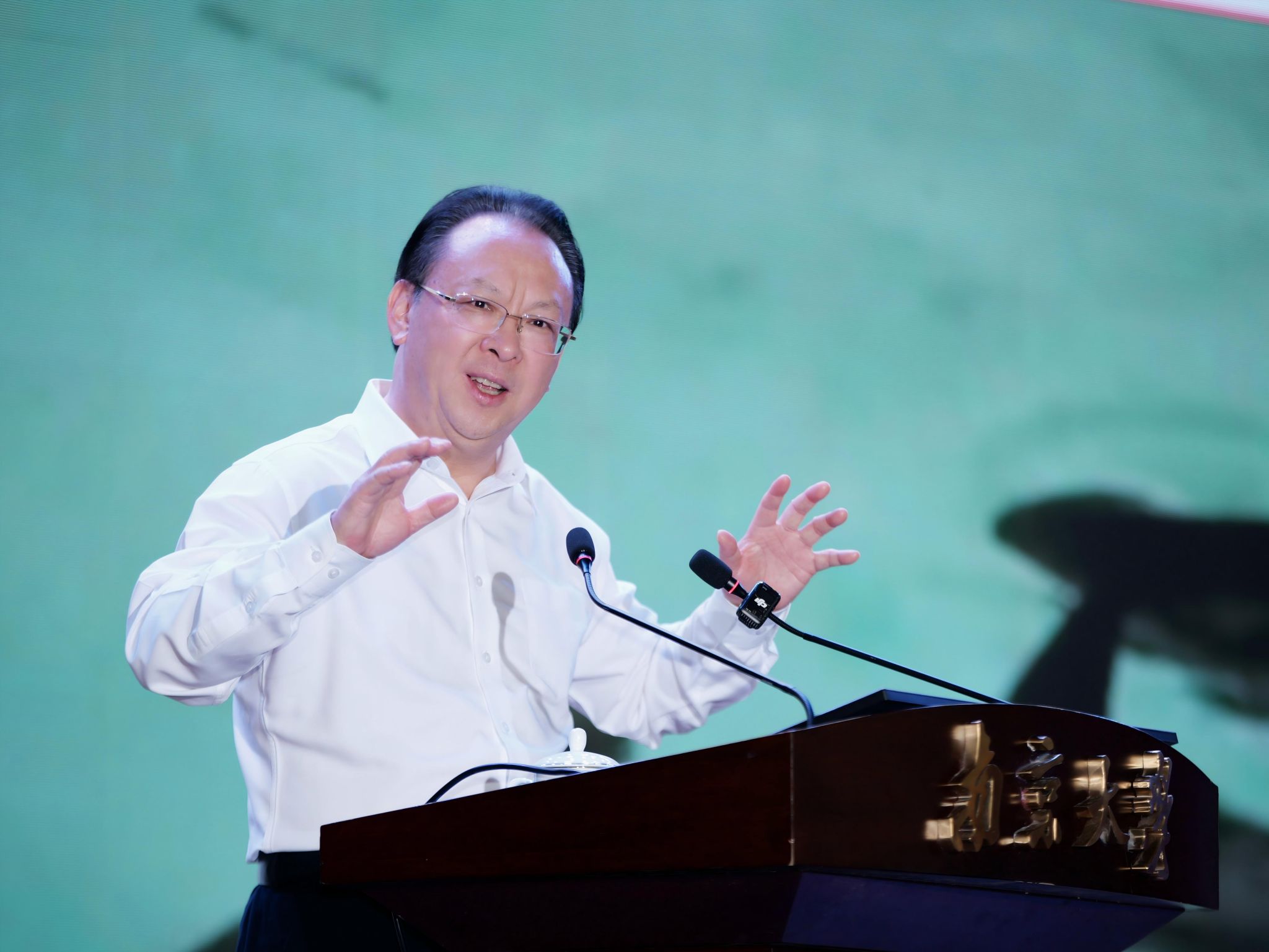
As for how to evaluate the current capabilities and development status of artificial intelligence, Tan Tieniu gave his answer. He believes that while artificial intelligence is rapidly advancing, there is still much it cannot do. Many fundamental problems remain unsolved. The current capabilities of artificial intelligence can be summarized in eight Chinese characters, which translate to: "lots of knowledge, limited wisdom, no strategy, lacking emotions." He urged the students to recognize the trend of AI leading the next wave of technological transformation while staying calm and objective about the challenges.
When discussing the development trends of AI, Tan Tieniu emphasized that artificial intelligence is not omnipotent; there is still much it cannot do. Nevertheless, facing the widespread penetration and arrival of the era of intelligence, ignorance, neglect, and rejection of artificial intelligence are absolutely unacceptable. He summarized the current development trends of artificial intelligence with eight key points: the transition from specialized AI to multifunctional AI; the evolution from artificial intelligence to human-machine hybrid intelligence; the shift from "brute force" AI to "dexterous" AI; the flourishing development of multimodal intelligent agents; the acceleration of universal intelligence dissemination through cloud collaboration; the continuous reshaping of numerous industries by AI; the intensifying international competition in AI; and the increasing prominence of AI safety and governance issues.
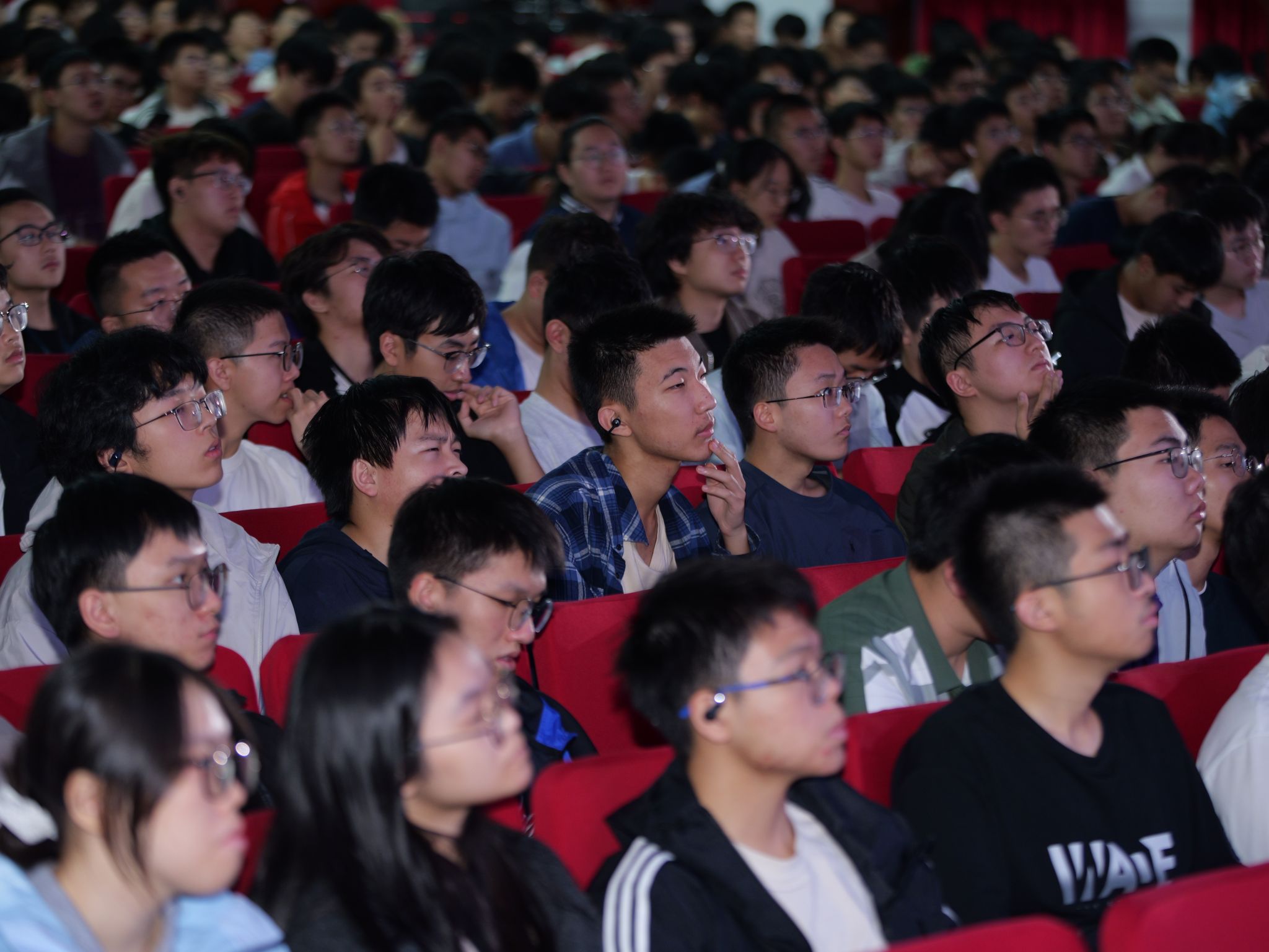
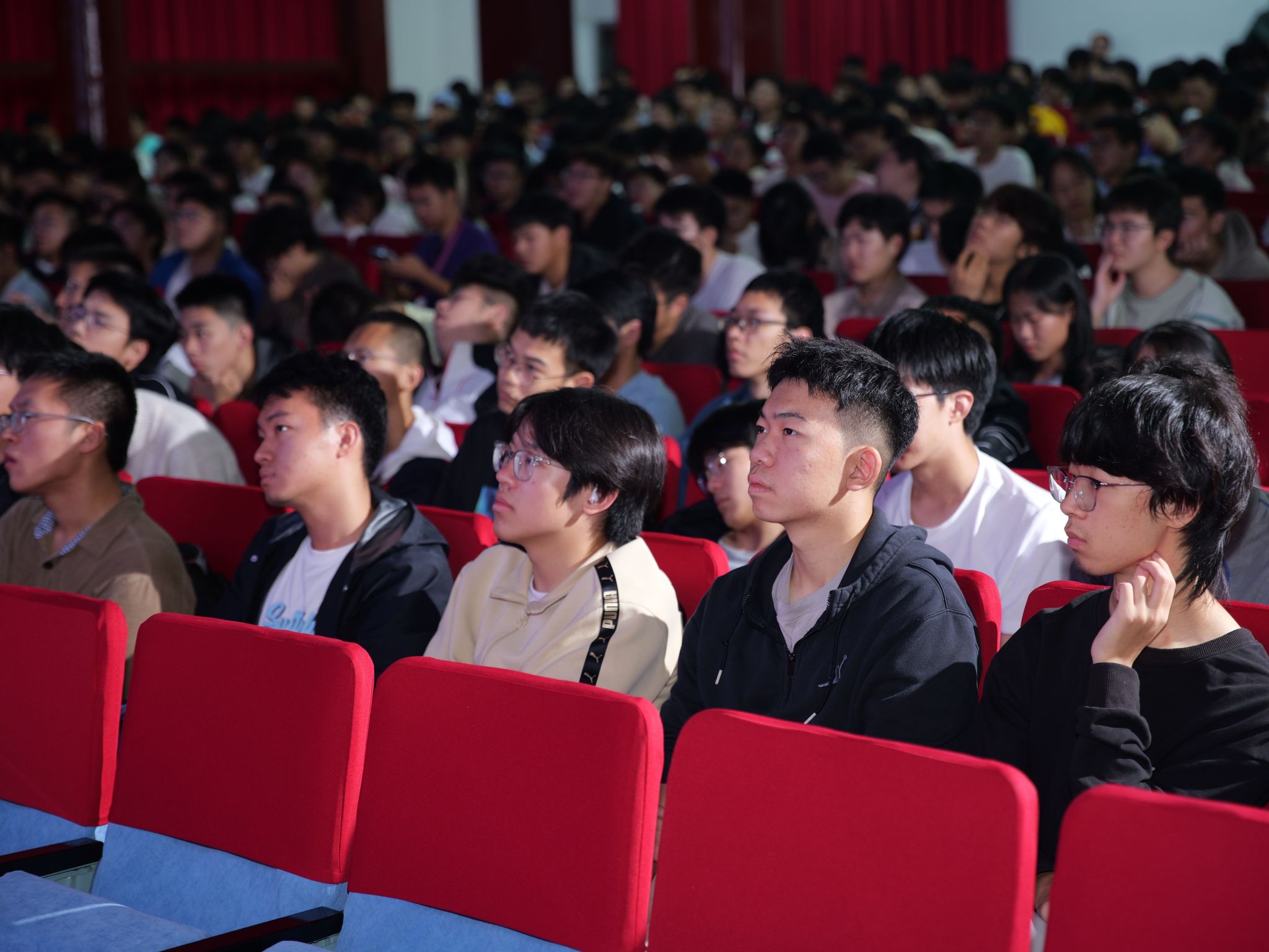
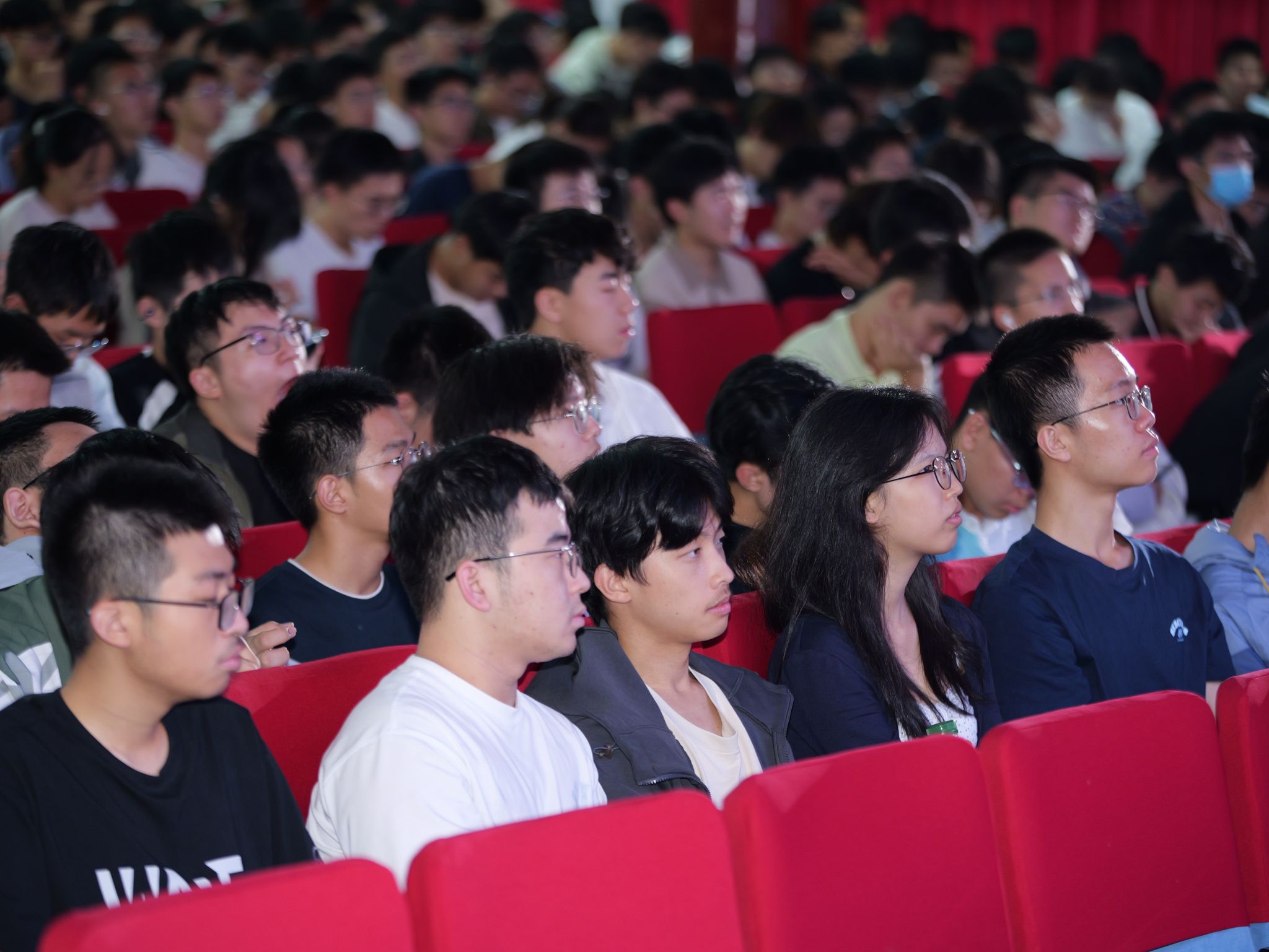
During the lecture, Tan Tieniu also introduced the teaching arrangements for NJU's Core General Course on AI for the fall semester of 2026. The course will bring together scholars and experts from AI and interdisciplinary fields, focusing on major topics in the AI domain. Meanwhile, the university will deepen cooperation with leading companies in the field of AI, integrating resources within and beyond the campus. It will conduct foundational and advanced practical activities to guide students in "learning by doing and creating through learning", achieving the educational goal of "everyone learns AI, everyone masters AI."
That evening, the atmosphere in the auditorium of the Gulou campus was electric, with no empty seats. The enriching first lecture unveiled the mysteries of artificial intelligence to the students. The Core General Course on AI for NJU's Class of 2026 officially kicked off, laying a solid foundation for young learners to embark on their journey of scientific exploration in artificial intelligence.


