In response to the emergency scientific investigation of the August 26 extreme geological disaster along the China–Nepal border, the School of Earth Sciences and Engineering at Nanjing University has mobilized researchers to participate in the joint expedition. Professor Hu Xiumian serves as deputy leader and scientific coordinator of the expedition team. Other Nanjing University participants include postdoctoral researcher Li Zhengchen and doctoral students Ye Shuhuai and Chu Feiyue.
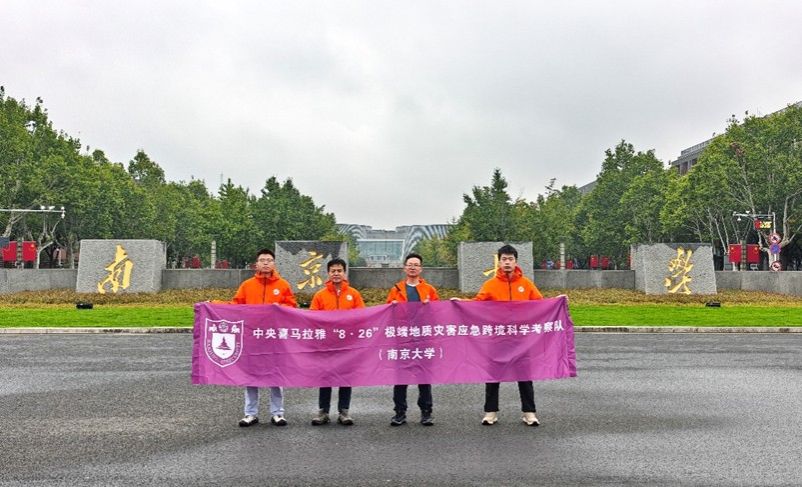
NJU expedition members, from left: Ye Shuhuai, Hu Xiumian, Li Zhengchen and Chu Feiyue.
On October 4, the Himalayan "August 26" Extreme Geological Disaster Cross-Border Emergency Scientific Expedition, organized under the leadership of China University of Geosciences (Beijing) in collaboration with the Nepal Academy of Science and Technology, was scheduled to depart from Chengdu for Nepal. Over approximately 20 days, the team will conduct a joint emergency investigation of major cryospheric and lithospheric hazards across the entire affected system, covering the source area outside China, the affected areas within China, and downstream reaches beyond the border. The expedition aims to contribute a Chinese scientific approach to the joint prevention and management of transboundary geological disasters.
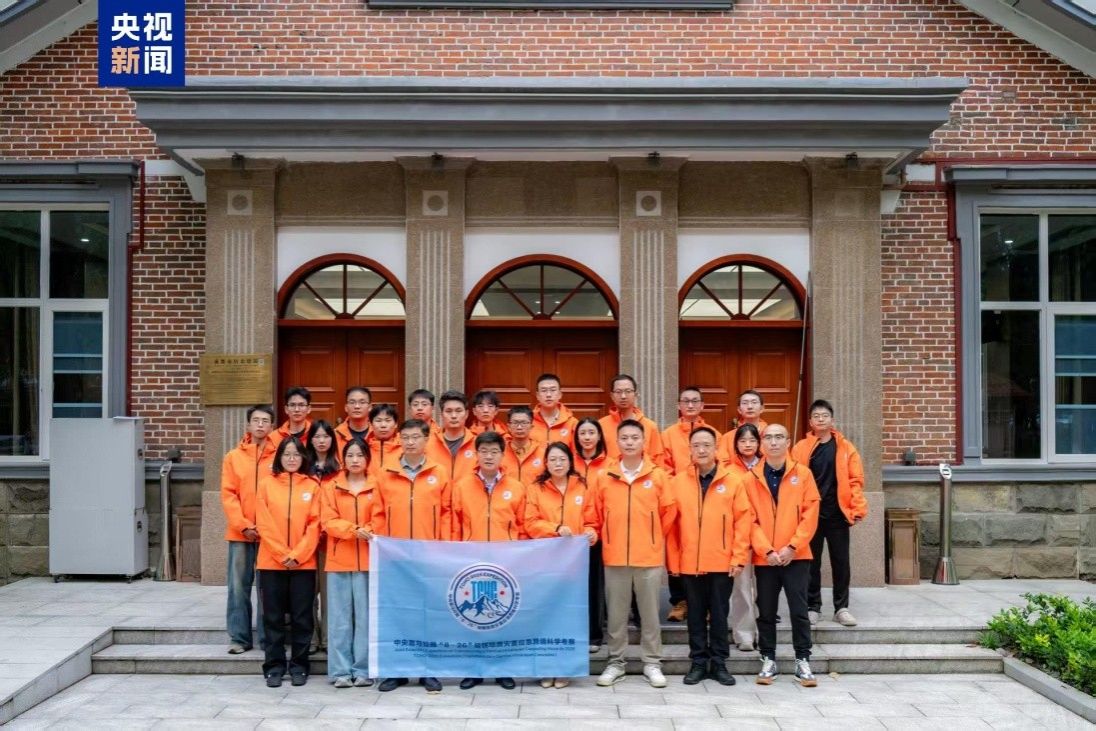
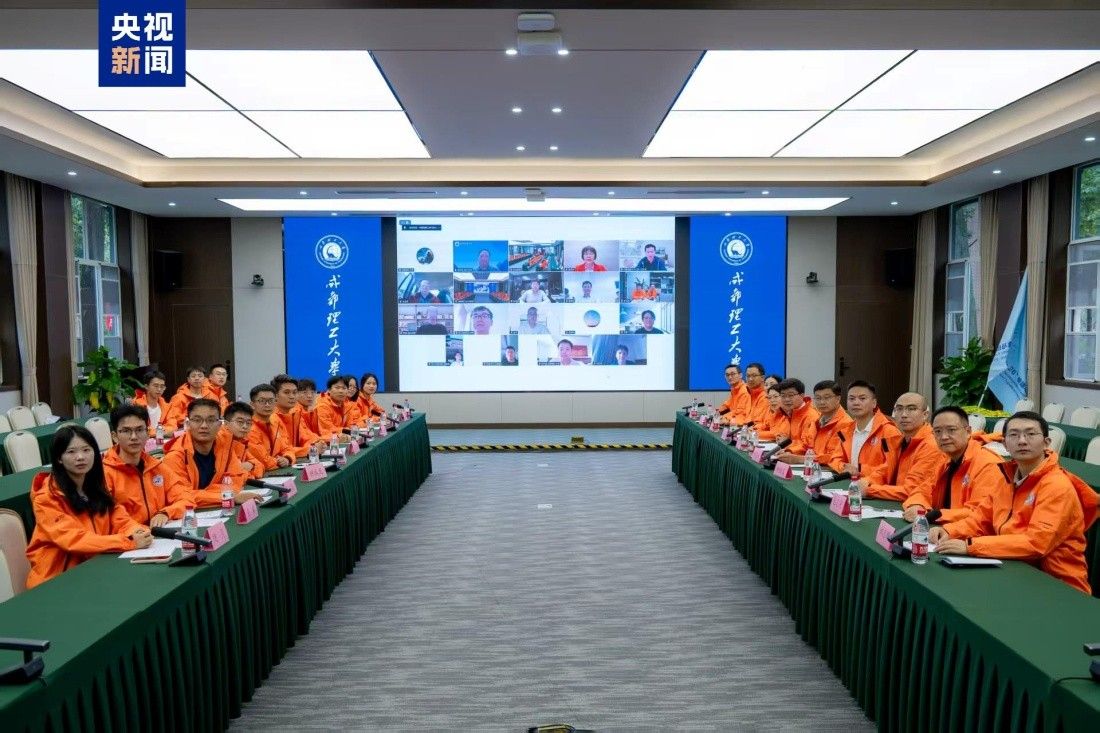
On the afternoon of October 3, the expedition team held a departure ceremony in Chengdu. Professor Lu Xiancai, a member of the Standing Committee of the CPC Nanjing University Committee and Vice President of Nanjing University, delivered remarks on behalf of the university. He noted that the disaster occurred in the core of the Himalayas' "sediment factory", where the interaction of ice and sediment caused an extreme ice–rock avalanche and debris-flow disaster. This expedition represents the first systematic, whole-basin investigation of a transboundary ice–rock avalanche–debris-flow hazard cascade. It will not only fill an important research gap but also lay the groundwork for preventing and forecasting similar disasters under global environmental change. He emphasized that the collaboration among China University of Geosciences (Beijing), Chengdu University of Technology, Nanjing University and other institutions demonstrates the value of complementary strengths and coordinated research. He urged team members to make safety their highest priority, strictly observe safety protocols and disciplinary requirements, respect local customs, and ensure that all field activities are lawful, compliant, safe and orderly.
On August 26, 2026, a sudden glacier collapse in the northern border region of Nepal triggered a transboundary debris-flow disaster, resulting in substantial loss of life and injuries. The source area lay within Nepal, while the disaster propagated across drainage basins and national borders. Its cascading impacts extended for more than 100 kilometres along the affected corridor, reaching Gyirong Port in Tibet, China, and communities in Nepal. Gyirong Port was the principal affected area on the Chinese side. Because the event unfolded across national boundaries, a unilateral investigation cannot fully reconstruct its evolution. Joint field investigations in Nepal by Chinese experts are therefore essential to tracing the complete disaster cascade back to its source.
The expedition has been jointly organized by Chinese and Nepali partners, with Wang Chengshan, an academician of the Chinese Academy of Sciences, and Bishal Upreti, an academician of the Nepal Academy of Science and Technology, serving as co-chief scientists. It brings together more than 50 researchers from over ten universities and research institutions, including China University of Geosciences (Beijing), the Nepal Academy of Science and Technology, Chengdu University of Technology, Nanjing University, Sichuan University, and the Airborne Geophysical Survey and Remote Sensing Center of the China Geological Survey.
The expedition will combine drone-based aerial surveying, helicopter reconnaissance, field geological logging and sampling, and other techniques. It will seek to clarify the successive transformations from ice–rock avalanches to granular flows, debris flows, sediment-laden floods and floods, while quantifying erosion, transport and deposition along the flow path. The findings will provide a robust scientific basis for reconstructing the entire hazard cascade and for recovery and reconstruction at Gyirong Port. The expedition will also generate valuable practical experience for managing cryospheric and lithospheric disaster risks in the Himalayan "Asian Water Tower" region under climate change.
Sources: CCTV News; School of Earth Sciences and Engineering, Nanjing University
Reviewed by: Dong Ting


